European Coalition Prepares Multinational Force for Post-Conflict Ukraine Deployment
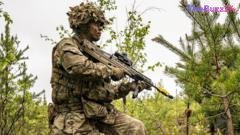
Military planners from Britain and France are spearheading a major multinational exercise in Poland to evaluate the logistical readiness of deploying a reassurance force to Ukraine in the event of a future peace settlement. Approximately 3,000 personnel drawn from a dozen European nations will participate in the upcoming maneuvers, designed to test command structures, mobility, and supply chain integrity across land, maritime, and air domains.
The initiative forms part of long-term security guarantees proposed by European allies to support Kyiv’s stability once active hostilities cease. Organizers emphasize that the contingency force will operate strictly outside of NATO command structures and will not engage in frontline combat, ceasefire monitoring, or peacekeeping duties. Instead, the mission is intended to reassure the local population and assist in rebuilding the capabilities of Ukraine’s domestic armed forces.
While the United States has participated in preliminary diplomatic discussions, American forces will not contribute directly to the deployment. Meanwhile, the Kremlin has previously expressed firm opposition to the presence of foreign military personnel on Ukrainian soil, designating potential contingents as viable targets. Western defense officials have maintained that while the coalition will not initiate offensive actions, the deployed units will retain full authority to defend themselves against any aggression.
The upcoming drills, designated Exercise Koalicja, will run for nearly two weeks and incorporate various specialized assets, including British fighter jets simulating civilian airspace reassurance missions and a Turkish-led maritime component aimed at eventually clearing Black Sea mines to restore commercial shipping lanes. Although significant logistical hurdles and questions regarding operational rules of engagement remain, participating leaders stress that the rehearsal marks a concrete transition from diplomatic rhetoric to credible military preparedness.
Key Takeaways
- Britain and France are leading a multinational military exercise in Poland involving nearly 3,000 troops from 12 European nations to rehearse a post-conflict deployment to Ukraine.
- Officials stress the proposed reassurance force will operate outside of NATO command, avoid frontline combat, and focus on supporting Ukraine's long-term security and armed forces.
- The drills will test vital logistical capabilities, including land mobility, air defense simulations, and a Turkish-led maritime mission to eventually clear Black Sea shipping routes.
Editor’s Analysis & Impact
The decision by European allies to rehearse a post-conflict deployment to Ukraine underscores a strategic shift toward proactive long-term security architecture, independent of immediate war developments. While the operation is explicitly non-offensive and excludes NATO’s direct command framework, it signals a resolute political commitment from key European powers to deter future aggression and stabilize regional trade, particularly via the Black Sea. However, the initiative highlights deep geopolitical friction, given Moscow’s explicit threats against foreign military personnel in Ukraine. As European nations move from theoretical security guarantees to practical military readiness, the ultimate success of such a coalition will depend heavily on the final terms of any future ceasefire, the exact rules of engagement established, and the political resolve of participating capitals to sustain multi-nation interoperability under persistent security threats.
Frequently Asked Questions
Q: What is the primary objective of the military exercise in Poland?
A: The exercise, known as Exercise Koalicja, is designed to test the logistical readiness, command and control, and deployment capabilities of a multinational European force intended to support Ukraine if a peace agreement is reached.
Q: Will the deployed forces operate under NATO command?
A: No, officials have clarified that any future deployment to Ukraine will not operate under NATO command, nor will the troops engage in frontline combat, peacekeeping, or ceasefire monitoring.
Q: Which countries are contributing personnel to the multinational force?
A: Roughly 3,000 personnel from 12 European nations are involved, including contributions from the UK, France, Poland, Turkey, Germany, Spain, Sweden, the Netherlands, Belgium, Estonia, and Lithuania.
AI Disclosure: This article is based on verified data and official reports. Our Team and AI have cross-referenced every financial detail with primary sources to ensure total accuracy.
More from this Category