Escalating Strikes Across Ukraine Claim Dozens of Civilian Lives as Peace Talks Loom
A devastating wave of Russian aerial bombardments struck multiple Ukrainian regions over a 24-hour period, targeting civilian infrastructure including a humanitarian aid distribution point, a medical hospice, and a regional hospital. The relentless attacks resulted in at least 38 civilian deaths and left scores of others severely injured, compounding an already critical humanitarian crisis.
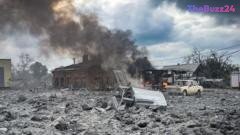
The hardest-hit area was the southern Zaporizhzhia region, where a powerful glide bomb assault on the village of Komyshuvakha killed 33 people. Local authorities reported that massive aerial munitions struck a school building currently functioning as an aid centre just as residents gathered for relief supplies. The impact caused a catastrophic roof collapse, trapping dozens under heavy concrete and rubble. While defense officials in Moscow claimed the target was a military installation, international monitors and local reports confirmed no military presence existed at the site, characterizing the assault as a severe violation of humanitarian law.
Meanwhile, northern and central cities faced parallel onslaughts. In Dnipro, a missile strike obliterated a local hospice, forcing the emergency evacuation of nearly 50 terminally ill patients, some of advanced age, into alternative facilities. Additional strikes across the eastern Donetsk region and the capital city of Kyiv heavily damaged critical energy infrastructure, leaving major municipal areas grappling with severe water shortages, heating outages, and a suspended metro network.
These intensifying military actions unfold against a complex diplomatic backdrop. Officials announced plans for upcoming trilateral peace negotiations in Abu Dhabi, alongside diplomatic initiatives hosted in Washington. However, leadership in Kyiv expressed skepticism regarding the Kremlin’s willingness to engage in genuine peace efforts, pointing to the ongoing campaign against civilian targets and energy grids as evidence of continued military escalation.
Key Takeaways
- At least 38 civilians were killed and scores injured in widespread Russian strikes targeting humanitarian aid centers, a hospice, and a hospital across Ukraine.
- A heavy glide bomb attack in the Zaporizhzhia region caused a school building used for aid distribution to collapse, trapping numerous residents.
- Critical energy infrastructure was severely damaged, leading to water and heating outages in Kyiv and the suspension of the city's metro network.
Editor’s Analysis & Impact
The recent surge in targeted strikes against civilian infrastructure and energy grids in Ukraine highlights a dangerous tactical pivot that directly strains the country’s remaining humanitarian and defense resources. By systematically degrading urban power networks and hitting soft targets like medical facilities, the strategy aims to severely erode civilian resilience ahead of potential diplomatic maneuvers. Furthermore, the stark contrast between escalating kinetic warfare and upcoming trilateral peace talks suggests that negotiations will face immense hurdles. International monitors and humanitarian organizations will likely increase scrutiny on these violations, while Western allies face renewed pressure to bolster Ukraine’s depleted air defense capabilities to prevent further civilian catastrophe.
Frequently Asked Questions
Q: Which areas were most affected by the recent Russian airstrikes?
A: The southern Zaporizhzhia region experienced the deadliest single attack, while cities like Dnipro, Kharkiv, Donetsk, and Kyiv also suffered heavy strikes on civilian and energy infrastructure.
Q: What type of facility was hit in the Zaporizhzhia region?
A: A school building being actively used as a humanitarian aid distribution center was struck by heavy aerial bombs, resulting in a roof collapse and numerous casualties.
Q: Are there any upcoming diplomatic talks regarding the conflict?
A: Yes, plans are underway for three-way peace talks brokered by international partners in Abu Dhabi, alongside diplomatic discussions scheduled in Washington.
AI Disclosure: This article is based on verified data and official reports. Our Team and AI have cross-referenced every financial detail with primary sources to ensure total accuracy.
More from this Category