Delhi Enforces Emergency Pollution Controls as Air Quality Deteriorates Ahead of Diwali
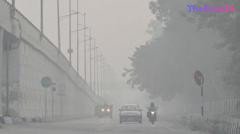
New Delhi is confronting a severe environmental crisis as atmospheric pollution sharply escalates across northern India ahead of the upcoming Diwali celebrations. The capital city’s Air Quality Index (AQI) recently surpassed 300, placing it squarely in the hazardous “very poor” category. The rapid degradation in air quality is driven by a combination of falling winter temperatures, diminished wind speeds, heavy vehicular traffic, industrial emissions, and smoke originating from agricultural stubble burning in neighboring regions such as Punjab and Haryana.
In response to the deteriorating conditions, civic authorities activated Stage II of the Graded Response Action Plan (GRAP). The emergency protocols mandate intensified mechanical road sweeping, enhanced dust suppression measures, increased municipal parking fees to discourage private vehicle usage, and additional public transit services to accommodate commuters. To reduce peak-hour traffic bottlenecks, government office operational schedules are also being staggered. These interventions aim to control rising levels of PM2.5, fine particulate matter capable of penetrating deep into the lungs and causing serious respiratory complications.
Adding to public health anxieties is the approaching festival of lights, which historically features widespread firework displays that exacerbate urban smog. India’s Supreme Court recently sanctioned the restricted sale and use of certified “green firecrackers”—which employ modified chemical compositions to generate lower emissions—during specific time windows over the festival weekend. Fireworks remain strictly prohibited near designated silence zones such as schools and medical facilities, with law enforcement tasked with inspecting vendors to ensure compliance.
The environmental challenge extends beyond Delhi. India’s financial hub, Mumbai, recently experienced elevated pollution levels, with its AQI briefly reaching the “very poor” bracket due to construction dust, localized emissions, and sluggish coastal winds. While Mumbai’s conditions have since shown temporary improvement, the regional nature of the crisis highlights the persistent vulnerability of major urban centers during the autumn and winter months.
Key Takeaways
- Delhi's Air Quality Index (AQI) surpassed 300, categorizing the city's air as 'very poor' ahead of major festival celebrations.
- Civic officials activated Stage II of the Graded Response Action Plan (GRAP) to curb vehicle emissions, manage traffic, and suppress airborne dust.
- India's Supreme Court restricted fireworks usage to certified eco-friendly 'green firecrackers' during limited daily time windows.
Editor’s Analysis & Impact
The recurring winter pollution crisis in northern India underscores persistent structural challenges across urban planning, agricultural policy, and environmental governance. While short-term emergency frameworks like GRAP offer necessary temporary relief, long-term environmental recovery depends on broader systemic shifts. Key measures must include providing viable, cost-effective technological alternatives for agricultural waste management to end crop stubble burning, accelerating public transit electrification, and strictly enforcing industrial emission standards. Economically, chronic air pollution imposes significant financial strain through elevated healthcare costs, reduced labor productivity, and dampened retail activity during prime commercial seasons. Regulatory enforcement surrounding eco-friendly firecrackers remains a test case for how effectively judicial directives can be executed across dense urban environments.
Frequently Asked Questions
Q: What primary factors are driving the pollution crisis in Delhi?
A: The pollution spike is caused by a mix of seasonal weather patterns—such as low wind speeds and dropping temperatures—combined with vehicular exhaust, construction dust, industrial emissions, and smoke from crop stubble burning in nearby agricultural states.
Q: What action is taken under Stage II of the Graded Response Action Plan (GRAP)?
A: Stage II measures include enhanced mechanical road cleaning, increased municipal parking fees to discourage private driving, deployment of additional metro train trips, and staggered work schedules for government offices to alleviate traffic congestion.
Q: How do 'green firecrackers' differ from traditional fireworks?
A: Green firecrackers are formulated with modified chemical mixtures designed to produce significantly lower particulate emissions and toxic gases. They also feature scannable QR codes for authentication by law enforcement.
AI Disclosure: This article is based on verified data and official reports. Our Team and AI have cross-referenced every financial detail with primary sources to ensure total accuracy.
More from this Category