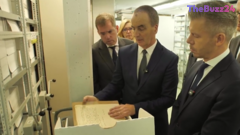
Hungary Opens Communist-Era Secret Police Archives to the Public
Hungary has officially opened its communist-era secret police files to the public, marking a significant and controversial step in the nation’s effort to address the legacy of its 45-year communist rule. The release of these documents, which occurred on the anniversary of the 1956 Soviet intervention in Budapest, aims to provide transparency regarding the state’s surveillance apparatus that operated until 1990. Prime Minister Péter Magyar emphasized the necessity of the move, framing it as a long-overdue fulfillment of promises made during the 1989 democratic transition to help the nation process historical trauma.
The newly accessible database, hosted on the nyitottaktak.hu website, currently contains the personal details of approximately 60,000 individuals recruited by the secret services. These records, known as ‘Form 6’ cards, include real names, codenames, dates of birth, and the specific circumstances surrounding recruitment, such as whether an individual was coerced or acted voluntarily. A second, more detailed set of records known as ‘B-dossiers’ is currently undergoing digitization and is scheduled for public release in February.
While proponents argue that access to these files is a fundamental right for citizens to understand how the state monitored its population, the initiative has faced significant criticism. Skeptics argue that the files are incomplete due to widespread shredding of documents during the collapse of the communist regime in 1988 and 1989. Furthermore, some historians and political figures warn that the release could lead to public misjudgment, as the records may lack the necessary context to explain the extreme pressure or blackmail tactics used by the state to force citizens into becoming informers.
Key Takeaways
- Hungary has released the first batch of communist-era secret police files, detailing the identities of approximately 60,000 informers.
- The release is intended to foster national healing, though critics argue it may cause social division and lacks sufficient context for the documents provided.
- A second, more comprehensive set of records, the 'B-dossiers,' is slated for public release in February 2025.
Editor’s Analysis & Impact
The decision to declassify and publish these archives represents a pivotal moment in Hungary’s post-communist identity. By choosing to confront the ‘secret history’ of the state, the government is attempting to close a chapter that has remained a source of political leverage and social suspicion for decades. However, the move carries significant risks. In the current polarized political climate, the weaponization of these files—even if unintentional—could lead to social unrest or the unfair stigmatization of individuals who were coerced into cooperation under duress. From an institutional perspective, this transparency sets a precedent for how former Eastern Bloc nations handle state-sanctioned surveillance records. The long-term impact will likely depend on whether the public can interpret these documents with historical nuance rather than as a tool for modern-day political retribution.
Frequently Asked Questions
Q: What information is currently available in the released files?
A: The current release includes 'Form 6' cards, which contain the real names, codenames, dates of birth, addresses, and recruitment motives of approximately 60,000 individuals who worked with the secret police.
Q: Why are some critics concerned about the release of these documents?
A: Critics argue that the files are incomplete due to the destruction of records in 1989 and that releasing names without full context may lead to unfair public judgment of individuals who were often blackmailed or coerced into informing.
AI Disclosure: This article is based on verified data and official reports. Our Team and AI have cross-referenced every financial detail with primary sources to ensure total accuracy.
More from this Category