Cyprus: A Tapestry of Ancient Geology, Feline Legends, and Fading Flamingo Flocks
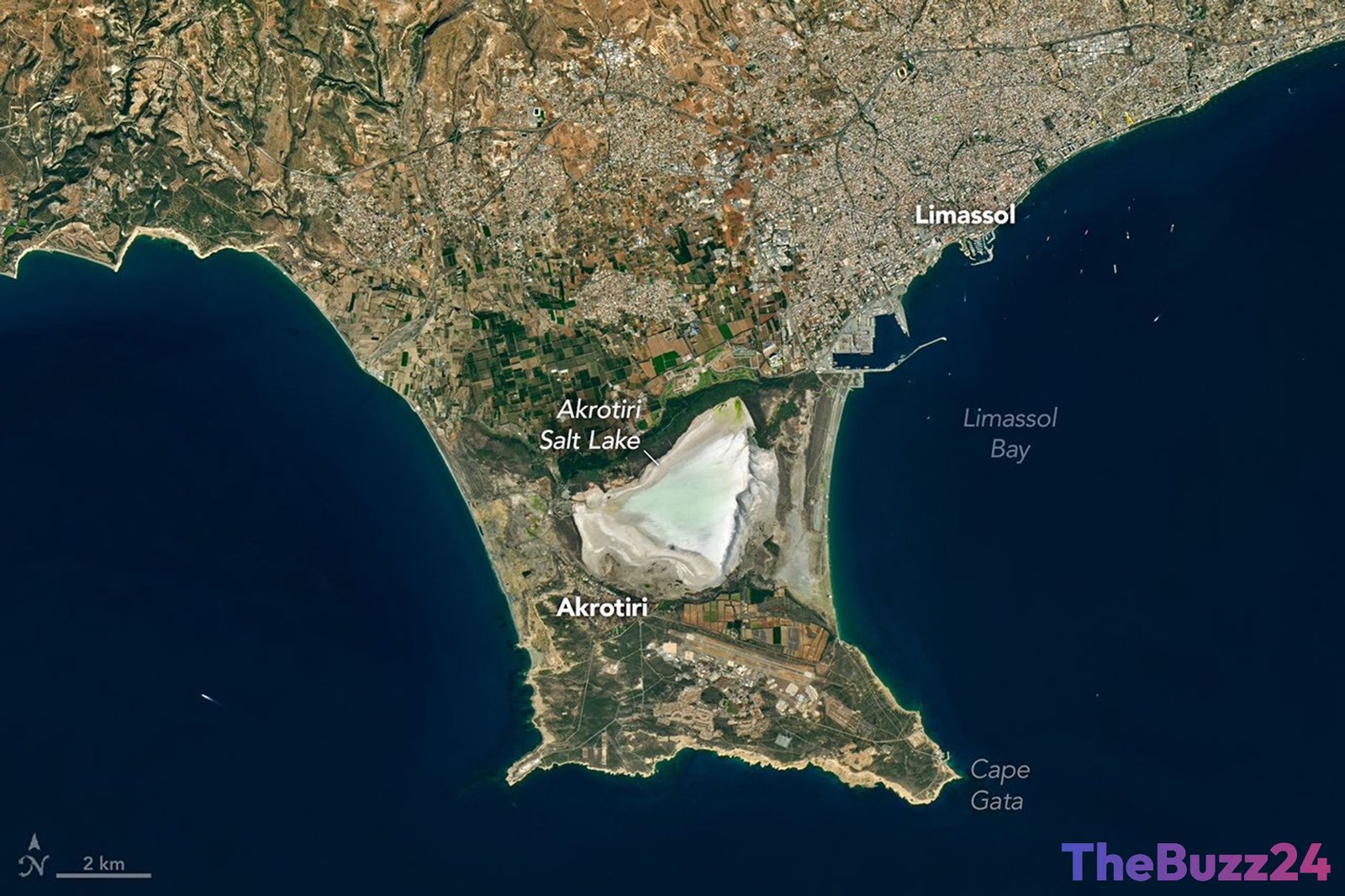
The island nation of Cyprus, particularly its Akrotiri Peninsula, presents a compelling narrative of geological evolution, historical interventions, and ecological shifts. Recent observations from the Operational Land Imager (OLI) on Landsat 8, captured on October 10, 2026, show seasonal rains beginning to replenish Akrotiri Salt Lake, a coastal lagoon nestled within this unique landform.
Cyprus’s origins trace back approximately 90 million years to the Late Cretaceous period, when molten rock erupted from the seafloor, solidified, and gradually built new oceanic crust. Tectonic forces subsequently uplifted portions of this oceanic rock, forming a rugged island composed of ophiolite—a distinctive green-mottled rock resembling snake skin. Remnants of this ancient geological foundation are still evident in the dark rock formations of the Troodos Mountains. During the Miocene epoch, younger marine sedimentary layers, including chalk, limestone, and marl, accumulated around the island. This material later contributed to the formation of a second, smaller island to the south through further geological uplift. Over millennia, river and marine sediments filled the channel between these two landmasses, creating deltas and eventually two natural land bridges, or tombolos, which merged to form the Akrotiri Peninsula, now the southernmost point of Cyprus. The more westerly Kouris River tombolo developed around 50,000 years ago, while the eastern tombolo, which cut off the Mediterranean Sea to form the salt lake, is a more recent feature, forming within the last 2,000 years.
Akrotiri Salt Lake, once an arm of the Mediterranean, experiences significant seasonal fluctuations in water levels, typically filling in late autumn and winter before drying out in summer. Historically, these winter waters attracted substantial populations of overwintering flamingos, often numbering around 4,000 birds. These flamingos rely on the lake’s fairy shrimp, rich in carotenoids, for their characteristic pink coloration. However, recent years have seen a dramatic decline in the wintering flamingo population, plummeting to as few as 30 birds in 2025, raising concerns among conservationists.
Beyond its geological wonders and avian visitors, Cyprus is also renowned for its historical association with snakes and cats. In antiquity, the island was known as Ophiousa, or “land of snakes,” a testament to its abundant blunt-nosed viper population. Legend recounts that during a severe drought in the fourth century, the Roman Empress Helena, mother of Constantine the Great, ordered shiploads of cats from Egypt to control the burgeoning snake communities. These initial feline imports were released in a particularly snake-infested area on the southeastern Akrotiri Peninsula, which subsequently became known as Cape Gata (Cape Cat in Greek). Today, the Holy Monastery of St. Nicholas of the Cats at Cape Gata continues this legacy, with nuns caring for hundreds of felines. The island’s cat population remains remarkably high, with estimates suggesting as many cats as people, exceeding one million feline predators stalking the island.
AI Disclosure: This article is based on verified data and official reports. Our Team and AI have cross-referenced every financial detail with primary sources to ensure total accuracy.
More from this Category