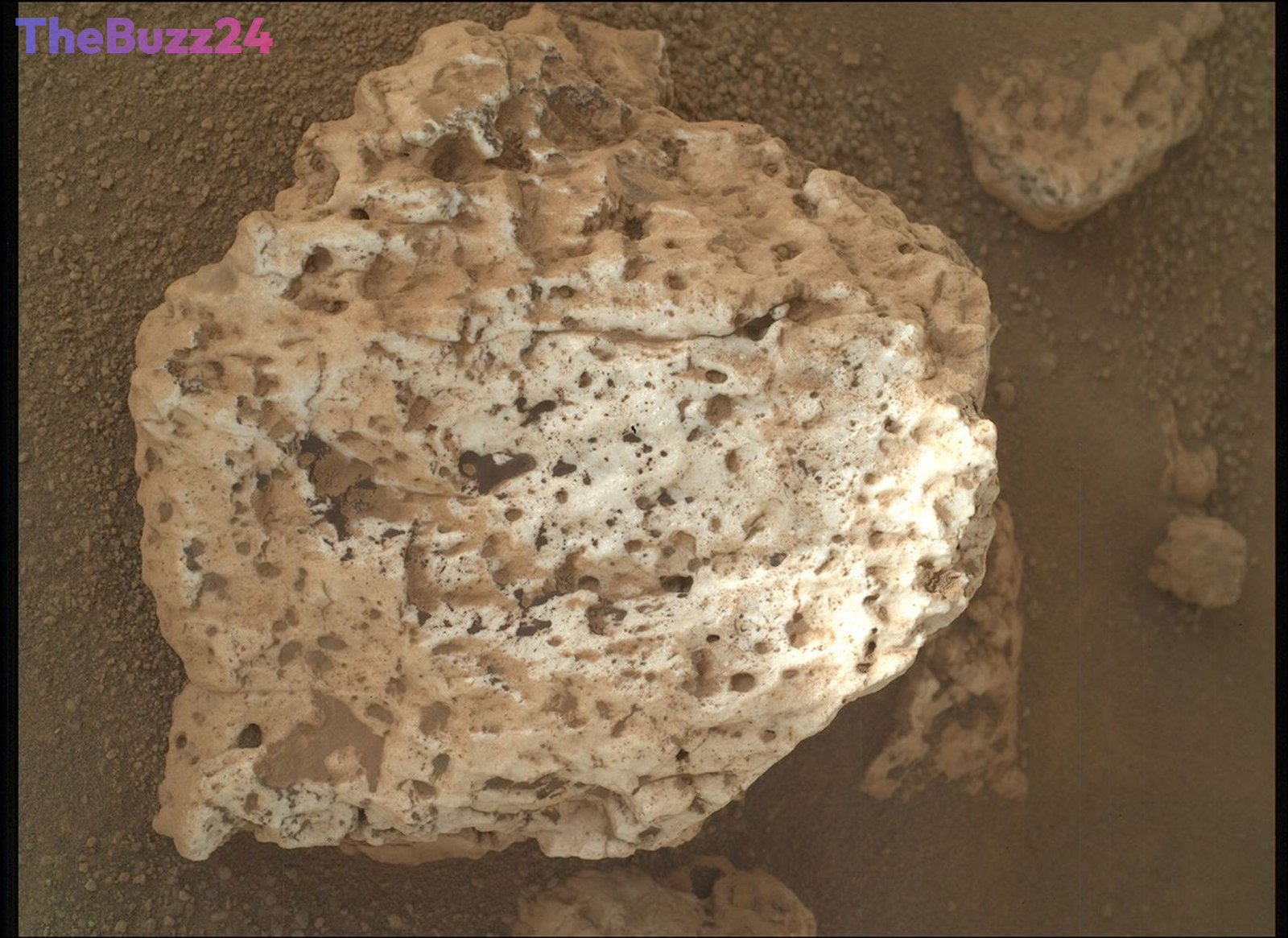
Mars Rover Detects Ruby-Like Mineral, Offering Clues to Ancient Impacts
NASA’s Perseverance rover has made an unexpected discovery on Mars: the detection of corundum, a mineral that, in its gemstone form, is known as ruby. This finding, identified through the rover’s SuperCam instrument, provides intriguing insights into the planet’s geological history, particularly the effects of ancient asteroid and meteor impacts.
The SuperCam instrument, designed to analyze Martian rocks and soil using lasers and spectrometers, detected a distinct luminescence when targeting a light-toned rock. This luminescence, occurring at specific wavelengths, indicated the presence of chromium within a corundum crystal structure. The phenomenon is similar to how a ruby, a form of corundum containing chromium, glows brightly when illuminated by a laser.
While the discovery doesn’t mean collectable rubies have been found, the presence of corundum is significant. Corundum is typically associated with metamorphic processes, which are not expected on Mars due to its lack of plate tectonics. However, scientists theorize that intense heat generated by large meteor and asteroid impacts could create localized metamorphic conditions. The Perseverance rover is exploring an ancient region near the rim of Jezero Crater, making it an ideal location to search for such evidence.
This unexpected finding has prompted the Perseverance mission team to increase their use of the time-resolved luminescence technique on light-colored rocks. By studying these mineral signatures, researchers hope to gain a deeper understanding of the impact history of Mars and the localized geological changes that resulted from these powerful cosmic events.
Key Takeaways
- NASA's Perseverance rover detected corundum, a mineral also found in rubies, on Mars.
- The discovery was made using the SuperCam instrument's ability to detect luminescence from chromium in the mineral.
- The presence of corundum suggests localized metamorphic conditions on Mars, likely caused by ancient asteroid and meteor impacts.
Editor’s Analysis & Impact
The detection of corundum on Mars by the Perseverance rover is a significant scientific development, offering a novel window into the planet’s geological past. This finding challenges previous assumptions about Martian geology by revealing evidence of metamorphic processes, albeit localized ones, likely triggered by impact events. The ability of SuperCam to detect this mineral through luminescence highlights the ingenuity of the rover’s instrumentation and its capacity for unexpected discoveries. This could lead to a re-evaluation of impact cratering models on Mars and potentially other celestial bodies. The ongoing analysis of such findings will be crucial for understanding the full scope of Mars’s dynamic history and its potential for past habitability.
Frequently Asked Questions
Q: What is corundum?
A: Corundum is a crystalline mineral composed of aluminum oxide (Al2O3). It is known for its hardness and is found in various colors. When chromium is present, it forms the gemstone ruby, and when iron and titanium are present, it forms the gemstone sapphire.
Q: Why is finding corundum on Mars significant?
A: Corundum is typically formed through metamorphic processes. Mars, lacking plate tectonics, was not expected to have widespread metamorphic rocks. Its discovery suggests that large impacts can create localized high-temperature and pressure conditions sufficient for metamorphism, providing new insights into the planet's geological history.
Q: Does this mean rubies have been found on Mars?
A: While the mineral detected is chemically the same as that found in rubies (corundum with chromium), the rover has not found gem-quality rubies. The crystals are microscopic and are significant for the scientific information they provide about Mars's geological past, not for their aesthetic value.
AI Disclosure: This article is based on verified data and official reports. Our Team and AI have cross-referenced every financial detail with primary sources to ensure total accuracy.
More from this Category