Israel’s Political Chess Match: New Parliament Sworn In Amidst Government Formation Race
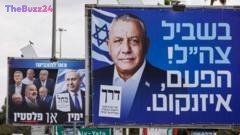
Israel’s newly elected parliament has officially been sworn in, marking the commencement of a critical period where political leaders will vie to assemble a governing coalition. The immediate focus is on opposition leader Gadi Eisenkot, who has been tasked by President Isaac Herzog with the challenging mission of forming a government. Eisenkot, a former army chief, secured more recommendations from Knesset members than the caretaker Prime Minister Benjamin Netanyahu, though the path to a stable coalition remains fraught with ideological divides.
Both Eisenkot’s bloc, comprising four parties that secured 48 seats, and Netanyahu’s bloc, with 53 seats, fall short of the 61-seat majority required in the 120-seat Knesset. This electoral outcome has plunged the nation into a phase of political uncertainty, with Eisenkot given a 28-day window, potentially extendable by two weeks, to forge a working government. The political landscape is further complicated by the significant presence of Arab-led parties, which have achieved a record number of seats, potentially positioning them as kingmakers.
Shortly after the swearing-in ceremony, both Netanyahu and Eisenkot delivered pointed addresses to the parliament, warning against the formation of a government reliant on what they characterized as ‘supporters of terror.’ Netanyahu specifically questioned the wisdom of a government dependent on parties aiming for Israel’s destruction, implicitly targeting the potential for an Eisenkot-led administration to involve Arab parties. He advocated for a broad unity government to counter the perceived threat from Iran.
Eisenkot, in turn, strongly rebuked Netanyahu’s remarks, labeling them as ‘delusional, divisive, hate-filled and shameful.’ He asserted that Netanyahu’s rhetoric only solidified his conviction that the caretaker prime minister is unfit for office. The election results, widely interpreted as a referendum on Netanyahu’s leadership, have created a complex situation where the caretaker prime minister will remain in his post until a new government is successfully formed, a process that could extend for weeks or even months.
Key Takeaways
- Israel's new parliament has been sworn in, initiating a race to form a government.
- Opposition leader Gadi Eisenkot has been tasked with forming a coalition but faces significant challenges due to a divided Knesset.
- The election results highlight the potential influence of Arab-led parties and the deep ideological rifts within Israeli politics.
Editor’s Analysis & Impact
The current political deadlock in Israel presents a complex challenge for coalition building, underscoring the nation’s deep ideological divisions. The significant gains by Arab-led parties introduce a new dynamic, potentially offering a path to power but also raising contentious issues regarding their inclusion in government. The outcome of this formation period will not only determine the next Israeli government but could also reshape the country’s political alliances and its approach to regional security, particularly concerning Iran. The prolonged uncertainty could impact investor confidence and international relations.
Frequently Asked Questions
Q: Who has been tasked with forming the next Israeli government?
A: Gadi Eisenkot, the opposition leader and former army chief, has been tasked by President Isaac Herzog with forming the next Israeli government.
Q: Why is forming a government in Israel proving difficult?
A: Forming a government is difficult because no single bloc secured a majority in the recent election. Both Benjamin Netanyahu's bloc and Gadi Eisenkot's bloc are short of the 61 seats needed, and there are significant ideological differences between potential coalition partners, particularly concerning the role of Arab parties and issues like ultra-Orthodox military conscription.
Q: What is the significance of the Arab-led parties' performance in the election?
A: The Arab-led parties achieved a record number of seats, potentially giving them the balance of power. Their support could be crucial for either Netanyahu or Eisenkot to form a government, but their inclusion is a contentious issue for many Israeli parties.
AI Disclosure: This article is based on verified data and official reports. Our Team and AI have cross-referenced every financial detail with primary sources to ensure total accuracy.
More from this Category