Catastrophic Fog-Induced Pile-Ups Claim Twelve Lives on Bulgaria’s Trakia Motorway
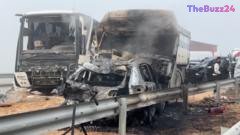
A devastating series of vehicle collisions on Bulgaria’s Trakia motorway has resulted in the deaths of twelve individuals and left approximately 50 others injured. The catastrophic incident, which involved dozens of cars and lorries, occurred in two separate pile-ups near the town of Zimnitsa in southeastern Bulgaria. Health officials confirmed that eleven people perished at the scene, with another succumbing to their injuries later in hospital.
More than 70 vehicles were involved across both crashes, which unfolded on both the eastbound and Sofia-bound carriageways of the Trakia motorway. Authorities have attributed the primary cause to extremely dense fog, which severely reduced visibility. Compounding the hazardous conditions were wet road surfaces and speeds deemed unsuitable for the prevailing weather. Officials also noted that drivers on the Sofia-bound carriageway may have been distracted by the initial crash, contributing to the second pile-up.
Emergency services faced significant challenges in their rescue efforts, with reports indicating that the thick fog prevented the use of helicopters for evacuation. Rescue teams were forced to dismantle sections of crash barriers to reach trapped individuals. Prime Minister Rumen Radev, who was hosting European Commission President Ursula von der Leyen at the time, promptly cut short his engagements to visit the scene, underscoring the gravity of the national tragedy.
Witnesses described a scene of chaos and devastation. One individual recounted pulling a man from a burning vehicle, attributing the disaster to “very thick fog.” Another survivor expressed profound relief, stating, “many, many people died,” and marveling at their own escape from the multi-vehicle wreckage. Regional governors Mihail Kasherov and Georgi Chalakov, along with road administration director Galin Kostov, provided updates on the incident and the ongoing response. The Trakia motorway, a vital artery connecting the capital Sofia to the Black Sea coast, remained closed for an extended period to facilitate clearance and investigation.
Key Takeaways
- Twelve fatalities and approximately 50 injuries resulted from two major pile-ups on Bulgaria's Trakia motorway.
- Dense fog, reduced visibility, and unsuitable driving speeds were identified as primary causes for the crashes involving over 70 vehicles.
- Prime Minister Rumen Radev visited the scene, highlighting the national impact of the tragic incident and the challenges faced by emergency services.
Editor’s Analysis & Impact
This tragic incident on the Trakia motorway serves as a stark reminder of the critical importance of road safety, particularly under adverse weather conditions. While not directly impacting financial markets, it highlights potential vulnerabilities in national infrastructure and emergency response protocols. Moving forward, there will likely be increased scrutiny on implementing advanced fog detection systems, variable speed limits, and enhanced driver education campaigns in regions prone to such weather phenomena. The broader implications extend to public trust in road safety and the efficiency of emergency services, underscoring the need for continuous investment in infrastructure resilience and coordinated disaster management strategies to prevent future catastrophes.
Frequently Asked Questions
Q: What caused the fatal pile-ups on the Trakia motorway?
A: The primary cause of the devastating pile-ups was extremely dense fog, which severely reduced visibility for drivers. Contributing factors included wet road surfaces and speeds deemed unsuitable for the hazardous conditions, alongside potential driver distraction from the initial crash.
Q: How many people were affected by the crashes?
A: The incidents resulted in twelve fatalities, with eleven people dying at the scene and one later in hospital. Additionally, approximately 50 individuals sustained injuries and were transported to hospitals in the Yambol, Sliven, and Burgas regions. Over 70 vehicles were involved in the collisions.
Q: What was the immediate response to the incident?
A: Emergency services, including ambulances, were dispatched to the scene to transport the injured. Rescue teams faced significant challenges due to the thick fog, which prevented the use of helicopters for evacuation and required them to remove sections of crash barriers to reach victims. Prime Minister Rumen Radev visited the site to assess the situation.
AI Disclosure: This article is based on verified data and official reports. Our Team and AI have cross-referenced every financial detail with primary sources to ensure total accuracy.
More from this Category