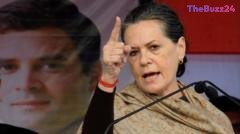
The Reluctant Matriarch: Sonia Gandhi Reflects on Tragedy, Duty, and the Evolution of Indian Politics
Sonia Gandhi’s journey into the heart of Indian politics was never a path she sought, but rather one forged through profound personal tragedy. In her memoir, she recounts the harrowing morning of October 31, 1984, when the assassination of her mother-in-law, Prime Minister Indira Gandhi, shattered her private life. Witnessing the aftermath of the violence and the subsequent pressure placed upon her husband, Rajiv Gandhi, to assume the mantle of leadership, Sonia describes a period defined by fear and the heavy burden of a political legacy she had hoped to avoid.
The narrative of her life is punctuated by the recurring shadow of political violence, culminating in the assassination of her husband in 1991. Despite her deep-seated aversion to the ‘ambition, greed, and treachery’ she associated with the political sphere, Sonia eventually found herself drawn into the fray. Driven by a sense of duty to protect the secular and pluralistic vision of India championed by her family, she stepped into the leadership of the Congress party, eventually guiding it to significant electoral victories.
Perhaps the most pivotal moment in her career occurred in 2004, when, after leading the Congress party to victory, she made the unexpected decision to decline the office of Prime Minister. Citing concerns over the potential for political instability and the exploitation of her foreign origins, she instead appointed Manmohan Singh to the role. This decision remains a defining chapter in her legacy, reflecting a complex interplay between personal conviction, familial protection, and the broader interests of the nation.
In her later years, Sonia Gandhi offers a candid critique of the shifting landscape of Indian governance. She observes a decline in parliamentary decorum and expresses deep concern over the rise of authoritarian tendencies and the ideological direction of the current administration under Prime Minister Narendra Modi. As she reflects on her decades in the public eye, her tone is one of melancholy, acknowledging that despite her efforts to uphold the values of a just and humane society, the political forces she sought to counter remain formidable.
Key Takeaways
- Sonia Gandhi’s entry into politics was driven by a sense of duty following the assassinations of Indira and Rajiv Gandhi, despite her personal dislike for political life.
- The decision to decline the Prime Ministership in 2004 was a calculated move to prevent political chaos and protect the nation from controversies surrounding her foreign birth.
- Her memoir highlights a perceived decline in political decency in India and expresses concern over the rise of Hindu nationalism and authoritarianism.
Editor’s Analysis & Impact
Sonia Gandhi’s memoir serves as both a historical record and a political manifesto, offering a rare glimpse into the internal dynamics of one of the world’s most influential political dynasties. From a market and industry perspective, the book underscores the volatility of the Indian political landscape, which remains a critical factor for international investors and global trade partners. Her critique of the current administration highlights the ongoing ideological struggle within India, which has significant implications for future policy-making, social stability, and the country’s secular identity. While the memoir is selective in its defense of the Congress party’s historical record, its release marks a significant moment in the narrative of modern India, signaling a transition in leadership as the next generation of the Gandhi family takes the stage amidst a deeply polarized political environment.
Frequently Asked Questions
Q: Why did Sonia Gandhi decline the position of Prime Minister in 2004?
A: She believed that accepting the position would create unnecessary political havoc due to her foreign birth and that it would be better for the country to have a leader like Manmohan Singh, whom she considered above reproach.
Q: What is the central theme of Sonia Gandhi's memoir regarding her political career?
A: The memoir centers on the theme of 'dharma' or duty, illustrating how she felt compelled to enter politics to defend the secular and pluralistic values of India, despite her personal desire to stay away from the public eye.
AI Disclosure: This article is based on verified data and official reports. Our Team and AI have cross-referenced every financial detail with primary sources to ensure total accuracy.
More from this Category