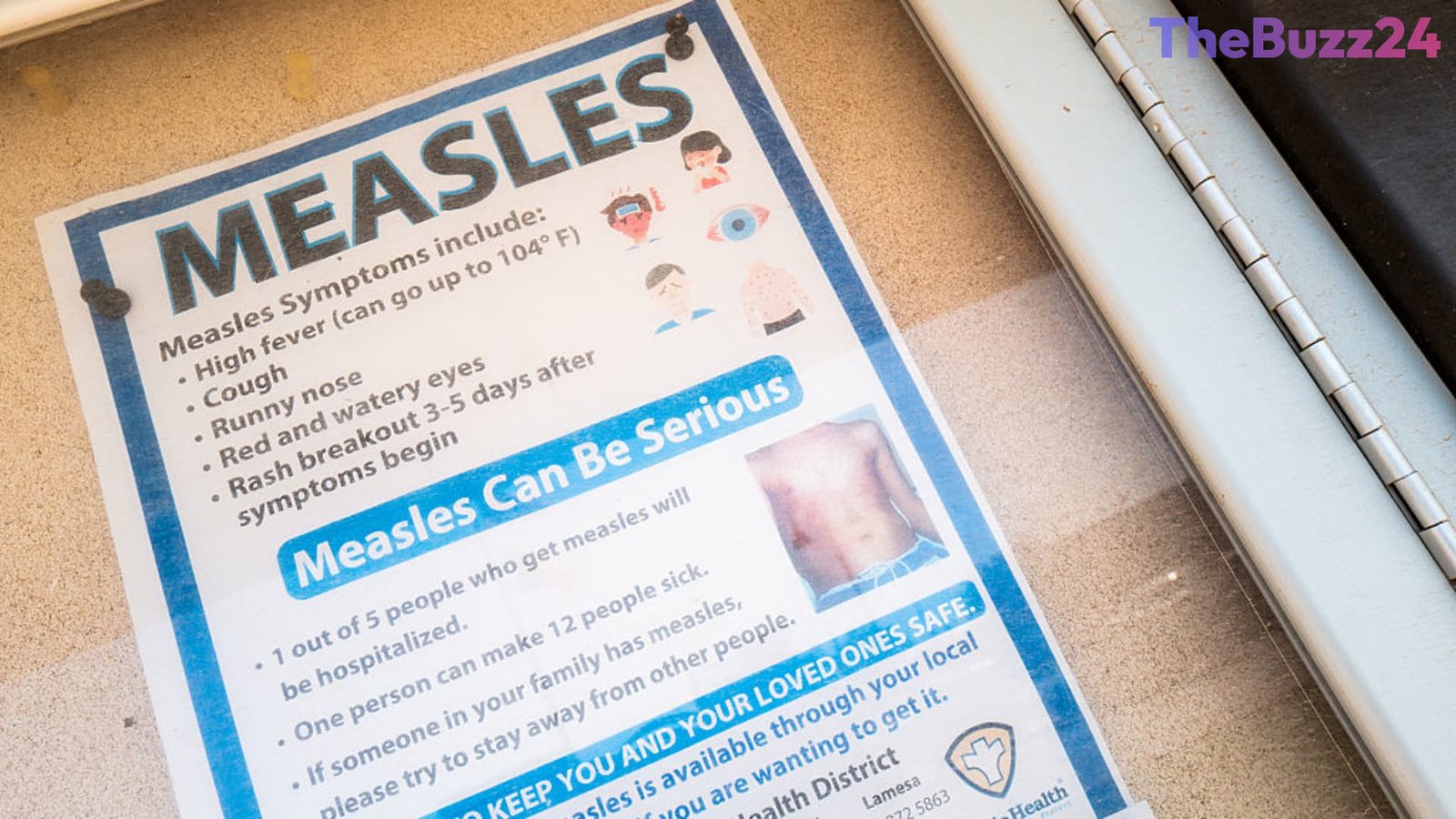
The Surging Cost of Measles: How Resurgent Outbreaks Strain Public Health and Economic Resources
The resurgence of measles across the United States is creating a massive financial drain on the nation’s healthcare infrastructure and public health systems. Recent economic models developed by academic researchers highlight the steep price tag associated with containing the highly contagious, vaccine-preventable disease, revealing costs that extend far beyond direct medical treatment.
Estimates from analytical tools created by health economists indicate that recent nationwide outbreaks have carried economic burdens scaling into tens of millions of dollars. These figures account for extensive public health mobilization, including contact tracing and exposure investigations, alongside substantial productivity losses incurred when infected individuals or exposed family members must miss work or undergo quarantine. With case numbers reaching multi-decade highs, the financial impact continues to mount significantly across multiple states.
The economic toll is largely driven by the labor-intensive nature of outbreak containment. When a single case is identified, public health departments must rapidly coordinate with schools, hospitals, and local communities to trace contacts and deploy preventive campaigns. This heavy lifting diverts crucial staff, time, and monetary resources away from other foundational public health priorities. Furthermore, indirect expenses compound rapidly because individuals exposed to the virus often face mandatory quarantines, leading to significant lost wages even if they never develop active symptoms.
Experts emphasize that these compounding expenses underscore the critical importance of maintaining robust childhood immunization rates. As herd immunity wanes in certain pockets of the population, public health agencies are left absorbing the shockwaves of preventable outbreaks, illustrating that the economic consequences of skipping vaccinations reach far wider than individual medical bills.
Key Takeaways
- Measles outbreaks in the U.S. carry immense economic costs, totaling tens of millions of dollars driven by public health responses and lost productivity.
- Containment efforts are heavily labor-intensive, requiring local health departments to divert critical resources away from other ongoing health initiatives.
- Indirect costs add up quickly due to widespread quarantines and missed workdays, even among individuals who ultimately do not fall ill.
Editor’s Analysis & Impact
The resurgence of vaccine-preventable diseases like measles represents a critical stress test for modern public health infrastructure and state-level economies. Beyond the immediate human toll, the financial mechanisms driving these outbreaks demonstrate that localized infections trigger exponential ripple effects across the workforce and government budgets. As public health agencies increasingly find themselves forced to reallocate finite resources toward reactive containment, policymakers face growing pressure to address declining immunization rates. Looking ahead, the ability of state and local entities to accurately forecast and absorb these labor-heavy containment costs will be paramount in preventing systemic strain. Ultimately, the economic argument for robust preventative healthcare and vaccination education has rarely been more mathematically compelling.
Frequently Asked Questions
Q: What drives the high economic cost of measles outbreaks?
A: The high cost is primarily driven by labor-intensive public health responses—such as contact tracing and exposure investigations—as well as lost productivity from individuals and parents missing work due to illness or mandatory quarantine.
Q: How do measles outbreaks impact local health departments?
A: Outbreaks force local health departments to abruptly divert staff and financial resources away from other routine health priorities to manage containment and coordinate with schools and hospitals.
Q: Can people incur financial losses from measles without getting sick?
A: Yes. Individuals who are exposed to measles often need to quarantine, resulting in lost wages and productivity even if they never develop active symptoms of the disease.
AI Disclosure: This article is based on verified data and official reports. Our Team and AI have cross-referenced every financial detail with primary sources to ensure total accuracy.
More from this Category