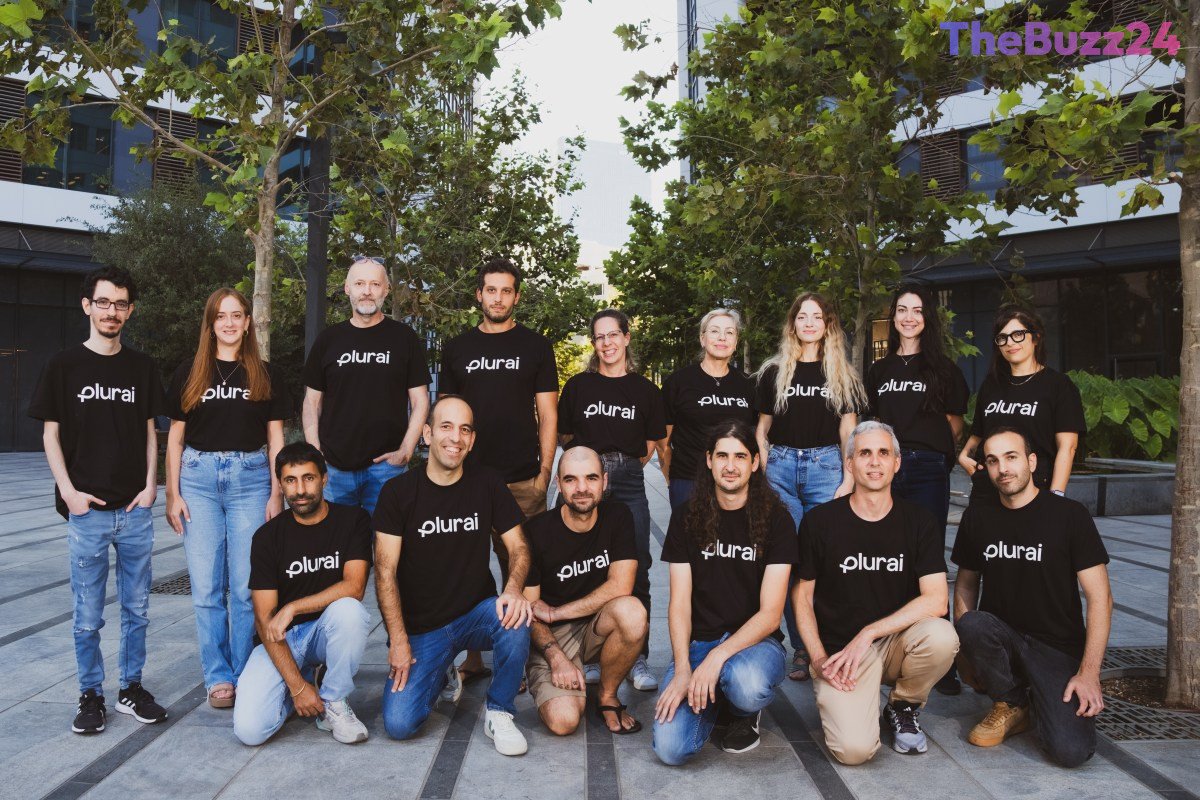
Plurai Secures $13 Million to Bring Autonomous Driving Simulation Tech to AI Agents
The reliability of AI agents remains a significant hurdle for enterprise adoption, with current models often struggling to maintain accuracy in complex, real-world corporate environments. Recent benchmarks indicate that even top-tier models frequently fall short of the precision required for autonomous operation, often failing to navigate edge cases or adhere to specific business policies. To bridge this gap, startup Plurai is introducing a simulation-based approach inspired by the methodologies used to train self-driving vehicles.
Founded by veterans of the autonomous driving industry, including alumni from Nexar who previously collaborated with Waymo, Plurai aims to solve the ‘demo-to-production’ reliability crisis. The company recently announced a $13 million seed funding round led by Team8. Plurai’s platform functions by creating a digital twin of a company’s internal systems, mapping potential workflows, and generating synthetic data to stress-test AI agents against various failure modes before they are deployed.
Beyond mere simulation, Plurai focuses on post-training smaller, open-weight models tailored to specific organizational needs. By decomposing complex tasks into smaller, manageable segments and verifying them within a simulated environment, the startup claims it can achieve performance levels comparable to frontier models at a fraction of the cost. This strategy addresses a growing concern among IT leaders regarding the sustainability of high-cost, general-purpose AI models that lack deep integration with proprietary business data.
As businesses continue to grapple with the limitations of off-the-shelf AI, Plurai’s methodology suggests a shift toward specialized, task-oriented models. By treating digital workflows with the same rigor applied to physical autonomous systems, the company hopes to provide a pathway for AI agents to move from experimental tools to reliable, cost-effective components of the modern enterprise infrastructure.
Key Takeaways
- Plurai raised $13 million to apply autonomous vehicle simulation techniques to improve the reliability of enterprise AI agents.
- The platform creates digital twins of corporate systems to map workflows and generate synthetic data for testing edge cases.
- Plurai aims to reduce costs and improve performance by post-training smaller, open-weight models specifically for individual business needs.
Editor’s Analysis & Impact
Plurai’s entry into the market highlights a critical pivot in the AI industry: the transition from ‘general intelligence’ hype to ‘operational reliability.’ As enterprises realize that massive frontier models are both expensive and prone to hallucinations when handling proprietary data, the demand for specialized, verifiable AI agents is surging. By leveraging simulation technology—a proven standard in robotics and autonomous driving—Plurai is addressing the ‘black box’ problem that currently prevents widespread corporate adoption. The future outlook for this sector is highly promising; as companies seek to optimize AI ROI, the ability to train smaller, cheaper, and more accurate models on synthetic data will likely become a competitive necessity. This approach not only lowers the barrier to entry for complex automation but also provides a more sustainable economic model for AI integration.
Frequently Asked Questions
Q: How does Plurai improve the reliability of AI agents?
A: Plurai uses simulation technology to create a digital twin of a company's systems, allowing it to map potential workflows and test agents against edge cases using synthetic data before they are deployed.
Q: Why is Plurai's approach considered more cost-effective?
A: Instead of relying solely on massive, expensive frontier models, Plurai uses its simulation data to post-train smaller, open-weight models that are optimized for specific tasks, significantly reducing operational costs while maintaining high performance.
AI Disclosure: This article is based on verified data and official reports. Our Team and AI have cross-referenced every financial detail with primary sources to ensure total accuracy.
More from this Category