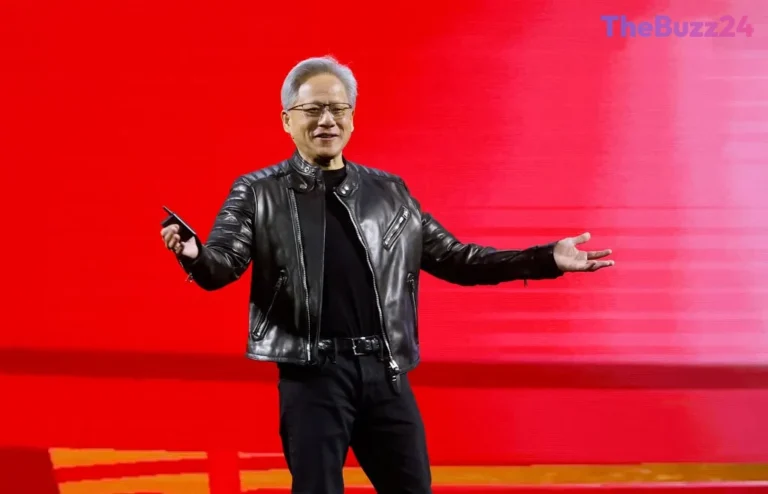
Nvidia CEO Jensen Huang Steps Down Amidst Controversy; CFO Takes Helm
Nvidia, a titan in the semiconductor industry, announced a significant leadership change as CEO Jensen Huang has resigned from his post. The company confirmed the departure on Thursday, with Chief Financial Officer Colette Kress stepping in as interim CEO. Kress will continue her duties as CFO while the board initiates a search for a permanent successor.
Huang, who co-founded Nvidia in 1993, has been instrumental in shaping the company’s trajectory, particularly its pivotal role in the development of the Graphics Processing Unit (GPU). Initially designed for gaming, Nvidia’s GPUs evolved to become indispensable for computationally intensive tasks, including cryptocurrency mining and, more recently, the burgeoning field of artificial intelligence. The company’s CUDA architecture, launched in 2006, broadened the utility of its chips beyond graphics, enabling their use in complex calculations and research.
Under Huang’s long tenure, Nvidia became a dominant force in the AI revolution, with its GPUs serving as the backbone for training and deploying sophisticated AI models. This strategic pivot fueled unprecedented growth, with Nvidia’s market capitalization soaring and its revenue and profits experiencing exponential increases in recent years. Huang was a vocal advocate for AI development, actively promoting the technology globally and engaging in lobbying efforts concerning export controls on advanced AI chips.
The leadership transition occurs at a critical juncture for Nvidia, which has faced increasing scrutiny and regulatory challenges, particularly regarding sales to China. The company’s stock experienced a notable decline following the announcement. The departure of Huang, a visionary leader who maintained tight control over the company, introduces a period of uncertainty for Nvidia and the broader AI ecosystem that relies heavily on its technology. The board has appointed Harvey C. Jones as the company’s first-ever chair, who is expected to play a key role in the CEO selection process.
Key Takeaways
- Nvidia CEO Jensen Huang has resigned, with CFO Colette Kress appointed as interim CEO.
- Huang's leadership was pivotal in Nvidia's rise to dominance in the AI chip market through its GPUs.
- The leadership change occurs amidst market volatility and regulatory considerations for the company.
Editor’s Analysis & Impact
Jensen Huang’s departure marks the end of an era for Nvidia, a company that has become synonymous with the artificial intelligence boom. His vision and leadership were critical in transforming Nvidia from a graphics card maker into the indispensable supplier of AI hardware. The immediate impact on Nvidia’s stock and its extensive investment portfolio in AI startups and data centers will be closely watched. The interim leadership faces the challenge of maintaining market confidence and navigating the complex geopolitical landscape, particularly concerning export restrictions. The long-term outlook will depend on the board’s ability to select a successor who can sustain innovation and strategic direction in the rapidly evolving AI sector.
Frequently Asked Questions
Q: Who is Colette Kress?
A: Colette Kress is the Chief Financial Officer (CFO) and Executive Vice President of Nvidia. She has been appointed as the interim CEO following Jensen Huang's resignation.
Q: What is Nvidia's role in the AI industry?
A: Nvidia's Graphics Processing Units (GPUs) are fundamental to the development and operation of artificial intelligence models. They are used for training and running complex AI algorithms, making Nvidia a critical supplier for the AI industry.
Q: What has caused Nvidia's stock to decline?
A: The stock decline appears to be linked to the news of CEO Jensen Huang's resignation and the associated uncertainty, as well as potential market reactions to ongoing regulatory and geopolitical factors affecting the semiconductor industry.
AI Disclosure: This article is based on verified data and official reports. Our Team and AI have cross-referenced every financial detail with primary sources to ensure total accuracy.
More from this Category