NASA Ames Honors Scientific Pioneers for Groundbreaking Contributions
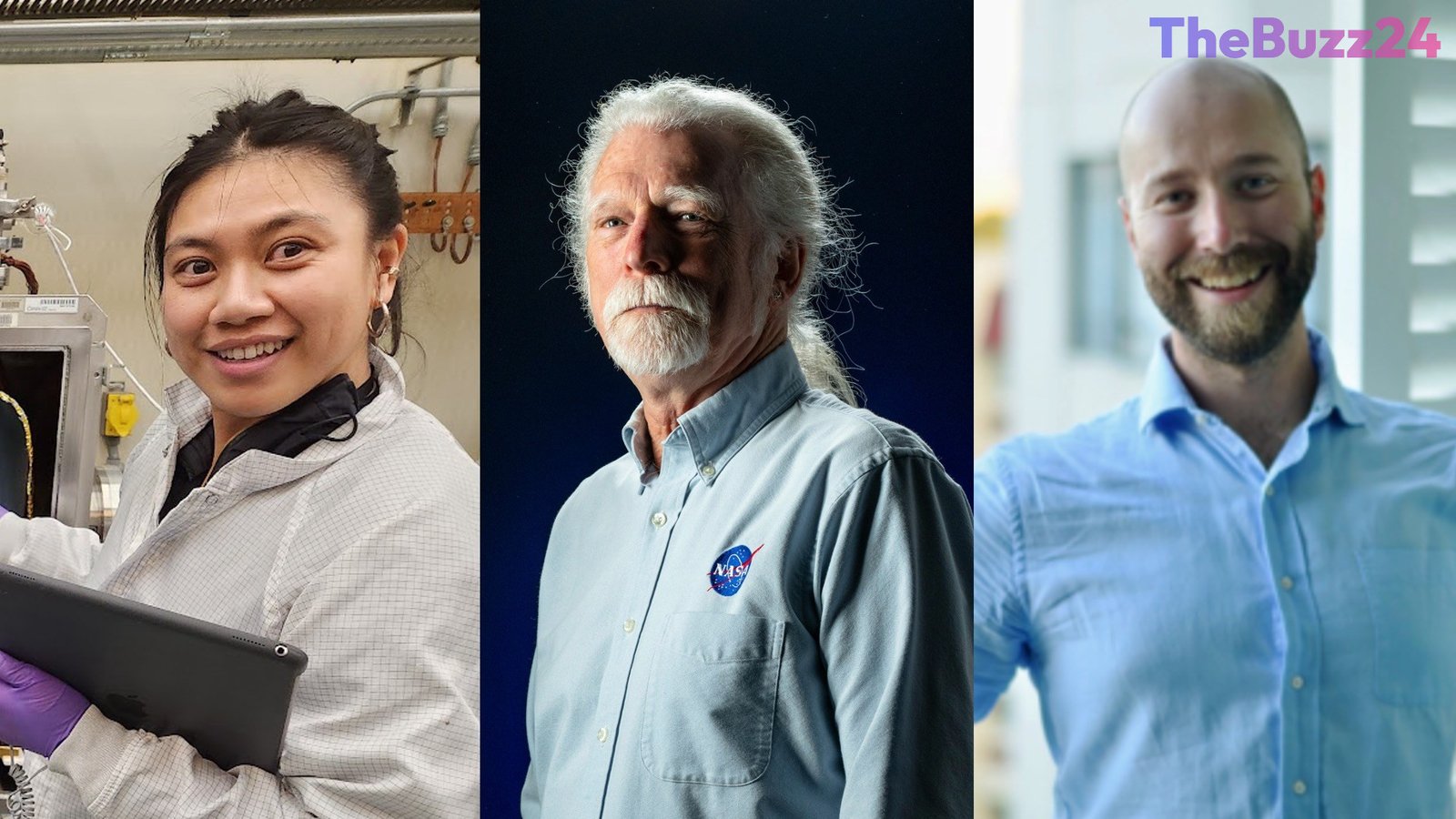
NASA Ames Research Center has celebrated three distinguished individuals – Alyssa Villanueva, Steve Howell, and Samuel LeBlanc – for their exceptional contributions across critical scientific disciplines. Their dedication, technical prowess, and collaborative spirit are vital to advancing the agency’s mission of exploring both our planet and the cosmos beyond. This recognition highlights the diverse expertise driving innovation within NASA’s scientific endeavors.
Alyssa Villanueva, an engineer with Blue Marble in the Space Biosciences Division, has been lauded for her indispensable role on the LEIA (Lunar Explorer Instrument for space biology Applications) team. Her technical excellence and unwavering support have been pivotal in all testing efforts, particularly in the preparation and execution of crucial engineering validation. Meanwhile, Steve Howell, a prominent figure in astrophysics, has been acknowledged for his leadership in numerous international space missions. His pioneering work in astronomical instrumentation has significantly enhanced both space- and ground-based telescope imaging, earning him the prestigious Catherine Wolfe Bruce Gold Medal from the Astronomical Society of the Pacific for his lifetime of major contributions.
In the realm of Earth Science, Samuel LeBlanc, a research scientist for the Bay Area Environmental Research Institute, stands out for his innovative thinking and technical leadership. LeBlanc’s efforts have dramatically improved Ames’ flight planning capabilities for NASA airborne science missions. His contributions have positioned Ames at the forefront of airborne science flight planning, both within and outside the agency, ensuring successful and cost-effective missions that maximize scientific returns for vital Earth observation.
Key Takeaways
- NASA Ames recognized Alyssa Villanueva, Steve Howell, and Samuel LeBlanc for their significant scientific contributions in space biosciences, astrophysics, and Earth science, respectively.
- Villanueva's work is crucial for the LEIA project's engineering validation, while Howell received the prestigious Catherine Wolfe Bruce Gold Medal for his lifetime achievements in astronomical instrumentation.
- LeBlanc's innovative leadership has advanced NASA's airborne science mission planning, leading to more successful and cost-effective Earth observation efforts.
Editor’s Analysis & Impact
The recognition of these three scientists underscores NASA’s commitment to fostering groundbreaking research across diverse fields. Such accolades not only celebrate individual excellence but also serve to inspire future generations of scientists and engineers. Their work directly impacts our understanding of life beyond Earth, the universe’s vastness, and the critical health of our own planet. This interdisciplinary approach is essential for tackling complex challenges in space exploration and environmental monitoring, ensuring that NASA remains at the forefront of scientific discovery and technological advancement. The continued investment in such talent is vital for the long-term success of both national and international scientific initiatives.
Frequently Asked Questions
Q: What is the LEIA project?
A: The LEIA (Lunar Explorer Instrument for space biology Applications) project is a NASA initiative focused on developing instruments for space biology research, likely involving studies related to the lunar environment. Alyssa Villanueva's work is critical to its engineering validation.
Q: What is the Catherine Wolfe Bruce Gold Medal?
A: The Catherine Wolfe Bruce Gold Medal is a highly prestigious award presented by the Astronomical Society of the Pacific. It recognizes individuals for a lifetime of outstanding achievement and contributions to astronomy.
Q: How do these contributions benefit NASA's overall mission?
A: These contributions are fundamental to NASA's mission by advancing capabilities in space biosciences (understanding life in space), astrophysics (exploring the universe), and Earth science (monitoring our planet). They enable more effective missions, generate critical data, and push the boundaries of scientific knowledge, ultimately benefiting humanity's understanding of itself and its place in the cosmos.
AI Disclosure: This article is based on verified data and official reports. Our Team and AI have cross-referenced every financial detail with primary sources to ensure total accuracy.
More from this Category