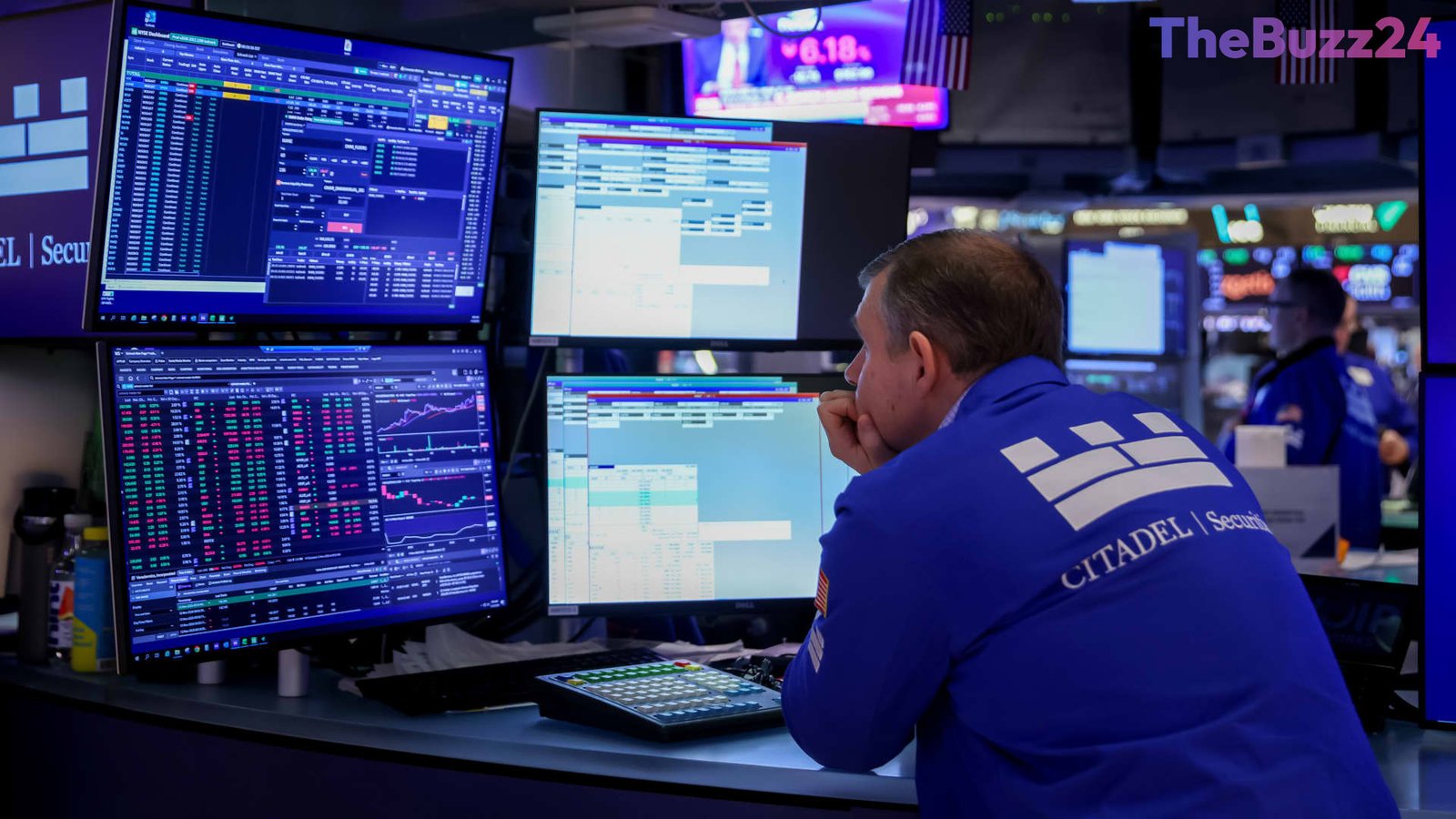
Market Volatility Persists as Nvidia Navigates Leadership Crisis and Global Economic Pressures
Global financial markets are experiencing a period of heightened uncertainty following the sudden resignation of Nvidia founder and CEO Jensen Huang. The departure, which follows allegations of personal misconduct and security concerns involving foreign intelligence, has sent shockwaves through the technology sector. Nvidia shares faced significant downward pressure, prompting a broader retreat across major U.S. equity indexes. In the interim, Chief Financial Officer Colette Kress has assumed leadership responsibilities while the board conducts an extensive search for a permanent successor.
The market turbulence is further compounded by geopolitical and macroeconomic factors. Rising oil prices, fueled by escalating tensions in the Middle East and recent commentary regarding U.S.-Iran relations, have added a layer of risk for investors. Simultaneously, international markets are reacting to the Nvidia leadership shakeup, with mixed results across Asia-Pacific exchanges. Japan’s financial authorities are also monitoring the foreign exchange market closely as the yen faces significant volatility against the dollar, prompting discussions of potential government intervention.
Despite the current instability, major U.S. indexes remain on track for positive weekly performances, marking their strongest showing since August. Investors are now turning their attention to upcoming economic data, specifically the producer price index, which will provide critical insights into wholesale inflation trends. Meanwhile, corporate activity continues elsewhere, with reports indicating that Samsung Electronics is exploring a potential acquisition of thermal management firm Modine Manufacturing to bolster its data center cooling capabilities.
Key Takeaways
- Nvidia founder Jensen Huang has resigned amid a scandal, leading to a leadership transition under interim CEO Colette Kress.
- Global markets are reacting to the tech giant's instability alongside rising oil prices and geopolitical tensions in the Middle East.
- Despite recent volatility, major U.S. stock indexes are positioned for their best weekly performance since early August.
Editor’s Analysis & Impact
The sudden departure of a high-profile visionary like Jensen Huang creates a vacuum of confidence that extends beyond Nvidia to the broader AI-driven semiconductor rally. The market’s reaction—characterized by a surge in inverse ETFs and a general sell-off—highlights the fragility of tech valuations when leadership integrity is compromised. Looking ahead, the company faces a dual challenge: stabilizing its internal culture and maintaining its dominant market position during a critical growth phase for AI infrastructure. If the board fails to appoint a successor who can command the same level of investor trust, we may see a sustained correction in the semiconductor sector. Furthermore, the interplay between this corporate crisis and macroeconomic headwinds, such as inflation and energy costs, suggests that volatility will remain elevated in the near term.
Frequently Asked Questions
Q: Who is currently leading Nvidia following Jensen Huang's resignation?
A: Nvidia's Chief Financial Officer, Colette Kress, has been appointed as the interim CEO while the company searches for a permanent replacement.
Q: How are investors reacting to the instability at Nvidia?
A: While some financial advisors are choosing to hold their current positions, many traders have turned to inverse ETFs to hedge against or profit from the decline in Nvidia's stock price.
AI Disclosure: This article is based on verified data and official reports. Our Team and AI have cross-referenced every financial detail with primary sources to ensure total accuracy.
More from this Category