US Envoys Push for EU Inclusion in Russia-Ukraine Peace Talks Amidst Shifting Security Landscape
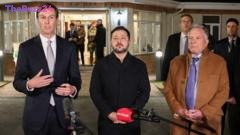
Ukrainian President Volodymyr Zelensky has welcomed a significant diplomatic development, expressing his support for the inclusion of European Union delegates in upcoming peace negotiations with Russia. This move, championed by US envoys Jared Kushner and Steve Witkoff, aims to give the EU a direct voice in discussions concerning the ongoing conflict and its broader implications for European security.
Zelensky’s endorsement comes as European leaders voice increasing concerns over regional stability following Russia’s full-scale invasion of Ukraine in February 2022. The Ukrainian president has long advocated for European involvement, seeing it as a logical step given Ukraine’s aspirations to join the EU and the continent’s vested interest in a lasting peace. The inclusion of EU representatives is seen by Kyiv as crucial for ensuring that the bloc’s security interests are adequately represented at the negotiating table.
The US envoys engaged in intensive diplomatic efforts, meeting with Russian President Vladimir Putin in Moscow prior to their discussions with Zelensky in Dublin. Putin reportedly indicated that Russia’s stance on the war and its territorial demands remains unchanged. Despite the lack of a breakthrough in these high-level meetings, a significant prisoner exchange, described as the largest to date since the invasion began, was agreed upon by both Russia and Ukraine. While details remain scarce, the exchange is expected to facilitate the return of thousands of individuals to their families.
This diplomatic push occurs against a backdrop of European apprehension regarding the current US administration’s commitment to European security and its approach to the Kremlin. European officials have long argued for their central role in shaping post-war continental dynamics. The potential inclusion of European delegates is viewed by some in Moscow as an acknowledgment of Europe’s significant geopolitical influence. Meanwhile, the war continues to reshape the security architecture of the continent, with many EU member states perceiving an existential threat and fearing potential further Russian aggression.
Key Takeaways
- US envoys are facilitating discussions to include EU delegates in future Russia-Ukraine peace talks.
- Ukraine's President Zelensky supports EU involvement, citing long-term security and EU aspirations.
- A large prisoner exchange was agreed upon, though details on the number of individuals and timeline are pending.
Editor’s Analysis & Impact
The push for EU inclusion in the Russia-Ukraine peace talks signifies a potential recalibration of diplomatic efforts, aiming to bolster European security interests and provide a more unified continental front. This development could empower the EU to exert greater influence on post-conflict arrangements, addressing long-standing concerns about its role in regional security. However, Russia’s unchanged territorial demands and the complexities of international diplomacy suggest that a swift resolution remains challenging. The success of these talks will hinge on the willingness of all parties to compromise and the EU’s ability to effectively leverage its collective diplomatic weight.
Frequently Asked Questions
Q: Why is Ukraine pushing for European Union involvement in peace talks?
A: Ukraine is seeking EU involvement in peace talks to ensure its long-term security interests are represented, especially given its aspirations to join the European Union. It also aims to give the EU a direct voice in negotiations that significantly impact the continent's stability.
Q: What was the outcome of the recent meetings between US envoys and Russian President Putin?
A: During the meeting with US envoys Jared Kushner and Steve Witkoff, Russian President Vladimir Putin reportedly stated that Russia's position on the war and its territorial demands has not changed. However, an agreement for a large prisoner exchange between Russia and Ukraine was reached.
Q: What are the broader security concerns for Europe related to the Ukraine conflict?
A: European leaders are deeply concerned about regional security, viewing Russia's actions in Ukraine as an existential threat. There is a fear that if Ukraine were to fall, it could embolden further Russian aggression on the European continent, fundamentally reshaping the security landscape.
AI Disclosure: This article is based on verified data and official reports. Our Team and AI have cross-referenced every financial detail with primary sources to ensure total accuracy.
More from this Category