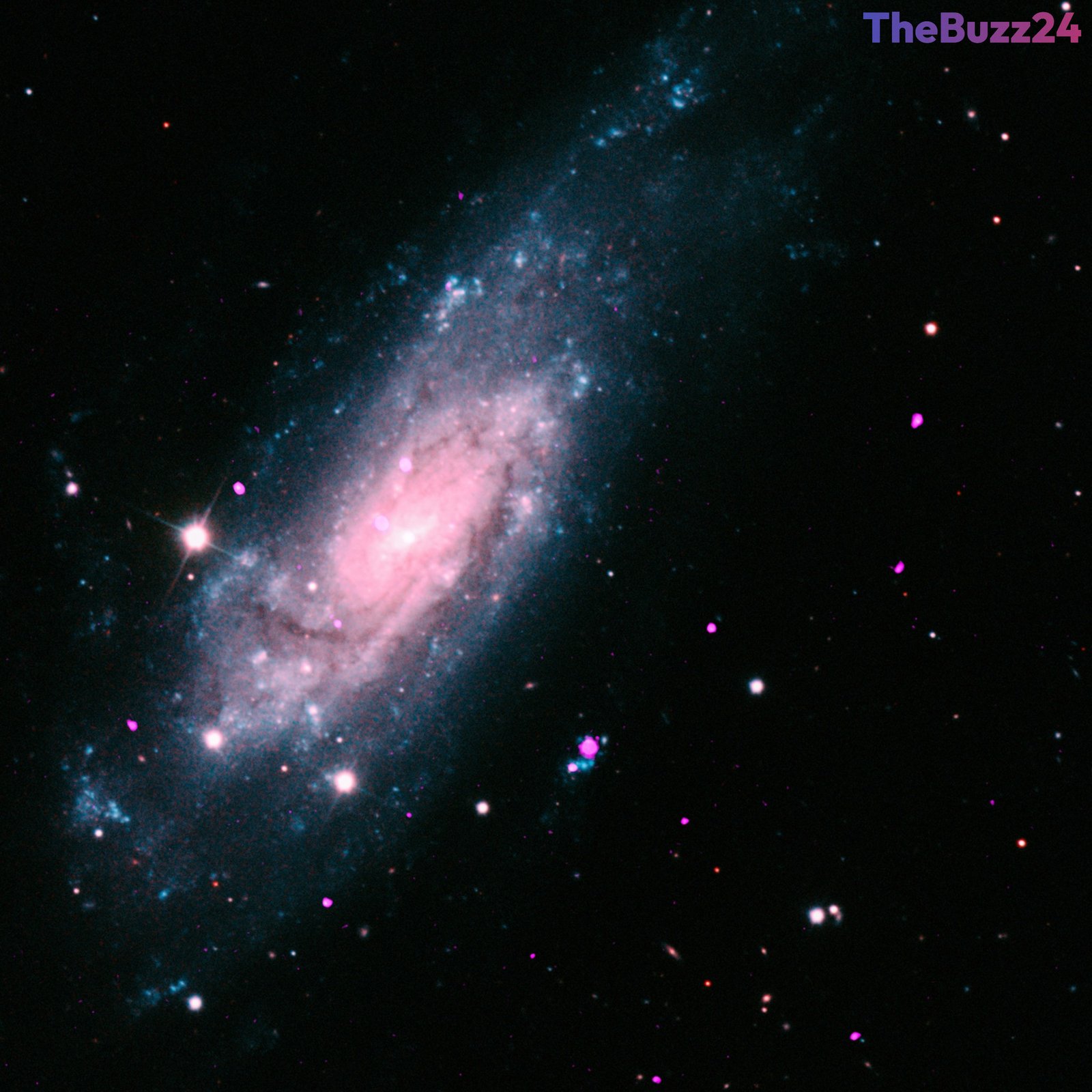
Astronomers Uncover the Engine Behind Massive Star Outbursts
Astronomers utilizing the Chandra X-ray Observatory have successfully identified the mechanism driving the violent, recurring outbursts of a massive, unstable star. The celestial object, designated AT 2016blu, resides within the spiral galaxy NGC 4559, situated approximately 30 million light-years from Earth. This discovery provides critical insight into the life cycles of some of the most volatile stars in the universe.
Research indicates that AT 2016blu possesses a mass at least 33 times greater than that of our Sun. Its extreme instability has long puzzled scientists, but the recent X-ray data has allowed researchers to map the energetic processes occurring within the star’s environment. These outbursts are not merely random events but are tied to the complex internal dynamics of such high-mass stellar bodies.
By observing the X-ray emissions from this distant galaxy, the team was able to distinguish the patterns of energy release that characterize the star’s erratic behavior. This breakthrough helps bridge the gap in understanding how massive stars evolve and eventually reach the end of their life cycles, potentially culminating in spectacular supernova events.
Key Takeaways
- Astronomers identified the cause of recurring outbursts in the massive star AT 2016blu.
- The star is located in the spiral galaxy NGC 4559, 30 million light-years away.
- AT 2016blu is estimated to be at least 33 times the mass of the Sun.
Editor’s Analysis & Impact
The identification of the trigger for AT 2016blu’s outbursts represents a significant milestone in stellar astrophysics. By pinpointing the mechanisms behind such high-mass instability, researchers are better equipped to model the final stages of stellar evolution. This discovery has broader implications for our understanding of galactic chemical enrichment, as massive stars are the primary engines for distributing heavy elements throughout the cosmos. Future observations of similar unstable stars will likely refine our predictive models regarding supernova precursors. As technology improves, the ability to monitor these distant, volatile objects in real-time will provide invaluable data on the life-and-death cycles of the universe’s most massive stars, ultimately shaping our comprehension of galaxy formation and evolution.
Frequently Asked Questions
Q: What is AT 2016blu?
A: AT 2016blu is a massive, unstable star located in the spiral galaxy NGC 4559, known for its recurring and violent outbursts.
Q: How far away is the star AT 2016blu?
A: The star is located approximately 30 million light-years from Earth.
AI Disclosure: This article is based on verified data and official reports. Our Team and AI have cross-referenced every financial detail with primary sources to ensure total accuracy.
More from this Category