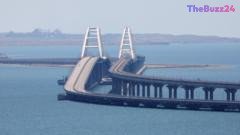
Massive Drone Offensive Targets Crimea Bridge and Russian Energy Infrastructure
In what is being described as the largest drone assault since the onset of the conflict, Ukraine has launched a massive aerial offensive targeting critical infrastructure deep within Russian-held territory. The operation resulted in minor damage to the strategic Kerch Bridge, which serves as a vital link between Russia and the annexed Crimean Peninsula. Russian officials reported that their air defense systems intercepted over 2,000 drones and several long-range missiles, with a significant portion of the swarm directed toward Moscow.
The strikes extended beyond the bridge, impacting several energy facilities, including an oil refinery in the Krasnodar region. Falling debris from the intercepted drones ignited fires at the site, resulting in multiple injuries. Simultaneously, Ukraine faced its own record-breaking day of air raid alerts, with Russian retaliatory strikes targeting energy infrastructure and causing widespread power outages for approximately 50,000 residents.
These escalations occur against a backdrop of stalled diplomatic efforts. Despite recent high-level discussions involving international envoys, the path to peace remains obstructed by fundamental disagreements. Russia continues to demand territorial concessions and a neutral status for Ukraine, while European partners express growing concern over the potential for major powers to negotiate regional security architectures without their direct participation. As the conflict intensifies, the prospect of a sustainable ceasefire appears increasingly elusive.
Key Takeaways
- Ukraine launched its largest drone attack of the war, targeting the Kerch Bridge and multiple Russian oil refineries.
- Russian air defenses claimed to intercept over 2,000 drones, while retaliatory strikes caused significant power outages in Ukraine.
- Diplomatic efforts remain deadlocked as Russia maintains strict demands regarding territory and NATO membership, causing friction with European allies.
Editor’s Analysis & Impact
The recent surge in drone warfare signals a shift toward high-intensity, long-range strikes that bypass traditional frontlines to target the economic and logistical backbone of the conflict. By hitting oil refineries and the Kerch Bridge, Ukraine is attempting to degrade Russia’s internal supply chains and symbolic infrastructure. Conversely, the Russian response highlights a strategy of attrition, focusing on Ukraine’s energy grid to exert civilian pressure. The broader implication is a hardening of positions; as both sides escalate their tactical capabilities, the diplomatic window for a negotiated settlement narrows. The involvement of international envoys suggests that while global powers are seeking an exit strategy, the lack of consensus on European security architecture ensures that the conflict will likely remain in a state of volatile stalemate for the foreseeable future.
Frequently Asked Questions
Q: What is the significance of the Kerch Bridge in the current conflict?
A: The Kerch Bridge is a critical logistical artery connecting Russia to Crimea, serving as a primary route for military supplies and a symbol of Russian control over the peninsula.
Q: Why are European nations concerned about current peace talks?
A: European nations fear that the United States and Russia might negotiate a new security architecture for the continent that excludes European input and undermines their regional security interests.
AI Disclosure: This article is based on verified data and official reports. Our Team and AI have cross-referenced every financial detail with primary sources to ensure total accuracy.
More from this Category