Nobel Laureate Miguel Ángel Asturias Finally Returns Home to Guatemala
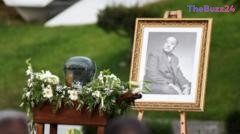
After more than five decades in exile, the remains of Nobel Prize-winning author and diplomat Miguel Ángel Asturias have been interred in his native Guatemala. The urn containing his ashes was laid to rest in a cultural center bearing his name in Guatemala City, surrounded by soil collected from various regions across the country. The ceremony marked a poignant conclusion to a long journey that began following his death in Madrid in 1974.
Asturias, who received the Nobel Prize for Literature in 1967, was a towering figure in Latin American letters, celebrated for his ability to weave indigenous mythology with sharp political critique. His seminal works, including ‘Legends of Guatemala’ and ‘Men of Maize,’ provided a profound look at the struggles of indigenous communities and the harsh realities of life under regional dictatorships. His writing often served as a voice for the marginalized, challenging the exploitation he witnessed during his lifetime.
His return to Guatemala was made possible following the 2023 election of President Bernardo Arévalo. The author had been stripped of his citizenship and forced into exile following the 1954 coup that ousted President Jacobo Árbenz Guzmán. For decades, the political climate in Guatemala prevented his family from repatriating his remains from Paris, where he had been buried at the Père Lachaise cemetery.
During the interment ceremony, President Arévalo honored the writer as a national treasure, stating that Asturias deserved to rest in the land he so vividly captured in his literature. The event was attended by family members and notable figures, including Nobel Peace Prize laureate Rigoberta Menchú, symbolizing a moment of national reconciliation and the reclaiming of a literary legacy that had been suppressed for generations.
Key Takeaways
- Nobel laureate Miguel Ángel Asturias has been reburied in Guatemala 52 years after his death in exile.
- The repatriation was facilitated by the current administration of President Bernardo Arévalo, ending decades of political exclusion.
- Asturias is recognized for his literary contributions that highlighted indigenous culture and criticized Latin American dictatorships.
Editor’s Analysis & Impact
The repatriation of Miguel Ángel Asturias’s remains serves as a significant cultural and political milestone for Guatemala. By bringing home a figure who was once stripped of his citizenship and censored, the current administration is signaling a shift toward historical reconciliation and the validation of intellectual dissent. From a cultural perspective, this event reinforces the importance of national identity and the role of literature in shaping a country’s historical narrative. Economically and socially, such gestures can bolster national pride and cultural tourism, though the broader implication remains the ongoing struggle to reconcile with a turbulent past. The return of Asturias is not merely a funeral; it is a symbolic reclamation of the national voice, suggesting that the current government is prioritizing the restoration of cultural heritage as a pillar of its modern political identity.
Frequently Asked Questions
Q: Why was Miguel Ángel Asturias in exile?
A: Asturias was forced into exile after the 1954 CIA-backed coup that overthrew the democratically elected government of Jacobo Árbenz Guzmán, during which his citizenship was revoked and his works were banned.
Q: What is Miguel Ángel Asturias best known for?
A: He is best known for his Nobel Prize-winning literature that blended surrealism with indigenous Maya mythology and for his vocal opposition to political corruption and the exploitation of workers in Latin America.
AI Disclosure: This article is based on verified data and official reports. Our Team and AI have cross-referenced every financial detail with primary sources to ensure total accuracy.
More from this Category