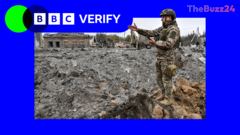
Deadly ‘Double-Tap’ Strike in Komyshuvakha Sparks War Crime Allegations
Ukrainian officials have leveled serious accusations against Russian forces following a devastating ‘double-tap’ aerial strike in the village of Komyshuvakha. The incident, which occurred on November 2, resulted in at least 72 fatalities, marking it as one of the deadliest single events since the onset of the conflict. According to local authorities, the attack involved two successive strikes on a humanitarian aid center, including the deployment of a massive 3,000kg aerial bomb that targeted a shelter where civilians had sought refuge.
The State Emergency Service of Ukraine (DSNS) reported that the second strike specifically targeted rescue and recovery operations already underway. The assault caused significant damage to emergency vehicles and excavation equipment, while injuring several police officers, rescue workers, and search dogs. Intelligence officials have characterized the operation as a deliberate attempt to terrorize the civilian population and impede humanitarian efforts, noting that rescue crews were operating under the constant threat of secondary strikes.
Forensic analysis of the site, including the examination of munition fragments, suggests the use of a FAB-3000 bomb equipped with a glide guidance kit. Experts in bomb disposal and international law have indicated that the scale of the destruction is consistent with such heavy weaponry. Legal scholars have weighed in on the incident, stating that if the targeting of rescue workers and humanitarian infrastructure was intentional, it constitutes a clear violation of international humanitarian law and qualifies as a war crime.
While the Russian Ministry of Defence issued a general statement claiming to have targeted energy and transport infrastructure across the region, they have not provided a specific response regarding the Komyshuvakha incident. The village, while lacking significant military or industrial facilities, remains a critical transit point for supplies and evacuations, leaving local residents in a state of constant vulnerability as the conflict continues to escalate.
Key Takeaways
- A 'double-tap' strike in Komyshuvakha killed at least 72 people, making it one of the deadliest incidents of the war.
- Evidence suggests the use of a 3,000kg FAB-3000 bomb, which specifically targeted rescue workers and humanitarian aid infrastructure.
- International law experts argue that the deliberate targeting of emergency responders during a rescue operation constitutes a war crime.
Editor’s Analysis & Impact
The Komyshuvakha incident represents a disturbing escalation in the tactical conduct of the war, specifically regarding the ‘double-tap’ methodology—a tactic designed to maximize casualties by striking first responders. From a geopolitical and legal perspective, this event significantly complicates the international discourse on accountability. The use of heavy-payload glide bombs against civilian-adjacent infrastructure suggests a shift toward more indiscriminate or terror-focused military strategies. As evidence of these strikes is verified by international observers, the pressure on global bodies to classify these actions as formal war crimes will likely intensify. The long-term implication is a further erosion of the ‘humanitarian space’ in conflict zones, making it increasingly dangerous for NGOs and emergency services to operate, which will likely exacerbate the humanitarian crisis for civilians trapped near the front lines.
Frequently Asked Questions
Q: What is a 'double-tap' strike?
A: A 'double-tap' strike is a military tactic where an initial attack is followed by a second strike on the same location shortly after, specifically intended to target first responders, rescue workers, and civilians who have gathered to assist the victims of the first blast.
Q: Why is the use of a FAB-3000 bomb significant in this context?
A: The FAB-3000 is a massive 3,000kg aerial bomb capable of destroying underground structures. Its use in a civilian area, particularly when equipped with a precision guidance kit, indicates a high level of destructive intent and raises serious questions about the proportionality and legality of the strike under international law.
AI Disclosure: This article is based on verified data and official reports. Our Team and AI have cross-referenced every financial detail with primary sources to ensure total accuracy.
More from this Category