Bridging the Education Gap: New Initiative Targets Displaced Children in West Africa
A new educational initiative, Dars Hausa, has been launched to provide essential learning opportunities for children in West Africa who have been forced out of school due to conflict, poverty, and displacement. The program delivers lessons in English, mathematics, and science through radio, television partnerships, and social media platforms, specifically targeting regions where formal schooling has been disrupted by armed groups and economic instability.
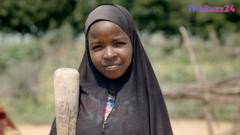
The initiative arrives at a critical time, as millions of children across Nigeria and neighboring countries remain out of the classroom. In regions plagued by criminal gangs and militant activity, many families have been forced to flee their homes, leaving children like 15-year-old Hadiza and 12-year-old Rukayya in precarious situations. For many, the necessity of survival—whether through early marriage or child labor—has taken precedence over formal education, despite national laws mandating nine years of compulsory schooling.
Local educators highlight that even when schools are available, attendance remains sporadic due to safety concerns and the economic pressure on families to have children contribute to household income. The Dars Hausa program, which follows similar successful models implemented in Afghanistan and for Arabic-speaking regions, aims to reach these marginalized students directly in their homes. By utilizing accessible technology, the program seeks to ensure that children in conflict zones retain access to foundational knowledge despite the systemic failures and security threats that have long hindered the regional education sector.
While government officials acknowledge the severity of the crisis, citing decades of underfunding and a lack of oversight, the burden of education often falls on the shoulders of displaced families. As the region continues to grapple with the influence of armed gangs and the displacement of hundreds of thousands of people, initiatives like Dars Hausa serve as a vital lifeline for children who still harbor aspirations of professional futures, such as medicine, despite their current circumstances.
Key Takeaways
- The Dars Hausa program provides remote education in English, math, and science to children in West Africa displaced by conflict and poverty.
- Nearly 19 million children in Nigeria are currently out of school, driven by factors including banditry, child labor, and early marriage.
- The initiative leverages radio and digital platforms to bypass the physical and safety barriers that prevent children from attending traditional classrooms.
Editor’s Analysis & Impact
The launch of Dars Hausa underscores a growing trend in humanitarian aid: the decentralization of education through digital and broadcast media. In regions where state infrastructure has collapsed due to insecurity, non-traditional learning models are becoming the primary mechanism for human capital development. The broader implication is a shift toward ‘education-in-emergencies’ as a permanent fixture rather than a temporary fix. Economically, the failure to educate this generation poses a long-term risk to regional stability, as a lack of schooling often correlates with higher recruitment rates for criminal and militant groups. Future outlooks suggest that unless governments can secure school environments and address the root causes of poverty, digital education will remain a necessary, albeit incomplete, substitute for formal schooling. The success of this program will likely be measured by its ability to scale and maintain engagement in areas with limited connectivity.
Frequently Asked Questions
Q: What is the Dars Hausa program?
A: Dars Hausa is an educational initiative that broadcasts lessons in English, math, and science via radio, social media, and local television to help children in West Africa who are unable to attend school.
Q: Why are so many children in Nigeria out of school?
A: The reasons are complex and include displacement caused by armed gangs, extreme poverty forcing children into labor, early marriage, and systemic issues such as school underfunding and a lack of teachers.
AI Disclosure: This article is based on verified data and official reports. Our Team and AI have cross-referenced every financial detail with primary sources to ensure total accuracy.
More from this Category