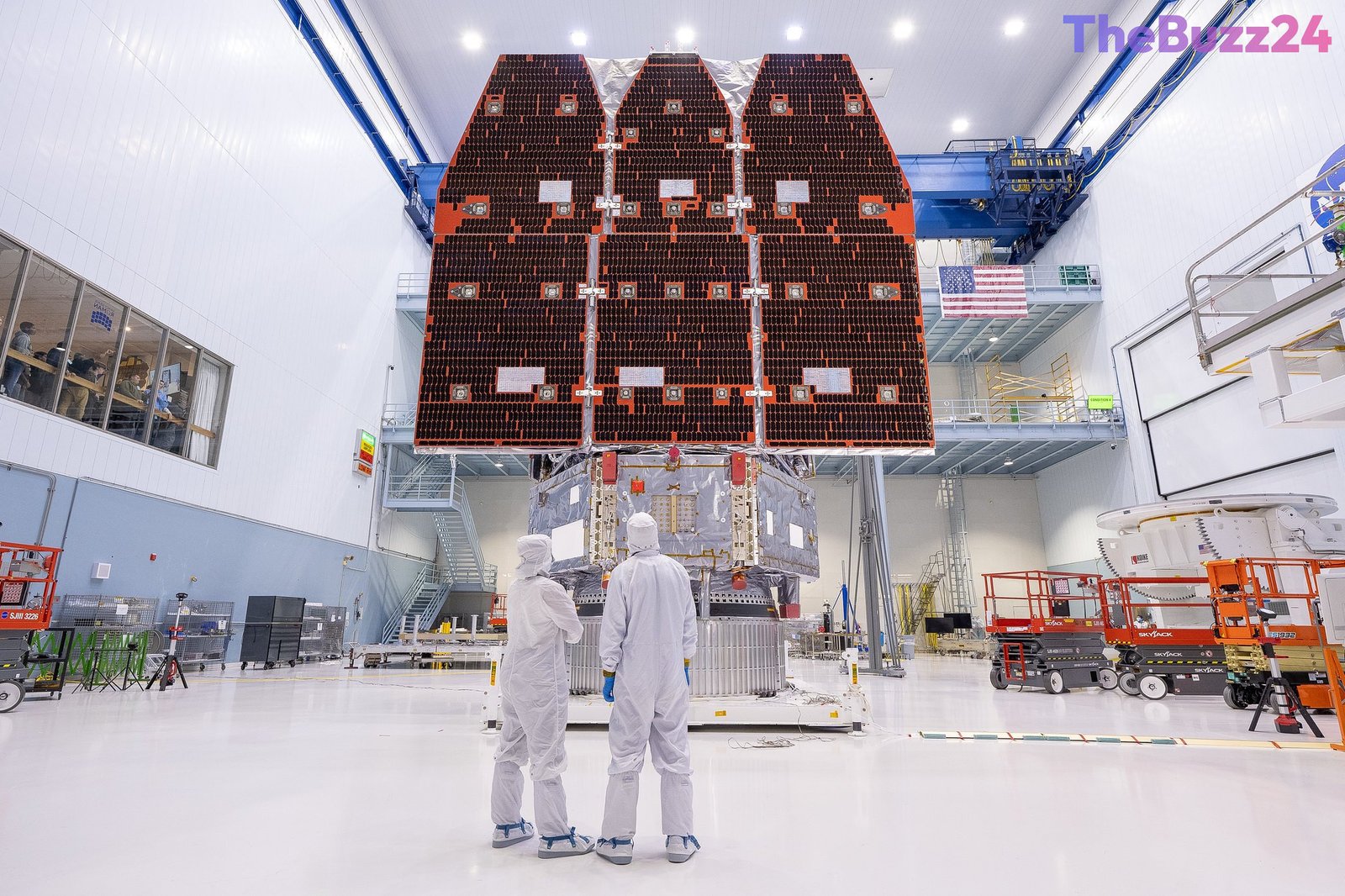
NASA Prepares to Unveil Historic First Images from the Nancy Grace Roman Space Telescope
Space enthusiasts and researchers alike are gearing up for a monumental event as NASA prepares to broadcast the very first images captured by the Nancy Grace Roman Space Telescope. The official unveiling is scheduled to take place during a live stream from the American Geophysical Union Annual Meeting in San Francisco. This much-anticipated reveal will offer the public and scientific community an unprecedented look at the cosmos, highlighting the advanced technological capabilities of a mission designed to decode some of the universe’s most enduring puzzles.
Launched aboard a SpaceX Falcon Heavy rocket from Florida’s Kennedy Space Center, the telescope embarked on a million-mile journey to reach the Sun-Earth Lagrange Point 2. Following an extensive commissioning phase involving system calibration and testing, the observatory is now primed to begin its scientific endeavors. Equipped with sharp infrared vision and a remarkably wide field of view, the Roman Space Telescope will spend its operational lifetime investigating dark energy, dark matter, and distant exoplanets, paving the way for groundbreaking discoveries in modern astrophysics.
In addition to the public broadcast, the rollout includes interactive elements designed to engage space fans worldwide, such as an initiative allowing individuals to claim a digital piece of the telescope’s inaugural imagery. As researchers gather to discuss the mission’s broader implications—ranging from Earth-space connections to direct imaging of alien worlds through cutting-edge coronagraph technology—the global community stands on the brink of a new era in space exploration.
Key Takeaways
- NASA is set to reveal the first operational images from the Nancy Grace Roman Space Telescope during a live stream from the American Geophysical Union Annual Meeting.
- The telescope reached its destination at the Sun-Earth Lagrange Point 2 following a launch on a SpaceX Falcon Heavy rocket earlier this year.
- The mission's primary objectives include investigating dark energy, dark matter, and distant exoplanets using advanced infrared capabilities.
Editor’s Analysis & Impact
The public debut of the Nancy Grace Roman Space Telescope marks a pivotal milestone for modern observational astronomy. By bridging wide-field sky surveys with high-resolution infrared imaging, the mission is uniquely positioned to accelerate our understanding of cosmic expansion and the distribution of dark matter. From an industry and economic standpoint, the success of this observatory reinforces the collaborative efforts between space agencies and aerospace primes like BAE Systems, L3Harris Technologies, and Teledyne. Looking forward, the data returned by Roman will likely lay the groundwork for future flagship missions, shaping astrophysical research priorities for decades to come and potentially revolutionizing how we detect and characterize exoplanetary systems.
Frequently Asked Questions
Q: What is the primary scientific purpose of the Nancy Grace Roman Space Telescope?
A: The telescope is designed to explore essential cosmic mysteries, including dark energy, dark matter, the formation of the universe, and the discovery of exoplanets outside our solar system.
Q: Where is the Roman Space Telescope located?
A: The telescope operates from its final orbital destination at the Sun-Earth Lagrange Point 2, located approximately one million miles away from Earth.
Q: How can the public participate in the image reveal?
A: NASA has organized an interactive program where participants can claim a unique pixel from the telescope's first images and receive a commemorative digital trading card.
AI Disclosure: This article is based on verified data and official reports. Our Team and AI have cross-referenced every financial detail with primary sources to ensure total accuracy.
More from this Category