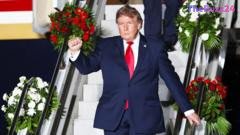
Trump Embarks on Strategic Asia Tour Amid High-Stakes Diplomacy
President Donald Trump has arrived in Manila, Philippines, marking the commencement of a significant diplomatic tour across Asia. The visit serves as a precursor to high-level summits in China, where the President is scheduled to engage in critical discussions with Chinese President Xi Jinping and Russian President Vladimir Putin regarding global security and nuclear policy.
Upon his arrival, the President participated in the Asean Summit, where he met with leaders from the Quad alliance, including representatives from India, Japan, and Australia. During these discussions, the President emphasized the importance of a stable and prosperous Indo-Pacific region, framing the partnership as a cornerstone for regional security. The administration is actively seeking to integrate more Southeast Asian nations into a U.S.-led technology and artificial intelligence ecosystem, a strategic move aimed at diversifying supply chains and reducing reliance on Chinese infrastructure.
Economic ties remain a central theme of the trip, underscored by the signing of a new trade agreement with Thailand. Despite previous tensions regarding tariffs and regional trade policies, Southeast Asian exports to the United States have seen a 30% increase over the past year, largely driven by the surging demand for AI-related components. As the tour progresses, the President is expected to navigate the complex balance of maintaining economic influence in the region while addressing geopolitical friction with major global powers.
Key Takeaways
- President Trump is visiting Southeast Asia to strengthen the Quad alliance and promote a U.S.-led AI and technology ecosystem.
- The administration signed a new trade deal with Thailand, highlighting the U.S. role as a primary export market for the region.
- High-stakes meetings with Xi Jinping and Vladimir Putin are scheduled in China to discuss nuclear policy and regional stability.
Editor’s Analysis & Impact
This diplomatic tour represents a calculated effort by the U.S. to reassert its influence in the Indo-Pacific, specifically by leveraging the current AI boom to create a ‘Pax Silica’ tech corridor. By pivoting toward Southeast Asian manufacturing hubs, the U.S. aims to decouple critical supply chains from Chinese dominance. However, the success of this strategy faces significant hurdles, as many of these nations remain deeply economically intertwined with China. The upcoming meetings with Xi and Putin will be pivotal; they will test whether the administration can successfully balance aggressive trade protectionism with the need for collaborative security frameworks. The market impact will likely be felt in the semiconductor and tech manufacturing sectors, as companies adjust to shifting geopolitical alignments and potential new trade regulations.
Frequently Asked Questions
Q: What is the primary goal of the President's trip to Asia?
A: The trip aims to strengthen the Quad alliance, promote a U.S.-led technology and AI ecosystem, and hold nuclear policy discussions with the leaders of China and Russia.
Q: How has the U.S.-Southeast Asia trade relationship changed recently?
A: Despite past tariff disputes, Southeast Asian exports to the U.S. grew by 30% last year, largely due to the region's role in manufacturing components for the artificial intelligence industry.
AI Disclosure: This article is based on verified data and official reports. Our Team and AI have cross-referenced every financial detail with primary sources to ensure total accuracy.
More from this Category