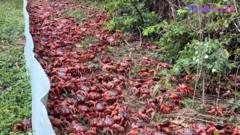
Christmas Island Transforms as Millions of Red Crabs Begin Epic Annual Migration
Millions of vibrant red crabs have commenced their extraordinary annual migration on Australia’s remote Christmas Island, transforming the landscape into a moving crimson carpet. This spectacular natural phenomenon sees the island’s dominant land crab species embark on a perilous journey from their forest homes to the coastal breeding grounds.
The migration is triggered by the onset of the wet season, typically occurring between October and December. Driven by an innate urge to reproduce, adult red crabs emerge en masse from the rainforests, navigating roads, cliffs, and beaches to reach the Indian Ocean. The males lead the initial charge, followed by the females, creating an awe-inspiring display of nature’s resilience and determination.
Upon reaching the shoreline, the crabs mate, and the females then descend to the water’s edge to release their eggs into the ocean. This critical phase of their life cycle ensures the continuation of the species, with tiny crab larvae developing in the sea before eventually returning to the island as juvenile crabs. The entire event is a testament to the unique biodiversity of Christmas Island and draws significant attention from naturalists and tourists alike, who flock to witness this unparalleled ecological marvel.
Key Takeaways
- Millions of red crabs on Christmas Island have begun their annual migration from forest habitats to the coast.
- This mass movement is a critical part of their breeding cycle, occurring with the onset of the wet season.
- The event is a unique and globally recognized natural spectacle, highlighting Christmas Island's distinct ecosystem.
Editor’s Analysis & Impact
This annual migration underscores the unique biodiversity of Christmas Island and its critical role in global ecological health. While not directly impacting financial markets, the event significantly boosts eco-tourism, drawing visitors eager to witness the natural spectacle. The future outlook for this migration is closely tied to environmental conservation efforts, particularly in mitigating climate change and habitat disruption. Rising sea levels or altered weather patterns could profoundly affect the crabs’ breeding cycles and migratory paths. Broader implications include raising awareness about fragile island ecosystems and the importance of protecting natural habitats, serving as a vivid reminder of the interconnectedness of species and their environments.
Frequently Asked Questions
Q: What is the Christmas Island red crab migration?
A: It is an annual natural event where millions of red crabs on Christmas Island migrate from their forest homes to the coast to mate and lay their eggs in the ocean, typically occurring with the start of the wet season.
Q: Why is this migration significant?
A: This migration is significant because it is a massive and unique natural spectacle, vital for the red crab species' reproduction, and serves as a key indicator of the health and distinctiveness of Christmas Island's ecosystem.
Q: How long does the red crab migration last?
A: The entire process, including the journey to the coast, mating, egg-laying, and the subsequent return of adult crabs and emergence of juveniles, can span several weeks to months, usually peaking around October to December.
AI Disclosure: This article is based on verified data and official reports. Our Team and AI have cross-referenced every financial detail with primary sources to ensure total accuracy.
More from this Category