Understanding M1 Solar Flares: A Glimpse into the Sun’s Volatile Activity
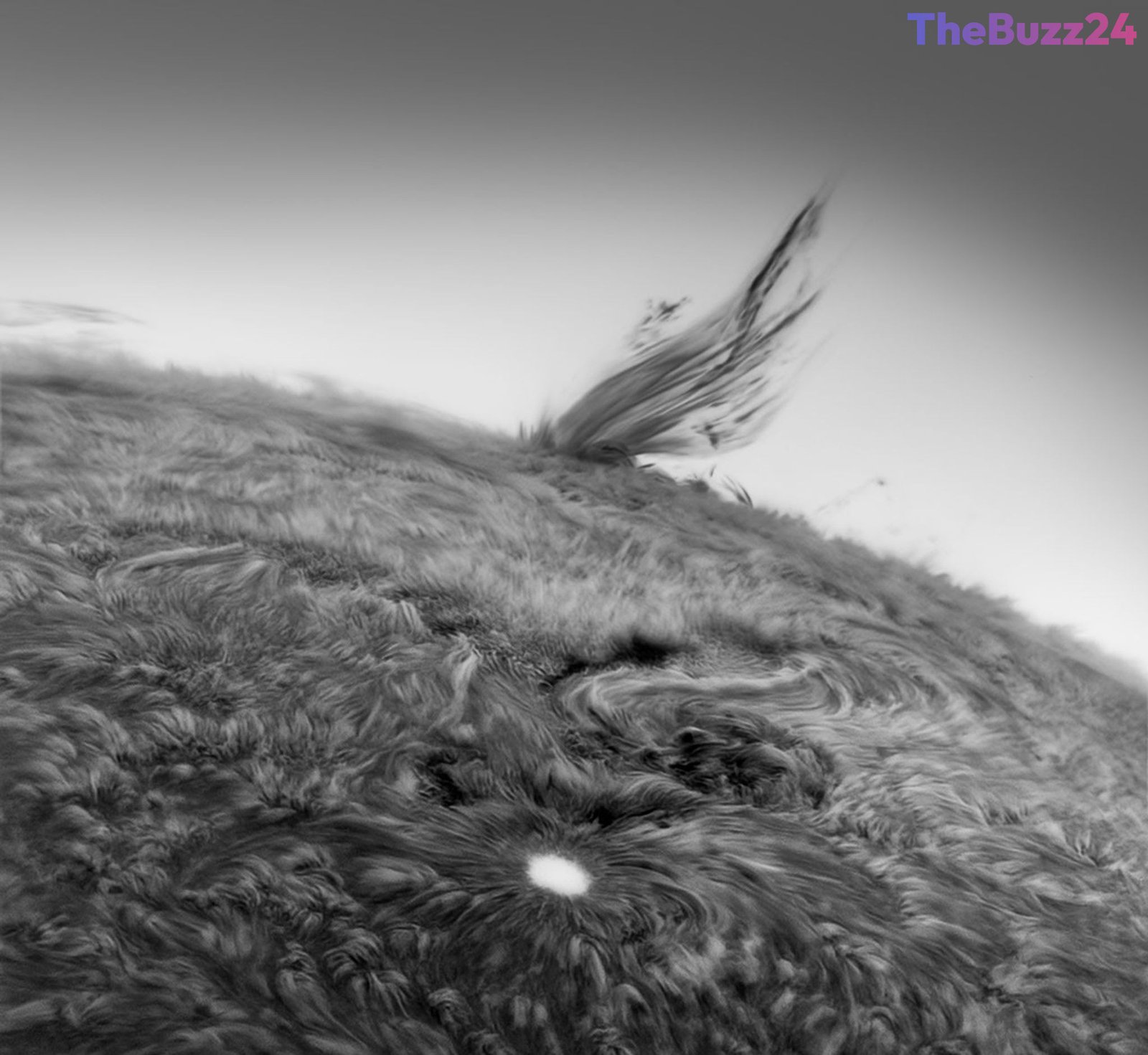
A recent celestial event on May 14, 2025, offered a vivid demonstration of the Sun’s dynamic nature, as a medium-sized solar flare erupted, illuminating the star’s chromosphere with a spectacular display of energized hydrogen atoms. Captured through a series of images over ten minutes using an H-alpha filter, this event provided scientists with valuable insights into the mechanisms driving solar activity. The flare was officially classified as an M1 based on observations from the Geostationary Operational Environmental Satellite (GOES) system, indicating a moderate intensity in X-ray emissions.
The Sun’s chromosphere, a layer of its atmosphere situated just above its visible surface, is known for its enigmatic temperature profile, which paradoxically increases with distance from the core. This phenomenon is believed to be fueled by the complex, swirling magnetic fields that extend upwards through the solar atmosphere. When these powerful magnetic fields twist, tangle, and ultimately snap, they release immense amounts of light and energetic particles, manifesting as a solar flare. The H-alpha filter specifically highlights the light emitted by hydrogen atoms as they become energized and stream away from the Sun’s surface during such an eruption.
While M1-class flares are not the most powerful solar events, they carry significant implications for Earth and space operations. Such flares have the potential to cause temporary radio blackouts, particularly at Earth’s polar regions, and can trigger minor radiation storms that pose a risk to astronauts in orbit. Agencies like NASA and the National Oceanic and Atmospheric Administration (NOAA) continuously monitor the Sun’s activity to predict and identify these space weather phenomena, enabling timely warnings and protective measures for both human assets in space and critical infrastructure on Earth.
Key Takeaways
- An M1-class solar flare, observed on May 14, 2025, showcased intense activity in the Sun's chromosphere, captured via H-alpha imaging.
- Solar flares are caused by the twisting and snapping of magnetic fields in the Sun's atmosphere, releasing energy and heating the chromosphere.
- M-class flares can lead to radio blackouts at Earth's poles and minor radiation storms, necessitating continuous monitoring by agencies like NASA and NOAA to protect astronauts and terrestrial systems.
Editor’s Analysis & Impact
This M1-class solar flare underscores the ongoing importance of space weather monitoring and research. While not a “killer flare,” it highlights the constant interaction between the Sun and Earth, impacting critical technologies. Industries reliant on satellite communications, GPS, and aviation are particularly vulnerable to even moderate solar events, which can disrupt signals and increase radiation exposure. The future outlook points to a need for more robust space weather prediction models and resilient infrastructure as solar activity cycles continue. Broader implications include the increasing recognition of space weather as a national security concern and the drive for international collaboration to develop comprehensive mitigation strategies against potential geomagnetic storms, ensuring the safety of space assets and Earth-based systems.
Frequently Asked Questions
Q: What is an M1-class solar flare?
A: An M1-class solar flare is a medium-sized solar flare, classified based on its X-ray brightness as observed by instruments like GOES. M-class flares are capable of causing minor to moderate space weather effects.
Q: How do solar flares impact Earth?
A: Solar flares, particularly M-class and stronger, can cause temporary radio blackouts, especially in polar regions, and generate minor radiation storms. These phenomena can disrupt satellite communications, GPS signals, and pose risks to astronauts.
Q: What is the Sun's chromosphere?
A: The chromosphere is a layer of the Sun's atmosphere located above its visible surface (photosphere). It is characterized by a temperature that surprisingly increases with altitude and is where many dynamic solar phenomena, like flares, are observed.
AI Disclosure: This article is based on verified data and official reports. Our Team and AI have cross-referenced every financial detail with primary sources to ensure total accuracy.
More from this Category