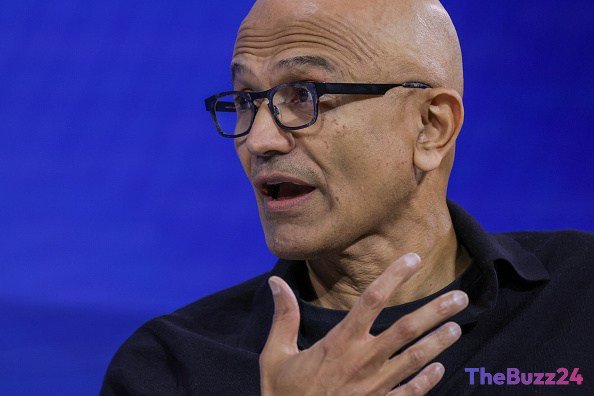
AI Agents Poised to Revolutionize Internet Economics, Warns Microsoft CEO Satya Nadella
Microsoft CEO Satya Nadella has issued a significant prediction regarding the future of the internet, stating that the proliferation of AI agents is set to fundamentally reshape its economic landscape. This transformative shift is expected to profoundly impact the business models of companies heavily reliant on advertising revenue and what Nadella terms “human web” traffic, signaling a potential paradigm shift for online commerce and content delivery.
Nadella elaborated that this transition to an “agentic web” could redefine the dynamics of how companies compensate each other for traffic and transactions. He drew a parallel to the historical shift from early web portals like Yahoo to the dominance of search engines such as Google, suggesting a similar upheaval is on the horizon. Current aggregators, whose business models were optimized for human interaction and ad monetization through “eyeballs,” will likely face a significant reshuffling. The focus could pivot towards cost-per-click (CPC) models or more direct transactional engagements, compelling businesses to adapt or risk obsolescence.
The discussion also touched upon the strategic decisions companies are making in response to this impending change. For instance, Amazon has reportedly opted to block AI agents from accessing its retail platform, preventing them from browsing catalogs or making purchases on behalf of users. Nadella cautioned that companies attempting to safeguard their existing business models by resisting AI agent integration might inadvertently cede ground to more forward-thinking competitors. He posited that if Amazon maintains its restrictive stance, alternative shopping platforms, such as Shopify, could embrace AI agents and gain a substantial competitive advantage. Nadella emphasized that businesses “in love with a particular business model” must scramble to innovate and adapt to this evolving digital environment.
Key Takeaways
- Microsoft CEO Satya Nadella predicts AI agents will fundamentally reshape the economic structure of the internet.
- Existing advertising-centric business models, particularly those of "human web" aggregators, are expected to undergo a significant transformation, potentially shifting towards transactional or cost-per-click models.
- Companies that resist the integration of AI agents, like Amazon's current stance, risk losing market share and competitive advantage to more adaptable platforms such as Shopify.
Editor’s Analysis & Impact
Nadella’s foresight underscores a looming disruption for the digital economy. The shift towards an “agentic web” implies a future where automated AI entities perform tasks traditionally handled by humans, from browsing and comparing products to executing transactions. This could drastically alter the value proposition of online advertising, potentially diminishing the importance of “eyeballs” in favor of direct conversions or agent-driven recommendations. Companies like Google and Meta, heavily reliant on ad revenue, will need to innovate their monetization strategies. E-commerce platforms face a critical choice: embrace agents for enhanced user experience and efficiency, or risk being bypassed. The broader implications include potential shifts in market power, new avenues for personalized services, and a re-evaluation of data privacy and security in an increasingly automated online world.
Frequently Asked Questions
Q: How will AI agents impact current internet business models, especially those reliant on advertising?
A: AI agents could significantly reduce the effectiveness of traditional ad-based models by automating browsing and potentially filtering out ads, or by making decisions based on objective criteria rather than emotional appeal. This may force businesses to shift towards more direct transactional fees, cost-per-click models, or subscription services that provide value to the agents themselves or their users.
Q: Why might some companies, like Amazon, initially block AI agents from their platforms?
A: Companies might block AI agents to protect their existing business models, control the user experience, prevent data scraping, or maintain direct relationships with human customers. They might also be concerned about potential misuse, security risks, or the impact on their pricing strategies if agents can easily compare offers across multiple platforms.
AI Disclosure: This article is based on verified data and official reports. Our Team and AI have cross-referenced every financial detail with primary sources to ensure total accuracy.
More from this Category