UK and EU Secure Major Post-Brexit Accord on Trade and Youth Mobility
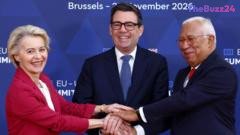
The United Kingdom and the European Union have finalized a wide-ranging agreement aimed at easing post-Brexit friction across trade, environmental standards, and cross-border mobility. Following high-level discussions in Brussels between Prime Minister Andy Burnham, European Commission President Ursula von der Leyen, and European Council President António Costa, both sides signaled a new chapter in cross-Continent relations. Under the negotiated terms, the UK will reduce regulatory hurdles on food exports by aligning with specific European rules from 2028, while also linking emissions trading systems and launching a new bilateral youth experience initiative.
Central to the economic aspect of the deal is the streamlining of British agricultural and food export procedures, which the UK Treasury estimates could pump up to £17 billion annually into the national economy—representing roughly a 0.5% boost to gross domestic product. Concurrently, a youth experience scheme will allow up to 100,000 individuals aged 18 to 31 from each region to work, study, and live across borders for up to three years, targeted for full implementation by January 2030. Furthermore, both parties agreed to deepen cooperation on security, pledging enhanced law enforcement data sharing to disrupt human trafficking and illegal border crossings across the English Channel.
Despite the executive optimism in Brussels, the accord has ignited intense political debate within Westminster. Opposition leaders expressed strong skepticism, with Conservative leader Kemi Badenoch asserting that aligning with continental regulations jeopardizes national autonomy and unfairly impacts domestic workers. Meanwhile, Reform UK leader Nigel Farage condemned the arrangement as a surrender of sovereignty, whereas Liberal Democrat leader Sir Ed Davey argued that incremental policy tweaks fall short of providing the structural economic overhaul the country requires.
Addressing domestic concerns, Prime Minister Burnham reiterated his administration’s commitment to maintaining boundaries outside the EU single market, customs union, and general free movement principles. However, he emphasized that informal discussions will continue to explore potential long-term strategic alignments before the next UK-EU summit. With implementing legislation slated for introduction in Parliament next week, the upcoming legislative vote will serve as a crucial litmus test for the government’s broader foreign policy vision.
Key Takeaways
- The UK and EU reached a strategic accord easing food export regulations, integrating emissions trading, and creating a youth mobility scheme for up to 100,000 citizens.
- Official estimates suggest the deal could boost the UK economy by up to £17 billion annually, equal to a 0.5% rise in gross domestic product.
- Political opponents criticize the agreement over rule-taking concerns, while the UK government maintains strict limits regarding the single market and customs union.
Editor’s Analysis & Impact
The latest accord between the UK and the EU marks the most concrete step toward regulatory re-engagement since the official Brexit departure. By streamlining sanitary and phytosanitary (SPS) rules on food exports and integrating carbon trading markets, the agreement offers tangible relief for British exporters facing supply chain bottlenecks. The financial projections suggesting a £17 billion economic cushion signal a pragmatic shift toward trade stabilization. However, domestic political resistance remains a major headwind. Aligning domestic regulations with Brussels invites sharp critique regarding sovereign rule-making, particularly from opposition factions. Moving forward, the government faces a delicate balancing act: capturing economic efficiencies through European alignment without triggering further political backlash over compromised independence.
Frequently Asked Questions
Q: What are the primary features of the new UK-EU deal?
A: The agreement focuses on removing most regulatory checks on British food exports starting in 2028, establishing a mutual youth mobility scheme for up to 100,000 young people, aligning carbon emissions trading systems, and expanding law enforcement data sharing to combat human trafficking.
Q: How will the deal impact the UK economy?
A: According to UK Treasury forecasts, the reduction in trade friction and regulatory burdens could add up to £17 billion annually to the UK economy, representing approximately a 0.5% increase in gross domestic product.
Q: Will the UK re-enter the EU Single Market or Customs Union?
A: No. The UK government reaffirmed its pledge to remain outside the EU single market, customs union, and free movement frameworks, insisting that future alignments will be structured through targeted bilateral agreements.
AI Disclosure: This article is based on verified data and official reports. Our Team and AI have cross-referenced every financial detail with primary sources to ensure total accuracy.
More from this Category