South Korea Deploys Emergency Alerts to Combat AI-Driven Exam Cheating
South Korean education authorities have reported that 111 students were caught with unauthorized smart devices during the nation’s high-stakes college entrance exam, known as the Suneung. The crackdown follows the implementation of aggressive new anti-cheating protocols designed to mitigate the growing threat of AI-assisted academic dishonesty. Among those apprehended, five individuals were caught actively using prohibited smart technology during the testing process.
The Suneung, an eight-hour marathon of examinations that effectively determines the academic and professional trajectory of half a million students annually, has recently faced intense scrutiny. Concerns reached a breaking point following a high-profile confession from a top-scoring candidate on a separate tax accountancy exam, who admitted to using a micro-camera and AI tools to transmit questions and receive answers in real-time. This incident, combined with several earlier reports of students utilizing AI-equipped glasses, prompted the government to treat the issue as a national emergency.
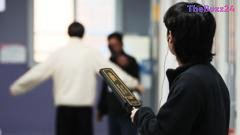
In an unprecedented move, the government utilized the national disaster alert system to broadcast warnings to mobile phones across the country during the exam hours. These alerts, which bypassed silent modes, served as a stern reminder of the strict prohibition against electronic devices in testing centers. Furthermore, authorities enforced rigorous physical inspections, including the examination of eyewear and the requirement for students to cover buttons on their clothing to prevent the concealment of miniature cameras.
President Lee Jae Myung has publicly called for a comprehensive overhaul of the examination system, emphasizing that the integrity of these tests is fundamental to the nation’s social order. The intensity of the measures has created a high-pressure environment, with many students expressing anxiety that their legitimate personal items, such as prescription glasses, might be misidentified as illicit technology. Despite the tension, the government maintains that these measures are essential to preserve fairness and trust in a system that dictates the distribution of critical societal opportunities.
Key Takeaways
- 111 students were caught with unauthorized devices during South Korea's national college entrance exam, the Suneung.
- The government utilized the national disaster alert system for the first time to warn against cheating during the testing period.
- New measures include strict inspections of eyewear and clothing to prevent the use of AI-powered cameras and communication tools.
Editor’s Analysis & Impact
The integration of AI into academic dishonesty represents a significant shift in the landscape of high-stakes testing. South Korea’s aggressive response highlights the existential threat that AI-assisted cheating poses to meritocratic systems where a single exam score can dictate a student’s entire career path. By leveraging national disaster infrastructure to combat cheating, the government is signaling that academic integrity is now a matter of national security. Looking ahead, we can expect a global trend toward ‘AI-hardened’ testing environments, likely involving advanced signal jamming, biometric verification, and a move away from traditional paper-based formats. However, the ‘arms race’ between proctors and students will likely continue, forcing educational institutions to balance the need for extreme security with the psychological well-being of students who are already under immense academic pressure.
Frequently Asked Questions
Q: What is the Suneung exam in South Korea?
A: The Suneung is a rigorous, eight-hour national college entrance exam held annually in November. It is considered a turning point for students, as the results heavily influence university placement, career prospects, and social status.
Q: Why did the government send emergency alerts to mobile phones during the exam?
A: The alerts were part of a new, emergency anti-cheating strategy to ensure that no unauthorized electronic devices were active in exam halls. It was the first time the national disaster alert system was used to enforce exam integrity.
AI Disclosure: This article is based on verified data and official reports. Our Team and AI have cross-referenced every financial detail with primary sources to ensure total accuracy.
More from this Category