France’s Streets Erupt: Inside the ‘Ultra-Left’ Movement Challenging the System
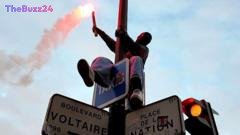
France is currently grappling with widespread social unrest, marked by escalating protests, looting, and violence. These demonstrations, now in their sixth consecutive weekend, are fueled by public anger over soaring prices, deteriorating public services, and alleged police brutality. President Emmanuel Macron has attributed the unrest to “delinquents” and “ultra-left groups” aiming to destabilize the French Republic, a claim that warrants closer examination amidst a politically charged atmosphere ahead of crucial elections.
The landscape of French political dissent is complex, with various factions blaming each other for the current crisis. The left points fingers at centrist and right-wing policies for the cost-of-living crisis, while the hard left denies orchestrating violence, even as the nationalist right promises to restore order. At the heart of the debate are the “ultra-left” groups, often characterized by their black attire and face coverings, known as the “Black Block.” These individuals, frequently emerging as daytime protests wane, are seen by some as the vanguard of radical dissent, though their organization and motivations remain subjects of intense scrutiny.
Interviews with young individuals involved in the protests reveal a deep-seated frustration stemming from socio-economic disparities, particularly in marginalized suburban areas known as the “banlieues.” Many express a sense of hopelessness regarding educational opportunities and job prospects, feeling that the promise of equality in France is unfulfilled. While some participants engage in acts of vandalism, such as throwing paint bombs at police or smashing shop windows, they often frame these actions as a desperate attempt to be heard, contrasting it with what they perceive as state-sanctioned violence. The use of encrypted messaging apps like Signal and Telegram, along with online platforms sharing protest tactics, highlights the role of social media in coordinating and disseminating information within these movements.
More seasoned activists within the ultra-left movement deny being part of a centrally organized effort to overthrow the French state. Instead, they describe a spontaneous eruption of “rage” driven by systemic issues, a sentiment they believe is mirrored in protests across Europe. They distinguish their goals from those of mainstream political figures like Jean-Luc Mélenchon, whom they view as part of the existing system. Their ultimate aim, they state, is not to destroy France but to dismantle the capitalist system and foster a more equitable society, addressing issues like economic hardship and the rising cost of living that affect a broad spectrum of the population.
Key Takeaways
- Widespread social unrest in France is driven by economic hardship, perceived social injustice, and alleged police brutality.
- The 'ultra-left' movement, including groups like the 'Black Block,' engages in protests and sometimes violent actions, though their organization and aims are debated.
- Activists claim their actions are a response to systemic failures and a desire for societal change, not an attempt to destabilize the French Republic.
Editor’s Analysis & Impact
The ongoing protests in France highlight a deep societal divide exacerbated by economic pressures and political polarization. The “ultra-left” movement, while not appearing to be a unified or significantly powerful force capable of toppling the state, represents a potent symptom of widespread discontent. Its tactics, often involving confrontation and property damage, complicate the broader political discourse and provide ammunition for nationalist and centrist factions. The situation underscores the challenges governments face in addressing grassroots anger stemming from economic inequality and perceived systemic failures. As France approaches critical elections, the unrest signals a volatile political climate where social issues are likely to remain at the forefront, potentially influencing electoral outcomes and future policy directions.
Frequently Asked Questions
Q: Who are the 'ultra-left' groups in France?
A: The 'ultra-left' is a broad term used to describe various radical left-wing and anarchist groups. A visible element is the 'Black Block,' known for wearing black clothing and face coverings during protests, often engaging in disruptive or violent actions.
Q: What are the main grievances driving the protests in France?
A: Protesters are primarily driven by concerns over the rising cost of living, perceived deterioration of public services, economic inequality, and alleged police brutality. Many also express frustration with the perceived lack of social justice and opportunity.
Q: Is the 'ultra-left' movement a significant threat to the French state?
A: While the 'ultra-left' engages in disruptive actions and expresses radical aims, former law enforcement officials and analysts suggest they lack the organization and means to pose a serious threat to the stability of the French state. However, their actions contribute to a volatile political climate.
AI Disclosure: This article is based on verified data and official reports. Our Team and AI have cross-referenced every financial detail with primary sources to ensure total accuracy.
More from this Category