UK Imposes Sanctions on Myanmar Military Leaders Following Landmark Genocide Ruling
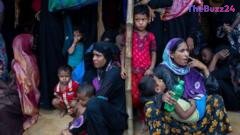
The United Kingdom has imposed sanctions on five senior Myanmar military leaders in response to a landmark ruling by the International Court of Justice (ICJ). The ICJ determined that Myanmar had committed genocide against its Rohingya minority, marking the first instance where a state has been found guilty of this grave crime. This decision stems from a brutal military crackdown in 2017 that resulted in the deaths of thousands of Rohingya and compelled over 700,000 to seek refuge outside the Buddhist-majority nation, formerly known as Burma.
Foreign Secretary Ed Miliband emphasized that the UK’s response to such a profoundly shocking crime must align with its values and be met with decisive action. The newly sanctioned individuals include Myo Htut Hlaing, Myo Min Tun, Myat Thet Oo, Kyaw Soe, and Kyaw Swar Oo. Miliband also highlighted that Myanmar’s President Min Aung Hlaing, who was previously sanctioned by the UK in 2021, bears direct responsibility for many of the atrocities, having led the military during the 2017 genocide. Several other nations, including Australia, Belgium, Portugal, Spain, and Canada, have also acknowledged the ICJ’s significant ruling.
Beyond the sanctions, the UK is taking further steps, including the confirmation of new legislation to halt the supply of aviation fuel to Myanmar. This follows the recent expulsion of Myanmar’s defence attaché. Miliband has urged Myanmar to cease ongoing violations, conduct thorough investigations, prosecute perpetrators, and implement measures to prevent any future recurrence of such atrocities. He also called for an immediate cessation of hostilities to facilitate humanitarian aid delivery, an end to air strikes targeting civilians, the release of political prisoners, and the initiation of dialogue towards an inclusive political settlement. The UK plans to raise the issue at the UN Security Council, with a dedicated meeting scheduled in the coming weeks.
The ICJ’s verdict, reached by a majority of nine votes to six, concluded that “genocidal intent is the only reasonable inference that can be drawn from the evidence.” The court also found Myanmar in violation of several other provisions of the 1948 Genocide Convention. Its ruling detailed that approximately 10,000 Rohingya were murdered during the “clearance operation” in western Rakhine state, with widespread reports of villages being razed and horrific acts of sexual violence. Myanmar has consistently denied these allegations. The crisis has led to over 1.2 million refugees being supported by Bangladesh, while air strikes and violence from the Arakan army reportedly continue in the region.
Key Takeaways
- The UK has sanctioned five senior Myanmar military leaders following an ICJ ruling that Myanmar committed genocide against the Rohingya minority.
- This marks the first time a state has been found guilty of genocide by the International Court of Justice, setting a major international legal precedent.
- The UK is implementing further measures, including new legislation to stop aviation fuel supply and raising the issue at the UN Security Council, while calling for an end to hostilities and accountability for atrocities.
Editor’s Analysis & Impact
The ICJ’s landmark ruling and subsequent UK sanctions significantly intensify international pressure on Myanmar’s military junta. While direct market impact might be limited, the aviation fuel ban could hinder military operations and further isolate the regime, potentially deterring foreign investment. This verdict sets a powerful precedent in international law, demonstrating that states can be held accountable for genocide, which could embolden other victims of mass atrocities globally. The future outlook suggests increased diplomatic isolation for Myanmar and potential for further coordinated sanctions from other nations. However, the effectiveness of these measures hinges on sustained international commitment and the ability of bodies like the UN Security Council to overcome geopolitical divisions. The broader implications underscore the critical role of international justice in addressing severe human rights violations and highlight the urgent need for a resolution to the ongoing humanitarian crisis faced by the Rohingya.
Frequently Asked Questions
Q: What is the significance of the ICJ's ruling?
A: The International Court of Justice's ruling is highly significant as it marks the first time a state has been found guilty of genocide by the court, setting a major precedent for international law and accountability.
Q: Which Myanmar leaders have been sanctioned by the UK?
A: The UK has sanctioned five senior military leaders: Myo Htut Hlaing, Myo Min Tun, Myat Thet Oo, Kyaw Soe, and Kyaw Swar Oo. Additionally, President Min Aung Hlaing, who led the military during the 2017 genocide, was previously sanctioned by the UK in 2021.
Q: What other actions is the UK taking besides sanctions?
A: Beyond sanctions, the UK plans to pass new legislation to stop the supply of aviation fuel to Myanmar, has expelled Myanmar's defence attaché, and will raise the issue at the UN Security Council. It also calls for an immediate pause in hostilities, humanitarian aid access, and the release of political prisoners.
AI Disclosure: This article is based on verified data and official reports. Our Team and AI have cross-referenced every financial detail with primary sources to ensure total accuracy.
More from this Category