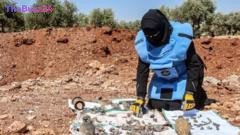
Syria’s Lingering Scars: Landmine Casualties Skyrocket Post-Conflict
Two years after the end of Syria’s protracted civil war and the fall of Bashar al-Assad’s regime, the nation is grappling with a devastating surge in casualties from landmines and explosive remnants of war. Families returning to their homes and former front lines are finding that the danger has not subsided, with children tragically becoming frequent victims.
Recent incidents highlight the pervasive threat. In one harrowing event, an 11-year-old girl named Alaa was killed and her 10-year-old brother critically injured when they unknowingly triggered a landmine while tending goats. This tragedy underscores the perilous reality faced by civilians attempting to reclaim their lives and land. According to the UN Mine Action Service (Unmas), nearly 1,000 children have been killed or injured by explosive ordnance in Syria since December 2024, a stark reminder of the war’s enduring legacy.
Data from the Landmine Monitor report reveals a significant increase in overall casualties, with 1,602 people killed or injured by landmines and explosive remnants of war in 2025 alone. This represents a more than 50% rise compared to the previous year, placing Syria second only to Myanmar in recorded incidents. Experts attribute this alarming trend to the large-scale return of refugees and internally displaced persons who, driven by necessity, are reoccupying areas that were once active conflict zones. Many of these individuals, including farmers and shepherds, are forced to take risks in contaminated fields to survive, often without clear information about which areas are safe.
The presence of unexploded ordnance continues to impede Syria’s economic recovery. Contaminated agricultural land cannot be cultivated, and individuals scavenging for materials in abandoned areas face constant danger. While the Syrian Ministry of Defence reports clearing hundreds of thousands of mines and munitions, the full extent of land contamination remains unknown, creating a critical information gap. This ongoing threat means the war’s deadly impact persists long after the cessation of active hostilities, claiming lives and inflicting life-altering injuries on a daily basis.
Key Takeaways
- Landmine and explosive remnant casualties in Syria have surged by over 50% in 2025, with nearly 1,000 children affected since late 2024.
- The return of refugees and displaced populations to former conflict zones is a primary driver of the increased casualty rate.
- The ongoing threat of unexploded ordnance hinders Syria's economic recovery and poses a persistent danger to civilians attempting to resume normal life.
Editor’s Analysis & Impact
The escalating landmine casualties in Syria present a grim post-conflict scenario, highlighting the long-term humanitarian and economic consequences of war. The data indicates a critical need for accelerated demining efforts and improved public awareness campaigns, especially as displaced populations return to their homes. The economic implications are substantial, with agricultural land remaining unusable and reconstruction efforts hampered by the pervasive threat. This situation underscores the international community’s responsibility to support Syria not only in its political transition but also in addressing the physical and economic scars left by years of conflict, ensuring that the war’s deadly legacy is systematically dismantled.
Frequently Asked Questions
Q: What is the main reason for the increase in landmine casualties in Syria?
A: The primary reason for the surge in landmine casualties is the large-scale return of refugees and internally displaced people to areas that were formerly on the front lines of the civil war. These individuals often reoccupy and attempt to use contaminated land for farming or other essential activities without full knowledge of the dangers.
Q: How are children being affected by landmines in Syria?
A: Children are disproportionately affected, accounting for approximately 37% of casualties recorded by Unmas since December 2024. They often fall victim while playing or assisting their families with agricultural tasks in areas suspected of containing explosive remnants of war.
Q: What is being done to address the landmine problem in Syria?
A: Demining teams, including those from the UN Mine Action Service and organizations like the Halo Trust, are working to clear contaminated areas. However, the vast scale of the problem, the scattered nature of the ordnance, and the lack of comprehensive surveys make clearance a monumental and ongoing challenge.
AI Disclosure: This article is based on verified data and official reports. Our Team and AI have cross-referenced every financial detail with primary sources to ensure total accuracy.
More from this Category