A Journalist’s Personal War: Uncovering Family Deaths and Rebuilding Bonds in Ukraine
A Ukrainian journalist, Anastasiya, has embarked on a deeply personal investigation into the deaths of her father and grandparents in the village of Dachne, eastern Ukraine, a community caught on the front lines of the ongoing conflict. The tragedy, which unfolded in January 2025, not only claimed three beloved family members but also ignited a profound rift within her own family, as her mother, originally from Siberia, attributed the deaths to Ukrainian forces—a narrative Anastasiya, born and raised in Ukraine, found difficult to reconcile with the complex realities on the ground. This personal quest for truth has become a journey of both journalistic inquiry and familial reconciliation.
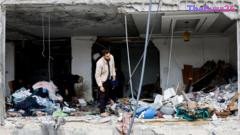
Anastasiya’s father, Serezha, reportedly sustained injuries from a drone strike on January 26, 2025. A neighbor, Misha, recounted finding Serezha injured and later discovered him deceased, subsequently burying him in a greenhouse with the help of other villagers. While drone activity was prevalent in the area, the specific origin of the drone that caused Serezha’s fatal injury remains unconfirmed. The circumstances surrounding her grandparents’ deaths, however, proved even more convoluted. Their house was destroyed, and they had sought refuge in another home. A neighbor, Lina, described encountering Ukrainian-speaking soldiers who she believed threatened her, and later heard her grandparents were found dead. Another villager, Maria, speculated that the grandparents might have irritated the soldiers, who she claimed were under the influence of drugs.
Forensic analysis conducted nearly 20 months later in occupied territory indicated that Anastasiya’s grandmother died from an explosives injury to the skull, though the cause was unspecified. Her grandfather’s body showed no obvious signs of injury. Satellite imagery of the house where they were found revealed no significant damage, further complicating the narrative. While many villagers in Russian-occupied Dachne expressed beliefs that Ukrainian soldiers were responsible, their testimonies lacked direct evidence. Military maps from open-source Ukrainian resources and U.S. think tanks suggested Ukrainian forces still held parts of the street where the grandparents lived during the period of their deaths, amidst rapidly shifting front lines. Ukrainian military officials, when presented with these findings, stated they had no verified evidence regarding the deaths or any implication of their servicemen during the intense hostilities, deferring such investigations to law enforcement.
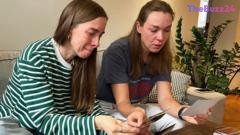
With her family’s bodies lying in occupied territory and the full truth elusive, Anastasiya has shifted her focus to mending the deep divisions within her family. After years of estrangement, she has reconnected with her sister, Sasha, who now lives in Belgrade. Together, they are working towards rebuilding their relationship and have initiated contact with their mother, who has also relocated to Serbia. This personal reconciliation underscores the profound and often unseen human cost of the conflict, where the search for truth is intertwined with the struggle to heal fractured family bonds.
Key Takeaways
- A Ukrainian journalist, Anastasiya, investigated the deaths of her father and grandparents in the war-torn village of Dachne, eastern Ukraine, leading to complex and often conflicting accounts.
- Her father's death was attributed to a drone strike, while the circumstances of her grandparents' deaths remain unclear, with some villagers implicating Ukrainian soldiers, though forensic evidence was inconclusive.
- The personal tragedy caused a deep family rift, as Anastasiya's mother blamed Ukrainian forces, but the journalist is now working to reconcile with her sister and mother, highlighting the profound human cost of the conflict.
Editor’s Analysis & Impact
This deeply personal narrative offers a poignant glimpse into the human toll of the conflict in Ukraine, transcending geopolitical headlines to reveal the devastating impact on individual families. The challenges faced by the journalist in uncovering the truth underscore the inherent difficulties in verifying events in active war zones, where propaganda, shifting front lines, and limited access obscure facts. The story highlights the psychological warfare at play, influencing civilian perceptions and creating deep societal and familial divisions. For journalism, it emphasizes the critical need for meticulous investigation, even when faced with emotional bias and conflicting accounts. The broader implications point to the long-term societal scars of conflict, where reconciliation, both personal and national, will be a protracted and complex process, requiring immense effort to bridge divides fueled by loss and competing narratives.
Frequently Asked Questions
Q: What happened to Anastasiya's family members?
A: Anastasiya's father, Serezha, died from injuries sustained in a drone strike. Her grandparents were found dead in their home, with conflicting accounts from villagers and inconclusive forensic evidence regarding the exact cause of their deaths.
Q: Why was there a division within Anastasiya's family?
A: A deep rift formed because Anastasiya's mother blamed Ukrainian troops for the deaths of her parents and husband, aligning with Russian narratives, while Anastasiya, a Ukrainian journalist, found the truth to be far more complex and ambiguous.
Q: Has the truth about the grandparents' deaths been definitively established?
A: No. While villagers offered accounts implicating Ukrainian soldiers, forensic evidence was inconclusive, and no independent verification or official investigation has definitively confirmed the exact circumstances or perpetrators of their deaths.
AI Disclosure: This article is based on verified data and official reports. Our Team and AI have cross-referenced every financial detail with primary sources to ensure total accuracy.
More from this Category