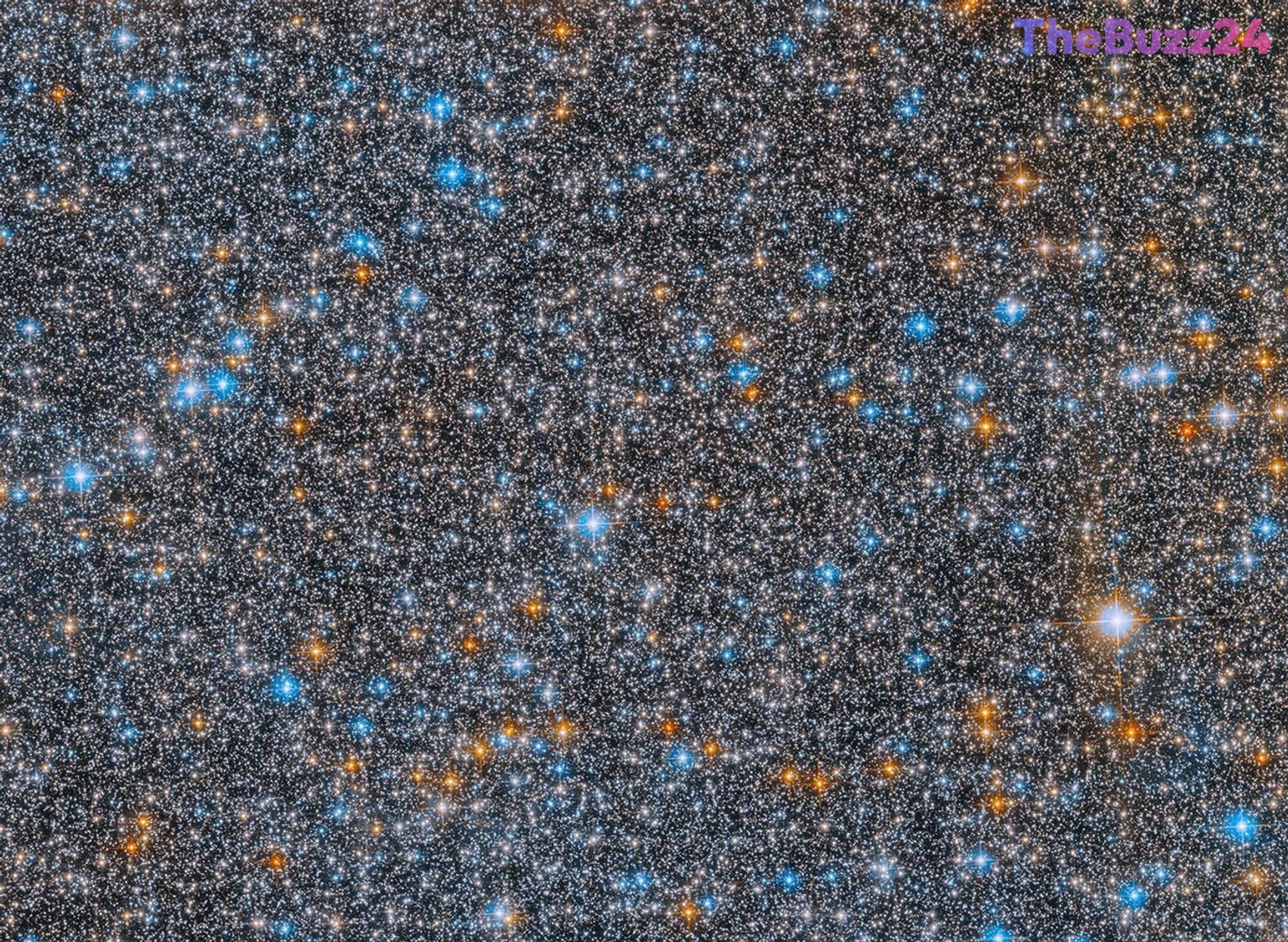
Hubble Telescope Maps Galactic Core to Prepare for Roman Space Telescope Mission
The Hubble Space Telescope has captured high-resolution imagery of the Milky Way’s galactic bulge, providing a detailed look at a densely packed region near the center of our galaxy. This survey serves as a critical foundation for the upcoming Nancy Grace Roman Space Telescope, which will utilize these observations to better calibrate its own instruments. By focusing on the red end of the visible spectrum and near-infrared wavelengths, Hubble is creating a baseline dataset that will allow researchers to interpret future findings with greater precision.
The galactic bulge is a primary target for astronomers because it contains nearly 25% of the Milky Way’s stellar mass. While this region is notoriously difficult to study due to the extreme density of stars, Hubble’s advanced optics allow scientists to resolve individual stars that would otherwise appear as a blurred glow. These observations provide essential data on the brightness, composition, and movement of stars, which are vital for understanding the evolution of galaxies over billions of years.
A major objective of this collaborative effort is the search for exoplanets through gravitational microlensing. This phenomenon occurs when the gravity of a foreground object magnifies light from a more distant star, revealing clues about the foreground object’s mass and potential planetary companions. By characterizing these stars now, researchers will be able to cross-reference Hubble’s historical data with future Roman observations, significantly enhancing the ability to detect and analyze planets in the crowded galactic center.
This initiative builds upon decades of legacy research, including previous programs like the WFC3 Galactic Bulge Treasury. As the scientific community prepares for the next generation of space exploration, the synergy between Hubble’s established high-precision imaging and the Roman Space Telescope’s wide-field capabilities promises to unlock new insights into dark matter, black holes, and the fundamental structure of our galaxy.
Key Takeaways
- Hubble is conducting a high-resolution survey of the Milky Way's galactic bulge to act as a reference for the upcoming Nancy Grace Roman Space Telescope.
- The data focuses on near-infrared and red-visible light to help identify exoplanets via gravitational microlensing.
- Studying the galactic bulge is essential for understanding galaxy formation, as it contains a quarter of the Milky Way's total stellar mass.
Editor’s Analysis & Impact
The collaboration between the Hubble Space Telescope and the Nancy Grace Roman Space Telescope represents a strategic shift toward multi-generational astronomical research. By using Hubble to ‘pre-map’ complex regions of the galaxy, NASA is effectively reducing the margin of error for the Roman mission. This approach highlights a growing trend in astrophysics: leveraging legacy hardware to maximize the scientific return of newer, more sensitive instruments. The ability to detect exoplanets in the dense galactic bulge is a significant technical hurdle, and this preparatory work is essential for the success of future wide-field surveys. As we move toward an era of high-volume space data, the integration of historical and contemporary observations will be the primary driver for breakthroughs in our understanding of dark energy and galactic evolution.
Frequently Asked Questions
Q: Why is the galactic bulge so difficult to study?
A: The galactic bulge is extremely crowded with stars, making it difficult for telescopes to resolve individual objects. Hubble's high-resolution capabilities are required to distinguish these stars from one another.
Q: What is gravitational microlensing?
A: It is a technique where the gravity of a foreground object acts like a lens, magnifying the light of a more distant star. This allows astronomers to detect the presence of planets orbiting the foreground star.
AI Disclosure: This article is based on verified data and official reports. Our Team and AI have cross-referenced every financial detail with primary sources to ensure total accuracy.
More from this Category