Kamchatka’s Shivelyuch Volcano: A Fiery Peak Above the Clouds
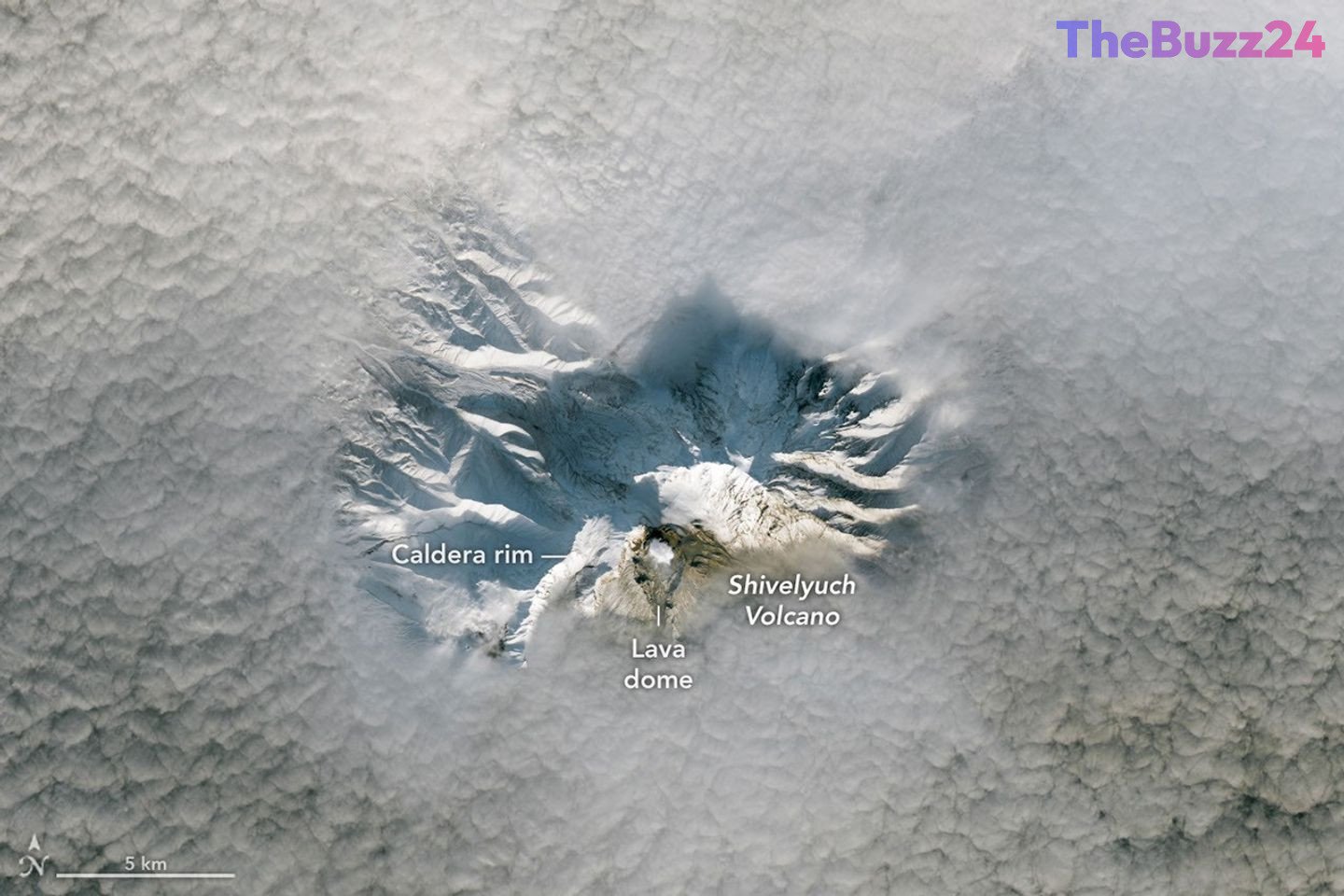
Shivelyuch volcano, a prominent and highly active stratovolcano located on Russia’s Kamchatka Peninsula, is renowned for its frequent eruptions, yet it is also consistently shrouded by dense cloud cover. A recent satellite observation on November 8, 2026, offered a rare clear view of the volcano’s upper reaches. Captured by the Operational Land Imager (OLI) aboard Landsat 9, the image showed clouds clinging to the snowy mountain’s flanks, but crucially, they remained below Shivelyuch’s impressive 3,283-meter (10,771-foot) peak, providing an unobstructed perspective of its caldera and northern upper slopes.
The volcano’s summit features a vast, 9-kilometer (5.6-mile) wide caldera that opens towards the south. Within this expansive depression, a dark area marks the presence of an active lava dome, formed by the extrusion of viscous magma from underlying vents. These lava domes are dynamic structures, undergoing continuous cycles of growth and collapse. Such collapses can be particularly hazardous, often triggering fast-moving avalanches of superheated ash and rock, known as pyroclastic flows, which can devastate surrounding areas.
In November 2026, the Kamchatka Volcanic Eruption Response Team (KVERT) confirmed that Shivelyuch had been experiencing effusive lava eruptions and explosive activity for several months. Despite the persistent cloudiness that often obscures ground-level observations, satellites consistently detect thermal anomalies emanating from the volcano, indicating ongoing internal heat and activity. On the specific day the satellite image was taken, KVERT reported a plume of resuspended ash drifting approximately 120 kilometers (75 miles) to the east. While this particular event was relatively minor, Shivelyuch is known for more powerful explosions that can propel ash several kilometers into the atmosphere, where it can travel vast distances and pose significant risks to aviation. A notable incident occurred in July 2026, when an ash plume from Shivelyuch rode the jet stream across the Bering Sea and into Alaskan airspace, leading to the cancellation of numerous flights.
Key Takeaways
- Shivelyuch volcano in Russia's Kamchatka Peninsula is characterized by frequent eruptions and persistent cloud cover, with a recent satellite image providing a clear view of its active summit.
- The volcano's 9-kilometer-wide caldera hosts an active lava dome, which undergoes cycles of growth and collapse, sometimes leading to dangerous pyroclastic flows.
- Ongoing effusive and explosive activity, including ash plumes that can disrupt air travel, has been reported for months, highlighting the volcano's significant hazard potential.
Editor’s Analysis & Impact
The persistent activity of Shivelyuch volcano underscores the critical role of satellite monitoring in assessing geological hazards, especially in remote and often cloud-covered regions. For the aviation industry, such volcanic eruptions represent a continuous threat, necessitating robust detection systems and clear communication protocols to ensure flight safety and minimize disruptions. The July 2026 incident, causing flight cancellations in Alaskan airspace, highlights the far-reaching impact of these events beyond immediate proximity. Future outlook suggests continued vigilance will be paramount, as unpredictable volcanic behavior can lead to significant economic and logistical challenges. This also emphasizes the broader implications for international air traffic management and the need for collaborative scientific efforts to mitigate risks.
Frequently Asked Questions
Q: What is Shivelyuch volcano known for?
A: Shivelyuch is one of the most active volcanoes on Russia's Kamchatka Peninsula, known for its frequent effusive and explosive eruptions, the presence of a dynamic lava dome within its caldera, and its tendency to be obscured by clouds.
Q: How do volcanic ash plumes affect air travel?
A: Volcanic ash plumes pose a severe threat to aircraft. The abrasive ash can damage jet engines, reduce visibility, and contaminate cabin air systems, leading to engine failure, structural damage, and potential loss of control. This often results in flight diversions or cancellations to ensure passenger safety.
Q: What is a lava dome?
A: A lava dome is a circular mound-shaped protrusion resulting from the slow extrusion of viscous lava from a volcano. The high viscosity of the lava prevents it from flowing far, causing it to pile up around the vent. Lava domes can grow, collapse, and regenerate, often associated with explosive eruptions and pyroclastic flows.
AI Disclosure: This article is based on verified data and official reports. Our Team and AI have cross-referenced every financial detail with primary sources to ensure total accuracy.
More from this Category