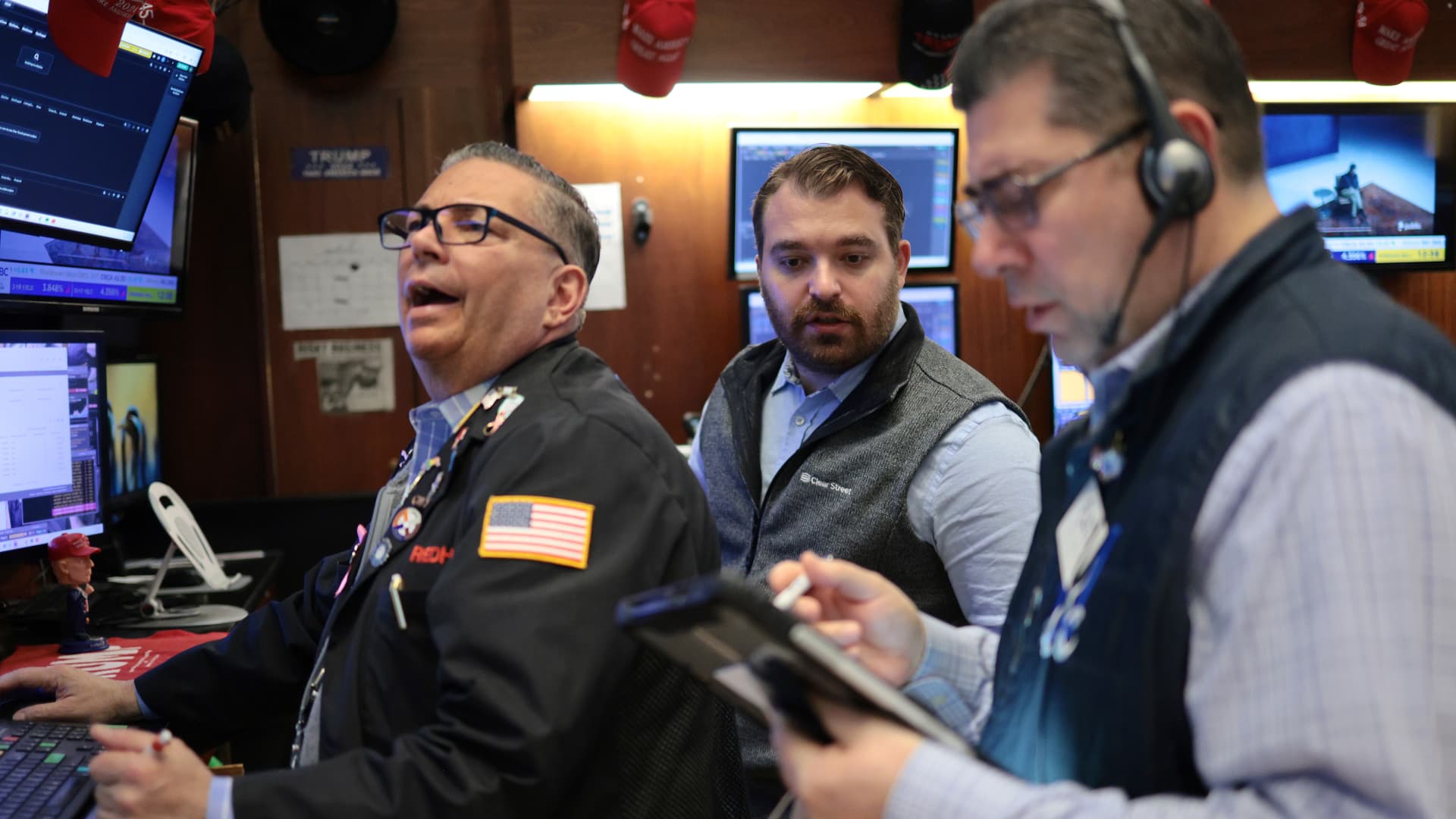
Geopolitical Uncertainty Triggers Global Market Sell-Off Following Presidential Remarks
Global financial markets faced significant instability this week as shifting rhetoric from President Donald Trump regarding the situation in Iran rattled investor confidence. Following a series of contradictory statements, U.S. stock futures—including the S&P 500, Nasdaq 100, and Dow Jones Industrial Average—experienced a sharp downturn. The volatility was mirrored in the energy sector, where West Texas Intermediate crude surged more than 3.5% to surpass $103 per barrel, and Brent crude climbed over 4% to reach $106.
The market turbulence was largely fueled by a Wednesday night address in which the President delivered a mixed message. While initially suggesting that the U.S. was nearing a resolution to the conflict, he quickly pivoted to a stern warning, threatening to strike Tehran with significant force. This aggressive stance stood in stark contrast to earlier signals, including social media posts where he had hinted at the possibility of a ceasefire and a potential withdrawal of U.S. military forces from the region, provided that the Strait of Hormuz remained accessible.
This inconsistency triggered a ripple effect across international exchanges. Markets in the Asia-Pacific region, which had shown early signs of stability, reversed course on Thursday. Major indices, including Japan’s Nikkei 225, South Korea’s Kospi, and Hong Kong’s Hang Seng, all saw notable declines. The shift in sentiment was particularly jarring for investors who had spent the previous session buoyed by hopes of a peaceful diplomatic resolution.
As the trading week draws to a close, market participants remain on high alert. Despite a fundamentally strong economy, the threat of geopolitical shocks continues to complicate the outlook for inflation and growth. Traders are now shifting their focus toward upcoming economic indicators, specifically the weekly jobless claims and the highly anticipated March jobs report, which are expected to provide further clarity on the health of the U.S. labor market.
Key Takeaways
- Global stock futures and Asian markets declined sharply following inconsistent messaging from the President regarding Iran.
- Oil prices spiked significantly, with both WTI and Brent crude seeing gains of over 3.5% and 4% respectively.
- Investors are pivoting their focus toward upcoming U.S. economic data, including jobless claims and the March jobs report, to gauge market resilience.
Editor’s Analysis & Impact
The recent market volatility underscores the extreme sensitivity of global financial systems to geopolitical rhetoric. When leadership messaging shifts rapidly between diplomatic optimism and military threats, it creates a ‘risk-off’ environment that forces capital into safe-haven assets like oil and away from equities. The broader implication is that even in a robust domestic economy, geopolitical instability acts as a persistent ‘ceiling’ on market growth. Moving forward, investors will likely demand more consistent policy signals to maintain long-term positions. The upcoming jobs report will be a critical litmus test; if the data remains strong, it may provide a floor for the markets, but if the geopolitical situation continues to escalate, the correlation between political instability and market contraction will likely tighten, potentially leading to sustained volatility throughout the quarter.
Frequently Asked Questions
Q: Why did oil prices rise following the President's comments?
A: Oil prices rose due to fears that escalating tensions in the Middle East, particularly involving the Strait of Hormuz, could disrupt global energy supplies.
Q: What economic data are investors watching next?
A: Investors are closely monitoring the weekly initial jobless claims and the March jobs report to assess the underlying strength of the U.S. economy amidst geopolitical uncertainty.
AI Disclosure: This article is based on verified data and official reports. Our Team and AI have cross-referenced every financial detail with primary sources to ensure total accuracy.
More from this Category