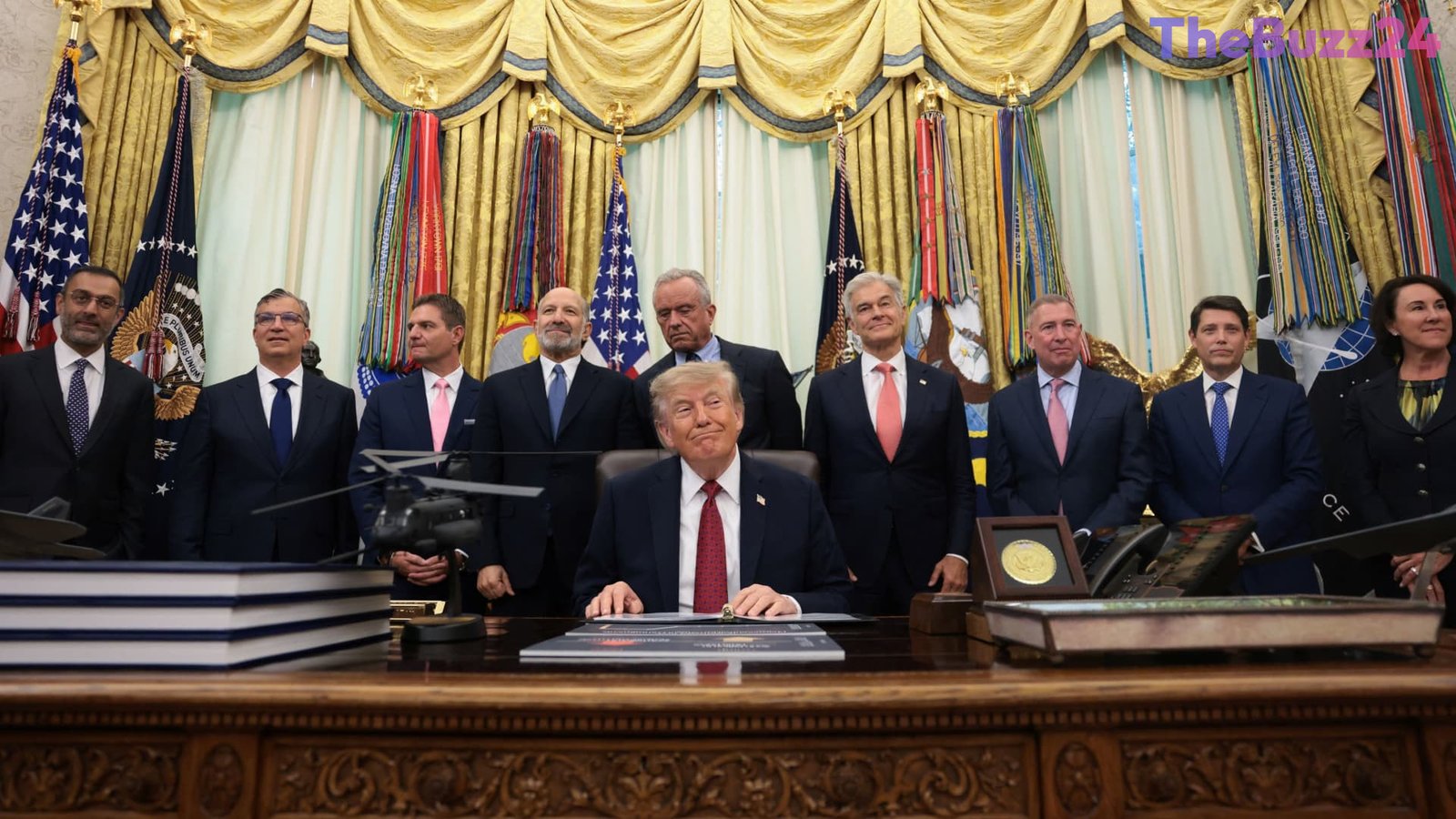
Administration Secures New Drug Pricing Agreements with Pharmaceutical Giants
A recent initiative by the administration has led to nearly a dozen pharmaceutical manufacturers voluntarily agreeing to sell their medications at reduced prices. These agreements are a continuation of a broader effort to align domestic drug costs with the typically lower prices found in other nations.
This latest round of deals brings the total number of pharmaceutical companies participating in the administration’s drug pricing initiative to 26. Among the nine new signatories are Alcon, Astellas Pharma, BeOne Medicines, BridgeBio, CSL, Kyowa Kirin, Sun Pharma, Teva Pharmaceuticals, and UCB. Under these new terms, the companies will provide discounts on outpatient drugs to every state Medicaid program, ensuring that the prices paid by states are consistent with what these companies charge in foreign markets. The agreements specifically target medications used to treat a range of chronic and rare conditions, including hemophilia, liver disease, skin conditions, and certain types of cancer.
Beyond price reductions, the participating companies have collectively pledged to invest at least $19.6 billion in U.S. manufacturing in the near future. Furthermore, Astellas, Sun Pharma, Teva, and UCB have committed to donating active pharmaceutical ingredients for key products to the federal government’s strategic reserve. This measure is designed to lessen reliance on foreign supply chains and enhance the nation’s preparedness for potential emergencies. For instance, UCB will contribute 163 tons of levetiracetam, an anticonvulsant vital for seizure control.
These agreements are part of the administration’s overarching “most favored nation” policy, which seeks to address the disparity between U.S. prescription drug prices and those overseas. A 2024 study by Rand Corp. indicated that U.S. prescription drug prices are, on average, nearly three times higher than in other countries, with branded drugs being more than four times costlier. While the policy aims to improve healthcare affordability, it has also prompted pharmaceutical companies to re-evaluate their commercial strategies, invest in domestic manufacturing, and explore direct-to-consumer channels to mitigate the impact on their bottom lines.
Key Takeaways
- Nine additional pharmaceutical companies have agreed to lower drug prices for state Medicaid programs as part of a broader federal initiative.
- The agreements include significant commitments to invest in U.S. manufacturing and donate critical active pharmaceutical ingredients to the federal strategic reserve.
- These deals are a continuation of the administration's 'most favored nation' policy, aiming to align U.S. drug prices with international rates and reduce reliance on foreign supply.
Editor’s Analysis & Impact
These new drug pricing agreements represent a significant shift in the pharmaceutical landscape, placing considerable pressure on companies to adapt their pricing and manufacturing strategies. The commitment to invest billions in U.S. manufacturing and donate active pharmaceutical ingredients signals a move towards greater domestic self-sufficiency and supply chain resilience, which could have long-term implications for national security and emergency preparedness. While potentially beneficial for consumers through lower drug costs, particularly for Medicaid beneficiaries, the impact on pharmaceutical companies’ profit margins could influence future research and development investments. The ‘most favored nation’ policy, if sustained, will likely continue to reshape the industry, pushing for more transparent and globally competitive pricing models, and potentially accelerating the trend of companies expanding direct-to-consumer channels to offset revenue dips.
Frequently Asked Questions
Q: What is the primary goal of these new drug pricing agreements?
A: The primary goal is to lower the cost of prescription medications for Americans, particularly for state Medicaid programs, by aligning U.S. drug prices with the typically lower prices found in other developed countries.
Q: Which types of diseases are impacted by the drugs covered in these deals?
A: The agreements cover medications that treat a range of chronic and rare conditions, including hemophilia, liver disease, skin conditions, and certain forms of cancer.
Q: How do these deals address concerns about reliance on foreign pharmaceutical supply?
A: Several participating companies have committed to donating active pharmaceutical ingredients (APIs) for key products to the U.S. federal government's strategic reserve. This aims to bolster domestic supply and reduce the nation's dependence on international sources for critical medicines.
AI Disclosure: This article is based on verified data and official reports. Our Team and AI have cross-referenced every financial detail with primary sources to ensure total accuracy.
More from this Category