AI Startup Inherent Claims Smaller Model Outperforms Giants in Scientific Replication
A London-based artificial intelligence lab, Inherent, founded by former Google DeepMind researchers, has announced a significant achievement with its AI agent, Faraday. The company claims that Faraday has successfully replicated scientific research findings, outperforming larger, more established AI models from industry leaders like Anthropic and OpenAI, despite utilizing a considerably smaller architecture.
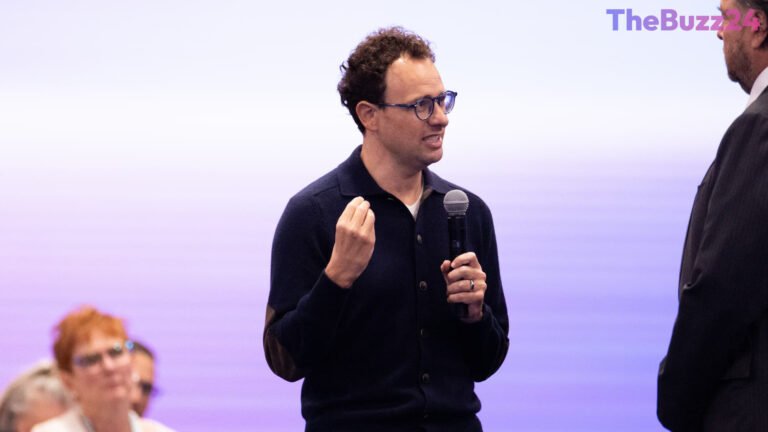
This breakthrough comes shortly after Inherent emerged from stealth mode, having secured $50 million in seed funding. The AI agent, Faraday, was tasked with independently reproducing the results of published scientific papers without prior knowledge of the outcomes. While this capability might seem like a niche skill, Inherent’s co-founder and chief scientist, Edward Hughes, highlighted its importance as a foundational training exercise for human scientists, akin to tasks undertaken by PhD students.
What sets Inherent’s achievement apart is not just the performance but the methodology. Faraday, built on the relatively compact Qwen 3.6 model with 27 billion parameters, competed against much larger systems such as Anthropic’s Claude Opus and OpenAI’s GPT-5.5. Beyond mere accuracy, Inherent aimed for Faraday to exhibit “research taste” – an intuitive understanding of which experiments are valuable and how to design them effectively. This was achieved through reinforcement learning, a training method that rewards desired outcomes, which the company believes will foster better generalization for its ultimate goal of creating AI capable of discovering novel scientific knowledge.
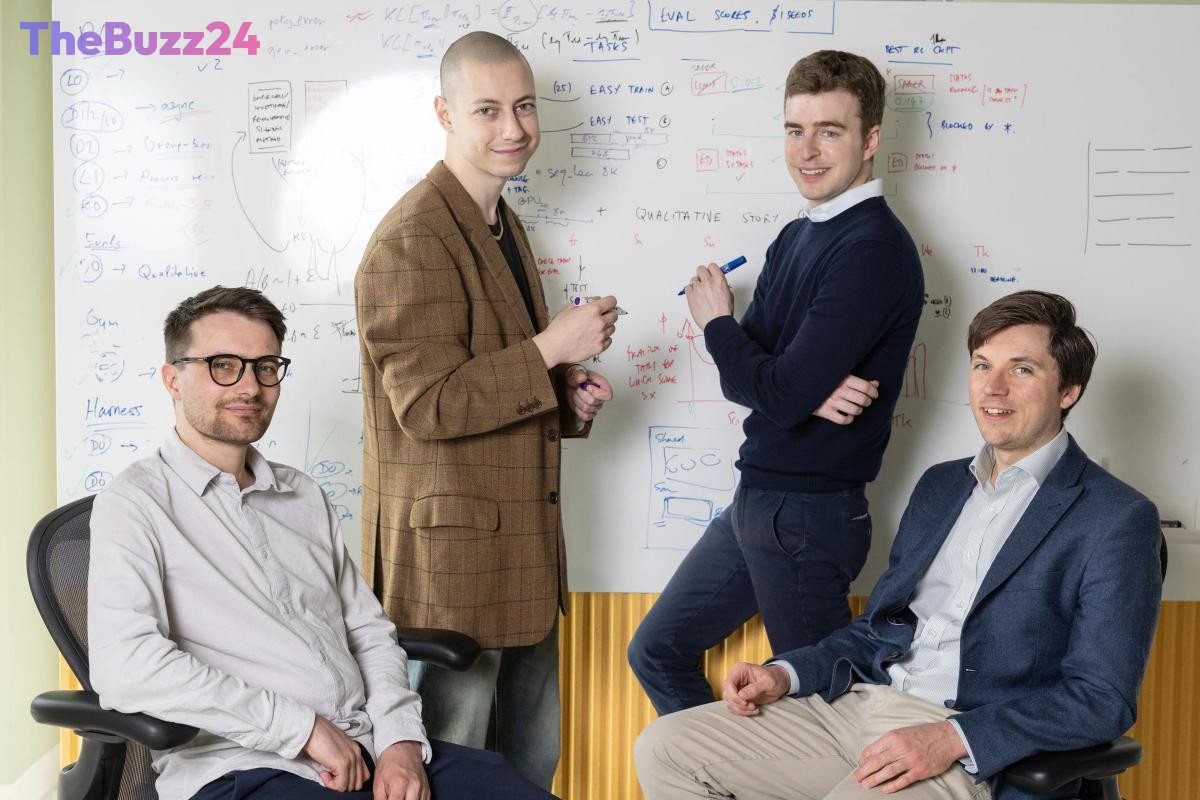
Inherent’s strategic approach also involves leveraging existing tools, much like human researchers. For instance, Faraday utilized OpenAI’s GPT-5.5 Codex for coding tasks, rather than developing its own proprietary solution. This reflects a philosophy of building AI teammates that can collaborate and explore, rather than simply confirming pre-existing hypotheses. The company, which operates from a shared office space in London’s King’s Cross AI hub, is actively expanding its team, potentially attracting talent from established AI firms.
Key Takeaways
- Inherent's AI agent, Faraday, has reportedly outperformed larger models from Anthropic and OpenAI in replicating scientific research.
- Faraday utilizes a significantly smaller AI model (Qwen 3.6 with 27 billion parameters) compared to its competitors.
- The startup emphasizes its AI's ability to demonstrate 'research taste' and its collaborative approach to AI development.
Editor’s Analysis & Impact
Inherent’s announcement challenges the prevailing notion that larger AI models inherently possess superior capabilities. By demonstrating that a smaller, more efficiently trained model can achieve comparable or better results in a complex task like scientific replication, Inherent signals a potential shift towards more resource-efficient AI development. This could have significant implications for the AI industry, potentially democratizing access to advanced AI capabilities and reducing the immense computational costs associated with training massive models. The focus on ‘research taste’ and collaborative AI agents also points towards a future where AI acts more as a scientific partner than a mere tool, accelerating the pace of discovery.
Frequently Asked Questions
Q: What is 'research taste' in the context of AI?
A: 'Research taste' refers to an AI's ability to intuitively understand the value of certain scientific experiments, design them effectively, and identify promising avenues for investigation, mirroring the judgment of experienced human researchers.
Q: How does Inherent's approach differ from other AI labs?
A: Inherent focuses on developing smaller, more efficient AI models and uses reinforcement learning to imbue them with 'research taste.' They also emphasize leveraging existing tools and fostering a collaborative AI 'teammate' rather than solely building proprietary systems.
Q: What is the significance of Faraday replicating scientific papers?
A: Replicating scientific findings is a fundamental skill for human scientists. For an AI to perform this task independently demonstrates a sophisticated level of understanding and analytical capability, serving as a stepping stone towards AI's ability to generate new scientific knowledge.
AI Disclosure: This article is based on verified data and official reports. Our Team and AI have cross-referenced every financial detail with primary sources to ensure total accuracy.
More from this Category