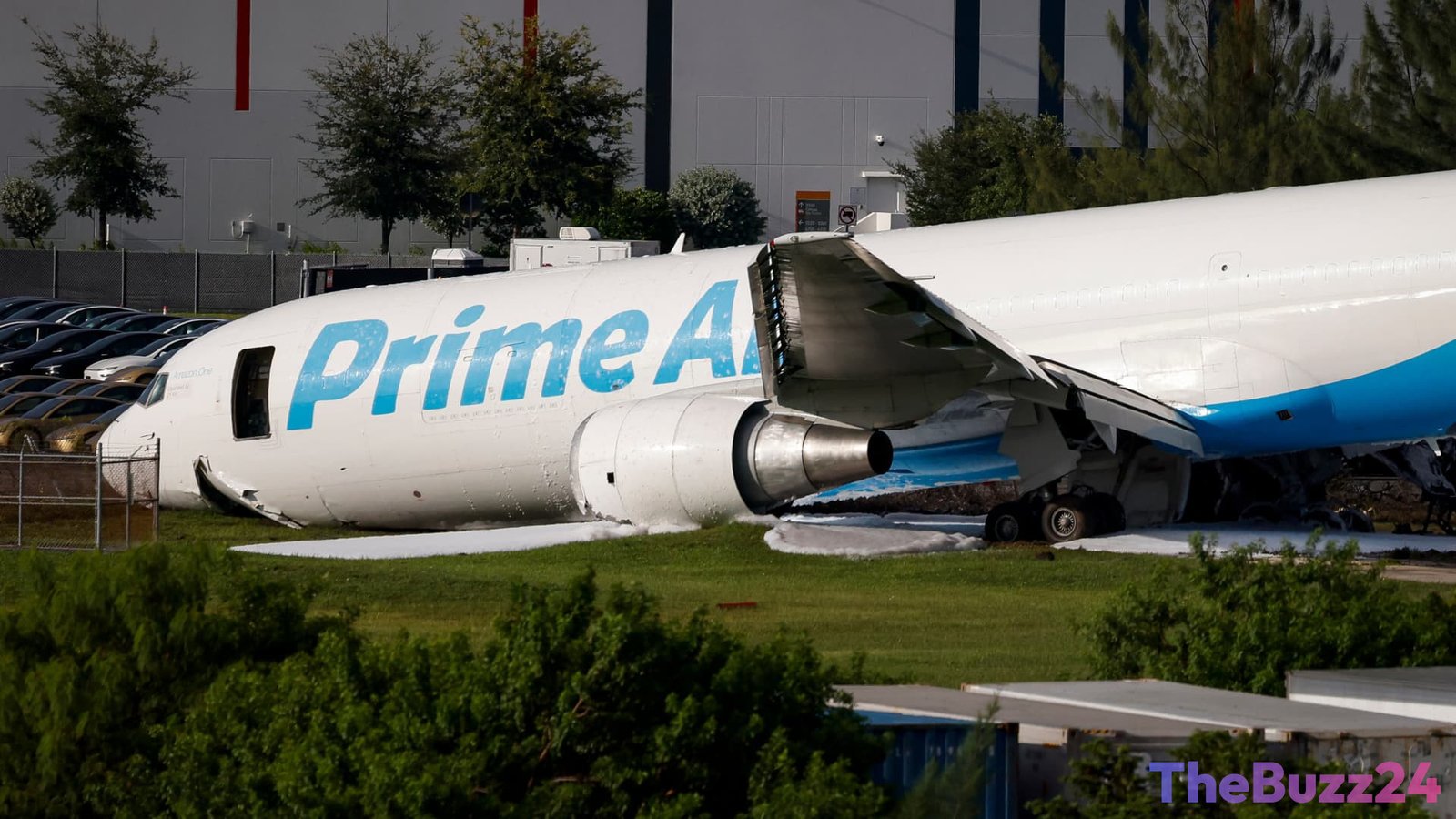
Amazon Cargo Plane Crash at MIA Claims Multiple Lives, Investigation Underway
A devastating incident at Miami International Airport (MIA) saw an Amazon cargo jet crash after overrunning the runway by approximately 1,300 feet, resulting in multiple fatalities. The National Transportation Safety Board (NTSB) confirmed that the aircraft, operated by 21 Air LLC on behalf of Amazon, struck two vehicles on the ground before coming to a halt. The NTSB chair, Jennifer Homendy, described the scene as one of “utter devastation” with debris scattered widely.
The ill-fated flight was arriving from San Juan, Puerto Rico, and had already completed two flights earlier that day. During its landing approach, the plane veered off the runway, impacting a Ford Econoline van carrying seven individuals. The van’s occupants were among the fatalities. The aircraft then breached a perimeter fence, striking a Toyota Corolla Cross outside the airport grounds, with all occupants of both vehicles perishing in the crash. The plane’s trajectory continued through another fence, narrowly missing a Tesla robotaxi staging area before its final stop.
In the aftermath, at least five people were confirmed dead and five others injured. Investigators have successfully recovered the flight data recorder and the cockpit voice recorder, which are being transported to NTSB headquarters for analysis. While on-site for at least a week, investigators will focus on gathering evidence and will not determine the probable cause during their initial assessment. The NTSB also indicated a review of the operational relationship between Amazon and its contracted carrier, 21 Air LLC, would be part of the investigation.
The crash significantly disrupted operations at MIA, a major hub for international freight. Two of the airport’s four runways remained closed following the incident, leading to widespread flight cancellations and delays impacting thousands of travelers, particularly during a busy holiday travel period. These disruptions continued into the following day, with airlines facing challenges due to the unavailability of aircraft and flight crews.
Key Takeaways
- An Amazon cargo jet crashed at Miami International Airport after overrunning the runway, killing at least five people.
- The aircraft struck two ground vehicles, a van and a car, before coming to a stop, with all occupants of these vehicles perishing.
- The NTSB has recovered flight recorders and is investigating the incident, including the relationship between Amazon and the operating carrier, 21 Air LLC.
Editor’s Analysis & Impact
This tragic incident highlights the critical safety considerations in air cargo operations, particularly those involving third-party carriers. The extensive runway overrun and subsequent ground impact underscore potential issues with aircraft performance, pilot decision-making, or air traffic control procedures. The NTSB’s focus on the Amazon-21 Air relationship suggests a potential examination of contractual safety protocols and oversight. The disruption to MIA, a key cargo gateway, also emphasizes the vulnerability of critical infrastructure to such accidents and the cascading economic effects of flight cancellations and delays, especially during peak travel times.
Frequently Asked Questions
Q: What caused the Amazon cargo jet to crash?
A: The exact cause of the crash is still under investigation by the National Transportation Safety Board (NTSB). Investigators are examining factors such as the aircraft's performance, pilot actions, and runway conditions.
Q: How many people were killed or injured in the crash?
A: The crash resulted in at least five fatalities and five injuries. The victims were occupants of two vehicles that were struck by the cargo plane on the ground.
Q: What was the impact of the crash on airport operations?
A: The incident led to the closure of two runways at Miami International Airport, causing significant flight cancellations and delays for thousands of passengers and disrupting cargo operations.
AI Disclosure: This article is based on verified data and official reports. Our Team and AI have cross-referenced every financial detail with primary sources to ensure total accuracy.
More from this Category