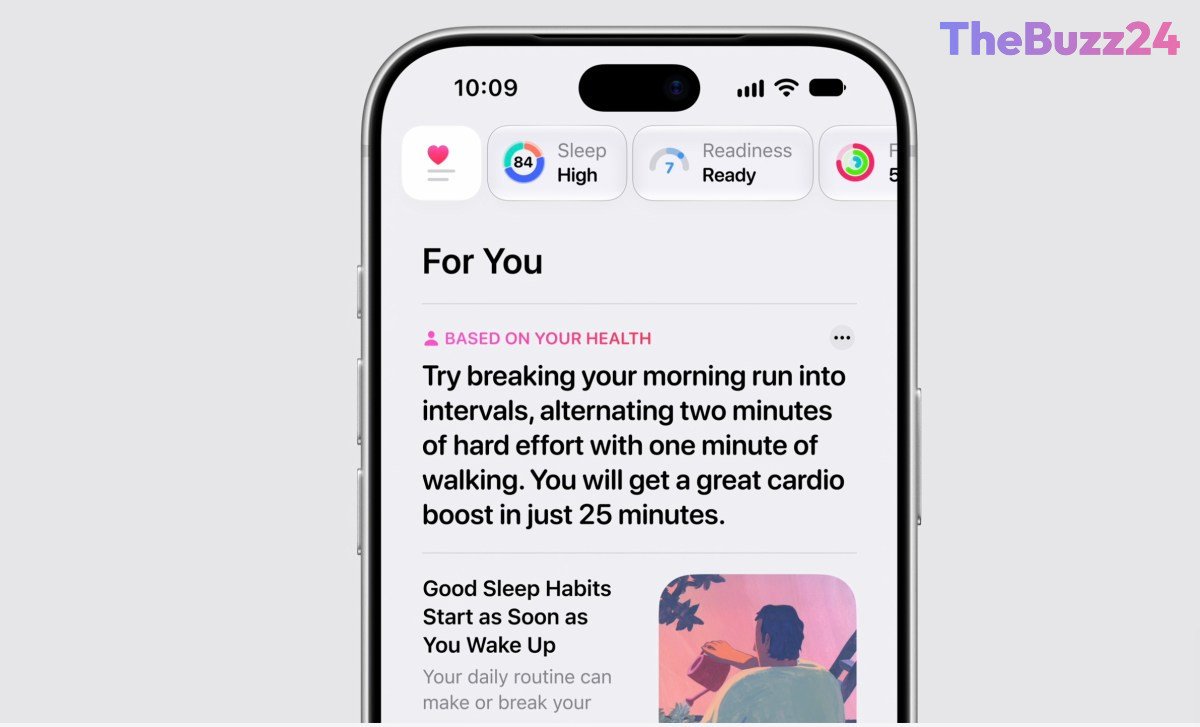
Apple Unveils Redesigned Health App Featuring ‘Health Age’ and AI-Driven Insights
Apple has announced a major redesign of its proprietary Health application, integrating advanced artificial intelligence capabilities to help users better interpret and act upon their personal wellness data. The revamped platform introduces a dedicated Insights tab that delivers timely summaries, tailored guidance, and sophisticated health evaluations directly to the user’s mobile device.
Among the standout additions is a metric known as “Health Age,” which compares an individual’s physiological markers—such as VO2 max, sleep patterns, and blood biomarkers—against their chronological age. Furthermore, a new longevity section tracks overall wellness across movement, cardiovascular health, and rest. To enhance these assessments, Apple has partnered with Quest Diagnostics to offer an exclusive 50-biomarker laboratory panel for $119, giving customers seamless access to comprehensive blood test results within the app ecosystem.
Leveraging machine intelligence, the platform can now synthesize disparate health metrics to offer actionable recommendations, such as suggesting cardio interval training to improve heart performance. The software also features guided movement assessments designed to aid physical recovery or graceful aging, complete with instructional video demonstrations. The updated Health application is scheduled for a rollout later this year, initially supporting U.S. English.
Key Takeaways
- The redesigned Apple Health app introduces an AI-powered Insights tab for personalized wellness guidance.
- A new 'Health Age' metric compares physiological data like sleep and VO2 max against chronological age.
- Apple partnered with Quest Diagnostics to provide a 50-biomarker lab panel for $119 within the ecosystem.
Editor’s Analysis & Impact
Apple’s latest overhaul of its Health application represents a significant strategic push deeper into preventive medicine and personalized wellness. By combining on-device artificial intelligence with comprehensive biometric tracking and diagnostic partnerships, the company is bridging the gap between consumer fitness wearables and clinical-grade health monitoring. The introduction of metrics like ‘Health Age’ and readiness scores gamifies longevity, potentially driving higher engagement with the Apple Watch and iPhone ecosystems. In the broader industry context, this move positions technology giants as central hubs for personal health management, challenging traditional healthcare providers to adopt more digital-first, patient-accessible models. As data privacy remains paramount in health tech, Apple’s ability to process sensitive medical information securely will be a critical factor in user adoption and regulatory scrutiny moving forward.
Frequently Asked Questions
Q: What is the new 'Health Age' feature in the Apple Health app?
A: The 'Health Age' feature calculates how your physical health metrics—including sleep, VO2 max, and blood biomarkers—compare against your actual chronological age.
Q: How does the app utilize artificial intelligence?
A: The platform uses artificial intelligence to synthesize various health data points, generating a readiness score, timely insights, and personalized workout or recovery recommendations.
Q: When will the updated Health app be released?
A: The updated Health application is slated to launch later this year, beginning with support for U.S. English.
AI Disclosure: This article is based on verified data and official reports. Our Team and AI have cross-referenced every financial detail with primary sources to ensure total accuracy.
More from this Category