Artemis II Crew Returns Safely, Marking a New Era for Lunar Exploration
The Artemis II mission has officially concluded, with the Orion spacecraft ‘Integrity’ splashing down in the Pacific Ocean off the coast of San Diego. This historic 10-day voyage represented the first time humans have traveled to the vicinity of the Moon in over 50 years, successfully paving the way for future deep-space exploration. The four-person crew, launched from Cape Canaveral on the Space Launch System, reached a record-breaking distance of 252,756 miles from Earth, surpassing the previous record held by Apollo 13.
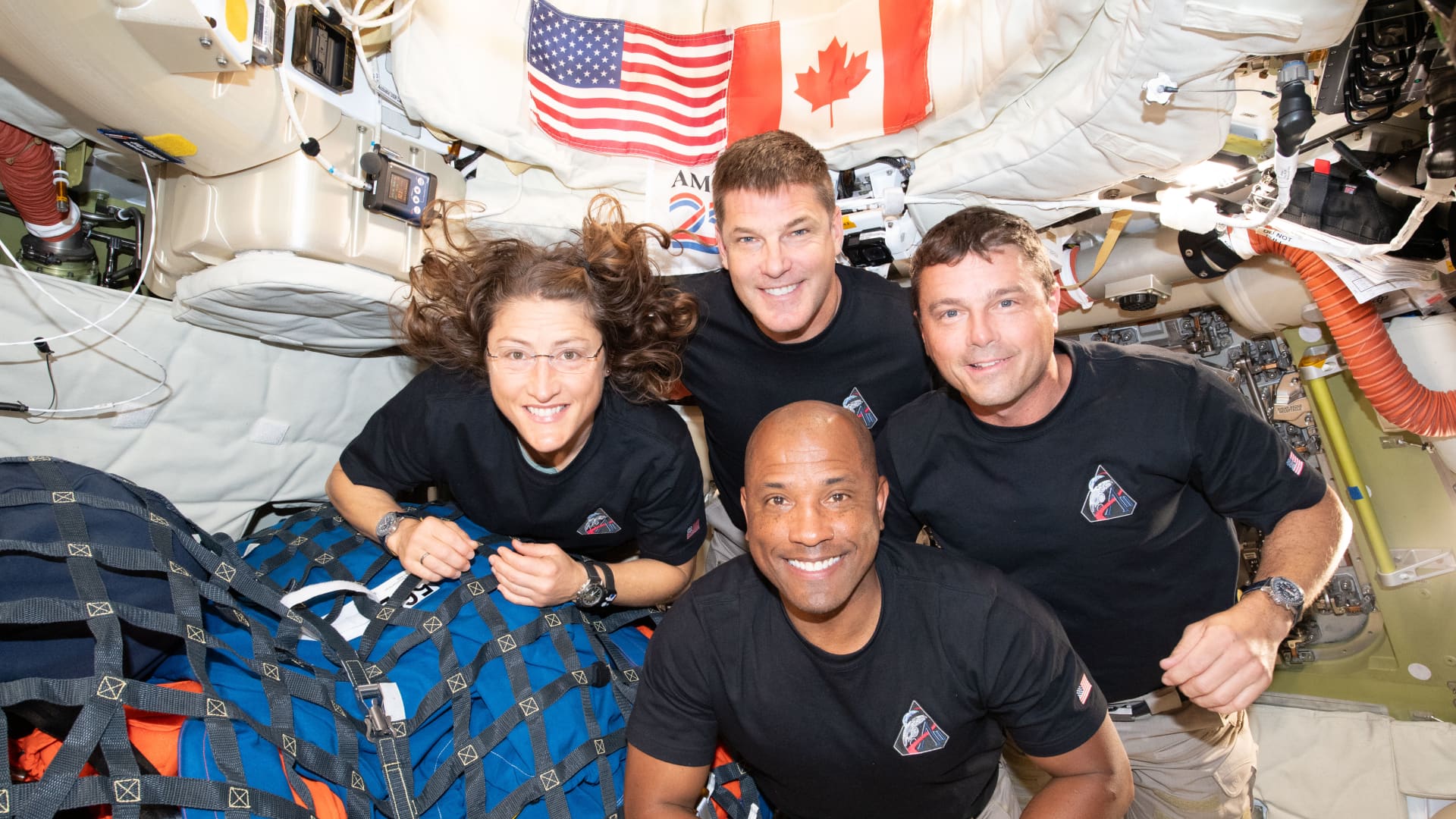
The mission was defined by its diverse crew, which included Reid Wiseman, Victor Glover, Christina Koch, and Jeremy Hansen. Their journey achieved several historic milestones, including the first Black astronaut, the first woman, and the first non-U.S. citizen to participate in a lunar mission. Beyond the human element, the flight served as a vital dress rehearsal for NASA’s long-term goal of returning humans to the lunar surface, building on the data gathered during the uncrewed Artemis I flight.
A major focus of the mission’s conclusion was the high-stakes atmospheric re-entry. To protect the crew, engineers implemented a recalibrated descent trajectory designed to manage the extreme heat generated as the capsule hit the atmosphere at 25,000 miles per hour. Despite temperatures reaching 5,000 degrees Fahrenheit, the Orion capsule performed as expected. Following a brief radio blackout caused by atmospheric friction, the craft successfully deployed its parachutes and landed safely, signaling that the Artemis program is firmly on track for its next phase of lunar development.
Key Takeaways
- The Artemis II mission successfully completed a 10-day journey, marking the first crewed lunar-vicinity mission in over half a century.
- The crew set a new human distance record from Earth and achieved historic milestones for diversity in space exploration.
- The successful re-entry of the Orion capsule validates critical heat shield adjustments made after the Artemis I mission.
Editor’s Analysis & Impact
The successful conclusion of Artemis II is a watershed moment for the global aerospace industry. By proving that the Orion spacecraft can safely transport a diverse crew and survive the extreme thermal stresses of re-entry, NASA has effectively de-risked the most critical components of the Artemis program. This success shifts the narrative from theoretical capability to operational readiness, providing the necessary momentum to secure continued political and financial support for the upcoming lunar landing missions. Furthermore, the mission’s success strengthens the international coalition of space agencies, as the inclusion of Canadian astronaut Jeremy Hansen underscores the collaborative nature of modern space exploration. Looking ahead, the focus will now pivot toward the logistics of establishing a sustained lunar presence, which serves as the essential technological and psychological proving ground for the eventual human exploration of Mars.
Frequently Asked Questions
Q: What was the primary goal of the Artemis II mission?
A: The primary goal was to serve as a crewed dress rehearsal for future lunar landings, testing the Orion spacecraft's systems and the crew's ability to navigate deep space.
Q: How did the re-entry process differ from previous tests?
A: Engineers adjusted the descent trajectory to better manage heat buildup and structural stress, addressing concerns identified during the uncrewed Artemis I flight.
AI Disclosure: This article is based on verified data and official reports. Our Team and AI have cross-referenced every financial detail with primary sources to ensure total accuracy.
More from this Category