Astronaut Chris Williams Safely Returns After Eight-Month Space Station Mission
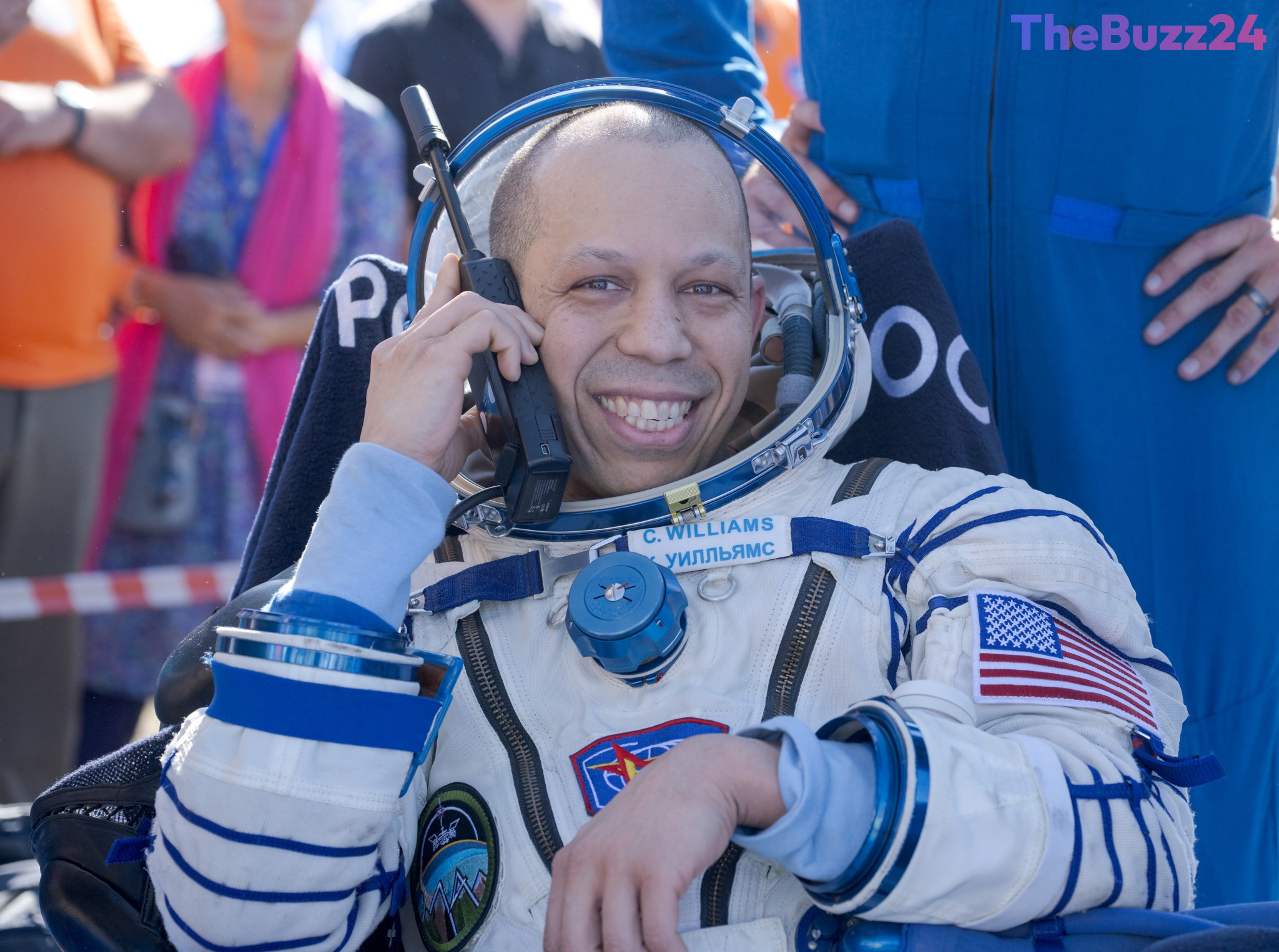
NASA astronaut Chris Williams has successfully concluded his inaugural mission to the International Space Station (ISS), returning to Earth after an extensive eight-month tenure in orbit. Williams, alongside Roscosmos cosmonauts Sergey Kud-Sverchkov and Sergei Mikaev, touched down in Kazakhstan on July 26, 2026, marking the end of Expedition 74. The crew was reportedly in good spirits following their re-entry.
During his prolonged stay aboard the orbiting laboratory, Williams played a pivotal role in advancing a diverse array of scientific investigations and technology demonstrations. His work contributed to ongoing research aimed at understanding the effects of microgravity on the human body, developing new materials, and testing innovative systems crucial for future long-duration space travel.
A significant part of Williams’ mission involved critical extravehicular activities (EVAs). He performed two spacewalks, undertaking essential tasks that included preparing the space station for upcoming power system upgrades. Additionally, he was instrumental in replacing a faulty joint on the Canadarm2 robotic arm, a vital piece of equipment for station maintenance and operations. These spacewalks are crucial for maintaining the operational integrity and extending the lifespan of the International Space Station.
Key Takeaways
- NASA astronaut Chris Williams successfully returned to Earth after an eight-month mission aboard the International Space Station.
- During his first mission, Williams supported numerous scientific investigations and technology demonstrations.
- He completed two critical spacewalks, including preparing for power system upgrades and repairing the Canadarm2 robotic arm.
Editor’s Analysis & Impact
The successful return of Astronaut Chris Williams underscores the ongoing importance of human presence in space for scientific advancement and critical maintenance. His eight-month mission, particularly the spacewalks for power upgrades and robotic arm repair, highlights the continuous effort required to sustain the International Space Station as a vital research platform. This event reinforces international collaboration in space exploration and demonstrates the dedication needed to maintain complex orbital infrastructure. Looking ahead, such missions are crucial for developing technologies and understanding human physiology for future deep-space endeavors, including lunar and Martian expeditions, ensuring the longevity and productivity of human spaceflight.
Frequently Asked Questions
Q: How long was Chris Williams' mission on the International Space Station?
A: Chris Williams spent eight months aboard the International Space Station during his first mission.
Q: What were some of Chris Williams' key contributions during his mission?
A: He supported a wide range of scientific investigations and technology demonstrations, and completed two critical spacewalks to prepare for power system upgrades and replace a faulty joint on the Canadarm2 robotic arm.
Q: Who accompanied Chris Williams on his return to Earth?
A: He returned with Roscosmos cosmonauts Sergey Kud-Sverchkov and Sergei Mikaev.
AI Disclosure: This article is based on verified data and official reports. Our Team and AI have cross-referenced every financial detail with primary sources to ensure total accuracy.
More from this Category