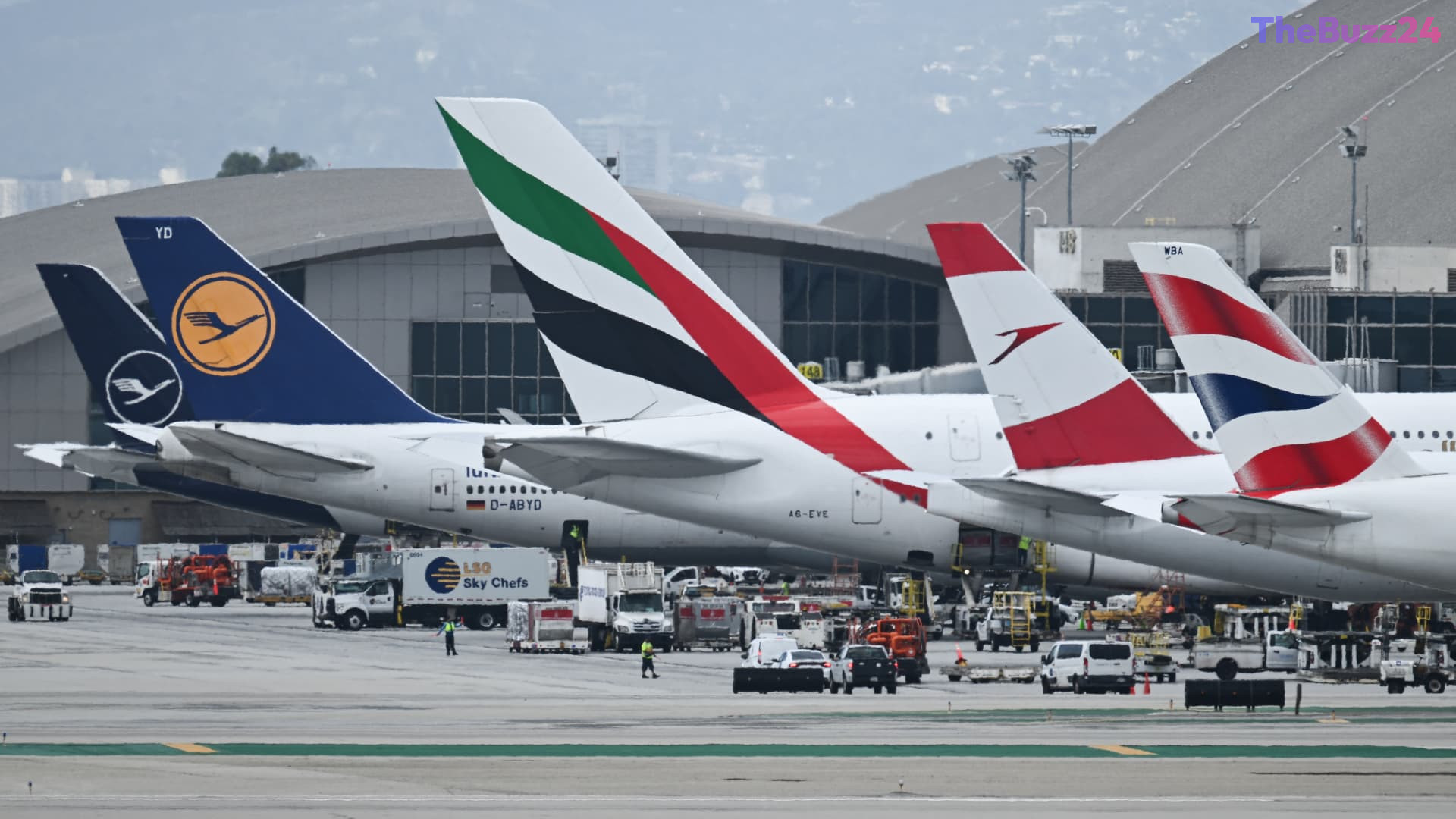
Aviation Industry Faces Turbulence as Fuel Costs and Reliability Issues Mount
Airline executives gathered in Rio de Janeiro this week for the industry’s largest annual assembly, where the primary focus centered on navigating a volatile economic landscape defined by surging fuel prices and geopolitical instability. Despite the ongoing conflict in the Middle East and the resulting closure of critical shipping lanes, industry leaders reported that passenger demand remains surprisingly resilient. However, the financial outlook for the sector is tightening, with global net profits projected to drop significantly from $45 billion in 2025 to $23 billion in 2026.
While major carriers like United Airlines and Etihad Airways report that booking volumes remain steady despite fare increases of approximately 20%, the long-term sustainability of these prices is a growing concern. Industry analysts warn that if fuel costs remain at current elevated levels, the threshold for consumer affordability may soon be reached, potentially dampening travel demand after the peak summer and fall seasons. This pressure is already being felt by smaller or more debt-laden carriers, with experts cautioning that high operational costs could lead to further airline collapses similar to the recent bankruptcy of Spirit Airlines.
Beyond fuel costs, the industry is grappling with a significant supply chain bottleneck regarding aircraft and engine reliability. While manufacturers like Airbus and Boeing continue to see robust demand for new jets, airlines are expressing frustration with next-generation engines. Although these engines promise superior fuel efficiency, they are suffering from frequent, unscheduled maintenance requirements that offset their economic benefits. As carriers struggle to balance fleet growth with these technical hurdles, the industry remains in a precarious position, forced to prioritize operational efficiency to survive a period of shrinking profit margins.
Key Takeaways
- Global airline profits are expected to be halved in 2026, falling to $23 billion due to a $100 billion increase in fuel costs.
- Passenger demand remains resilient for now, but executives fear that sustained high fares could eventually price out travelers and shippers.
- New-generation aircraft engines are failing to meet reliability expectations, leading to frequent, costly maintenance that hampers fleet efficiency.
Editor’s Analysis & Impact
The aviation industry is currently caught in a ‘perfect storm’ of macroeconomic and operational challenges. The shift from post-pandemic travel surges to a more constrained environment highlights a K-shaped recovery where luxury and high-fare travel remains robust, while budget-conscious segments face existential threats. The reliance on ‘engineering marvels’—new, highly efficient engines—has backfired, creating a maintenance crisis that limits capacity exactly when airlines need to maximize their fleet utilization. Looking ahead, the industry’s ability to maintain profitability will depend on its capacity to pass costs to consumers without triggering a demand collapse. If geopolitical tensions in the Middle East persist, we should expect further consolidation, as cash-rich carriers will likely acquire or outlast smaller, more vulnerable competitors struggling under the weight of debt and fuel volatility.
Frequently Asked Questions
Q: Why are airline profits expected to drop in 2026?
A: Profits are projected to decline primarily due to a massive increase in fuel costs, which have doubled in some regions, and airspace closures caused by geopolitical conflicts in the Middle East.
Q: Are airlines slowing down their aircraft orders due to high costs?
A: No, airlines are continuing to place orders for new jets. Manufacturers like Boeing and Airbus remain sold out of popular models through the early 2030s, as carriers plan their fleet growth years in advance.
Q: What is the main issue with new-generation aircraft engines?
A: While these engines offer better fuel efficiency, they are experiencing significant reliability issues, requiring more frequent and unscheduled maintenance than previous generations of engines.
AI Disclosure: This article is based on verified data and official reports. Our Team and AI have cross-referenced every financial detail with primary sources to ensure total accuracy.
More from this Category