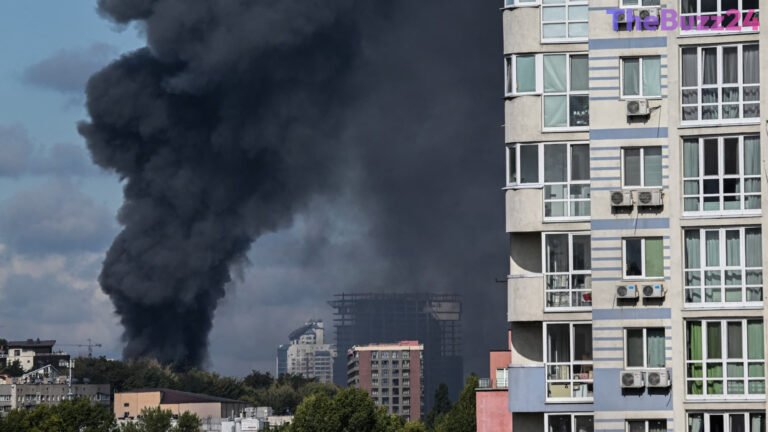
Baltic Security on Edge Following Unidentified Drone Incursion in Vilnius
Lithuania’s capital, Vilnius, faced a major security mobilization on Tuesday as high-ranking government officials, including President Gitanas Nauseda and Prime Minister Inga Ruginiene, were moved to emergency shelters. The sudden alert paralyzed the city, forcing the suspension of commercial air travel and halting major road and rail transit networks. During the height of the security operation, the Seimas, Lithuania’s parliament, was evacuated, with lawmakers and staff relocated to underground bunkers as a precautionary measure.
The emergency was triggered by the detection of an unidentified drone entering Lithuanian airspace from the direction of Belarus. Although the national military scrambled NATO fighter jets to intercept the aerial vehicle, the craft could not be located, leaving the nature and origin of the device officially unconfirmed. This event marks a significant escalation in a series of aerial disturbances that have recently plagued the Baltic region.
Security concerns across Estonia, Latvia, and Lithuania have intensified as these incursions become more frequent. While previous incidents, such as a drone intercepted in Estonia, have been attributed to electronic interference affecting navigation, the geopolitical implications remain severe. Moscow has publicly accused Baltic nations of supporting cross-border operations, while the Kremlin continues to monitor the region, adding a layer of volatility to the already strained security landscape surrounding the ongoing conflict in Ukraine.
Key Takeaways
- Vilnius experienced a city-wide security lockdown, including the evacuation of the Lithuanian parliament and the suspension of commercial transport.
- NATO jets were scrambled to intercept an unidentified drone originating from Belarus, though the craft was not successfully located.
- The incident highlights growing regional instability as Baltic nations face an increasing frequency of unexplained aerial incursions.
Editor’s Analysis & Impact
The incident in Vilnius underscores the precarious security environment currently facing the Baltic states. As the conflict in Ukraine continues, the spillover effect—whether through accidental drone drift caused by electronic warfare or deliberate probing of NATO airspace—is becoming a normalized threat. The inability to intercept the drone highlights a critical gap in regional air defense capabilities, forcing a re-evaluation of how these nations manage airspace sovereignty. For the broader market and geopolitical landscape, this suggests that the Baltic region will likely see increased military spending and a more permanent NATO presence. Investors and policymakers should anticipate heightened volatility in the region, as any miscalculation during these intercepts could lead to a rapid escalation of tensions between NATO and regional actors, potentially impacting supply chains and regional stability.
Frequently Asked Questions
Q: Why was the Lithuanian parliament evacuated?
A: The parliament was evacuated as a precautionary measure following the detection of an unidentified drone entering Lithuanian airspace, which triggered a high-level security alert in Vilnius.
Q: Was the drone successfully intercepted by the military?
A: No, despite scrambling NATO fighter jets to locate the craft, the military was unable to find or intercept the drone before it disappeared from radar.
AI Disclosure: This article is based on verified data and official reports. Our Team and AI have cross-referenced every financial detail with primary sources to ensure total accuracy.
More from this Category