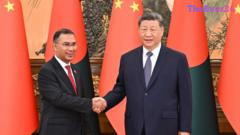
Bangladesh Navigates Delicate Diplomatic Path Between India and China
Bangladesh is currently navigating a complex geopolitical landscape, seeking to bolster its economic recovery through increased Chinese investment while simultaneously attempting to mend strained relations with its neighbor, India. Following his election victory in February, Prime Minister Tarique Rahman has prioritized a foreign policy that balances these two regional giants, signaling a strategic recalibration for Dhaka.
While India has historically been the primary partner for new South Asian leadership, Rahman’s recent official visit to Beijing has drawn significant attention. The outreach includes potential cooperation on the management of the Teesta River and the development of a special economic zone near Mongla port. These initiatives are being closely monitored in New Delhi, where concerns persist regarding Chinese influence near the strategically vital Siliguri Corridor, often referred to as the ‘Chicken’s Neck.’
Simultaneously, Dhaka and New Delhi are working to thaw a relationship that turned frosty following the 2024 ousting of former Prime Minister Sheikh Hasina, who remains in India. Despite lingering tensions—including disputes over border security and the presence of the deposed leader—both nations have taken steps toward normalization. These include the resumption of cross-border bus services, the issuance of tourist visas, and the appointment of a high-ranking Indian diplomat to Dhaka to facilitate dialogue.
Ultimately, Prime Minister Rahman faces a challenging balancing act. While China offers substantial financial resources and infrastructure expertise, India remains an essential partner for regional security and economic stability. As Dhaka seeks to move past the political volatility of the previous year, its ability to maintain a neutral, pragmatic stance between Beijing and New Delhi will be a defining factor in its future economic and diplomatic trajectory.
Key Takeaways
- Bangladesh is actively seeking to diversify its economic partnerships by engaging with China for infrastructure and development projects.
- Relations between Dhaka and New Delhi are in a recovery phase following the political upheaval of 2024, though significant diplomatic hurdles remain.
- The potential involvement of China in the Teesta River project presents a major security concern for India due to the project's proximity to the Siliguri Corridor.
Editor’s Analysis & Impact
The diplomatic maneuvering by Bangladesh reflects a broader trend in South Asia where smaller nations are increasingly leveraging the rivalry between India and China to secure favorable economic terms. For Bangladesh, the primary challenge is to avoid becoming a proxy in this regional power struggle. The economic necessity of Chinese capital is undeniable, yet the geographical and historical ties to India are too deep to sever. Future stability will likely depend on whether Dhaka can successfully frame its Chinese partnerships as purely developmental rather than security-oriented. If successful, this ‘hedging’ strategy could provide a blueprint for other regional players; however, any misstep could lead to increased pressure from New Delhi or potential debt-trap concerns associated with heavy reliance on Beijing.
Frequently Asked Questions
Q: Why is the Teesta River project a point of contention between India and Bangladesh?
A: The Teesta River is a shared water resource, and India is concerned that Chinese involvement in its management could grant Beijing a strategic foothold near the sensitive Siliguri Corridor.
Q: What is the current status of the relationship between Dhaka and New Delhi?
A: The relationship is currently in a 'reset' phase. While tensions remain due to the presence of deposed leader Sheikh Hasina in India and border issues, both sides have resumed limited trade, transport, and diplomatic engagement.
AI Disclosure: This article is based on verified data and official reports. Our Team and AI have cross-referenced every financial detail with primary sources to ensure total accuracy.
More from this Category