Berkshire Hathaway CEO Greg Abel Sworn In as U.S. Citizen Amid Growing Speculation Over Dow Jones Inclusion
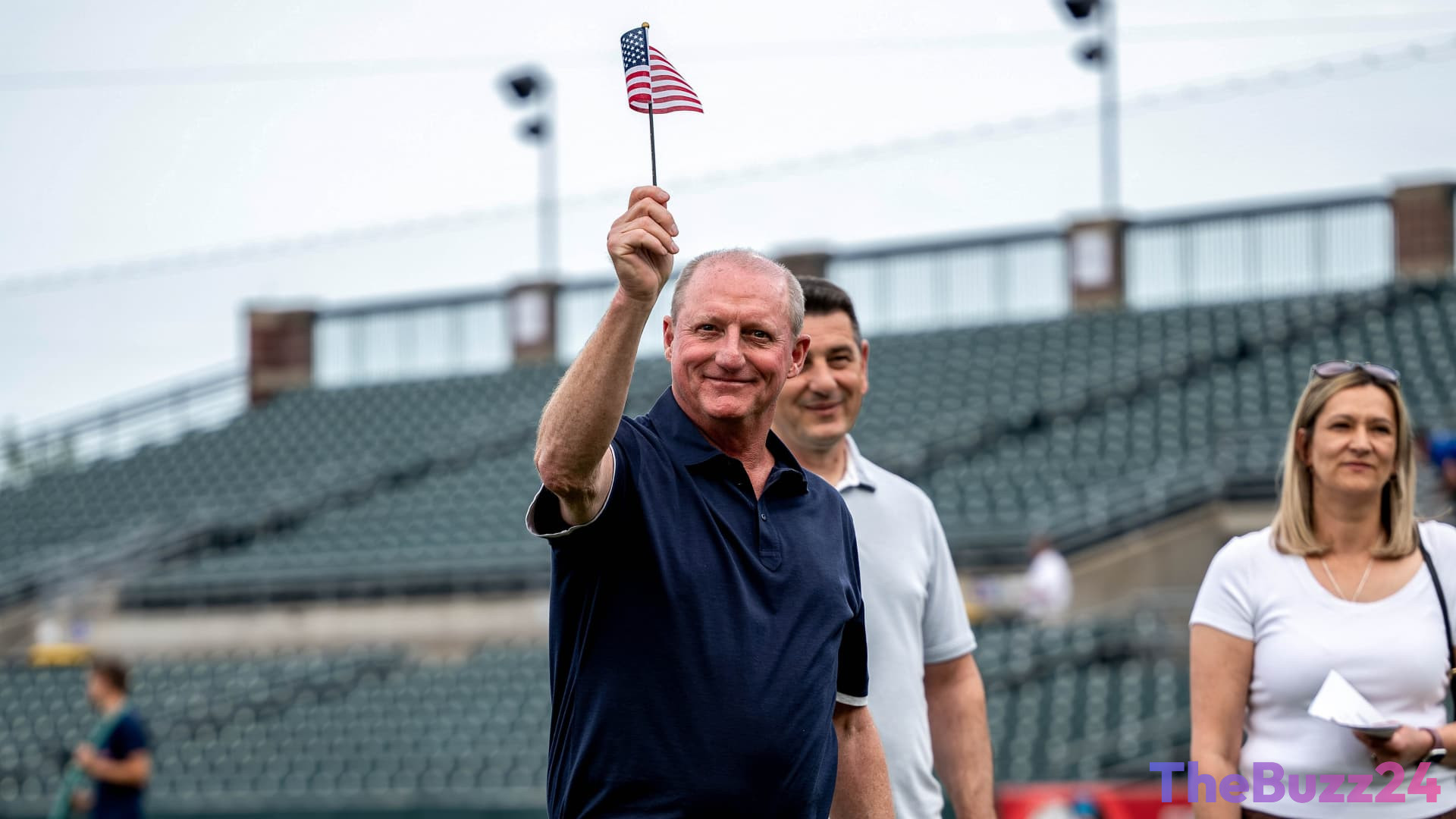
Berkshire Hathaway Chief Executive Officer Greg Abel has officially become a citizen of the United States. Abel, who was born in Edmonton, Canada, in 1962 and has been a long-term resident of Iowa, took his oath of citizenship during an annual naturalization ceremony hosted by the Iowa Cubs in Des Moines. The low-profile executive, who oversees a conglomerate valued at over $1 trillion, celebrated the milestone by throwing out the ceremonial first pitch at the minor league baseball game.
The transition has been anticipated for some time, with Berkshire Hathaway Chairman Warren Buffett previously noting that achieving American citizenship held deep personal significance for Abel. Despite managing one of the world’s most powerful investment engines and holding an estimated personal net worth of $1 billion, Abel maintained a modest presence at the event, where he was one of dozens of individuals from various nations taking the oath of citizenship.
Alongside Abel’s personal milestone, financial analysts are increasingly debating whether Berkshire Hathaway is primed to join the prestigious Dow Jones Industrial Average. Historically, the price-weighted index excluded Berkshire due to Warren Buffett’s famous aversion to stock splits, which kept share prices—particularly the Class A shares—prohibitively high for the index’s calculation model. However, with the Dow recently adjusting its components to include higher-priced tech giants like Alphabet, Berkshire’s Class B shares, trading around $499, are now viewed as a highly viable candidate for inclusion.
While Berkshire’s inclusion would represent a historic nod to the conglomerate’s massive economic footprint, some structural hurdles remain. The Dow is already heavily weighted toward financial institutions, and Berkshire is officially classified within the financial sector. Additionally, even at approximately $499, Berkshire’s Class B shares would still sit near the top of the index’s price spectrum, potentially giving it outsized influence compared to the median Dow component.
Key Takeaways
- Berkshire Hathaway CEO Greg Abel officially became a U.S. citizen during a naturalization ceremony at an Iowa Cubs baseball game.
- Market speculation is rising regarding Berkshire Hathaway's potential inclusion in the Dow Jones Industrial Average.
- While Berkshire's Class B shares are now priced within a range compatible with the Dow, its classification as a financial stock remains a structural hurdle for index inclusion.
Editor’s Analysis & Impact
Greg Abel’s formal transition to U.S. citizenship solidifies his standing as the designated successor to Warren Buffett, anchoring the future leadership of Berkshire Hathaway firmly within the United States. Simultaneously, the shifting dynamics of the Dow Jones Industrial Average reflect a broader evolution in market indexing. As traditional price-weighted constraints soften to accommodate high-value modern enterprises like Alphabet, excluding a $1 trillion powerhouse like Berkshire Hathaway increasingly looks like an omission of a key economic pillar. While the index’s heavy exposure to financials presents a short-term barrier, adding Berkshire would offer investors a more comprehensive reflection of the American industrial and financial landscape, especially as the conglomerate prepares for its post-Buffett era.
Frequently Asked Questions
Q: Where did Berkshire CEO Greg Abel receive his U.S. citizenship?
A: Greg Abel was sworn in as a U.S. citizen during an annual naturalization ceremony hosted by the Iowa Cubs at a minor league baseball game in Des Moines, Iowa.
Q: Why has Berkshire Hathaway historically been excluded from the Dow Jones Industrial Average?
A: The Dow Jones is a price-weighted index, meaning high stock prices have a disproportionate impact. Warren Buffett's refusal to split Berkshire's Class A shares kept the price too high for inclusion without distorting the entire index.
Q: What makes Berkshire's Class B shares a potential candidate for the Dow now?
A: With the Dow increasingly accepting higher-priced stocks and modern trading reducing the need for stock splits, Berkshire's Class B shares (trading around $499) are now within a comparable range to other high-priced Dow components like Goldman Sachs.
AI Disclosure: This article is based on verified data and official reports. Our Team and AI have cross-referenced every financial detail with primary sources to ensure total accuracy.
More from this Category