Beyond the Demo: AI Leaders Discuss Real-World Enterprise Adoption Challenges
The transition from an impressive artificial intelligence demonstration to a fully integrated enterprise solution is fraught with challenges, as AI leaders prepare to share their insights at TechCrunch Disrupt 2026. While initial AI demos can showcase remarkable capabilities, the true test lies in how customers adopt these technologies into their daily workflows, their expectations for reliability, and whether the AI solves a significant enough problem to warrant permanent integration.
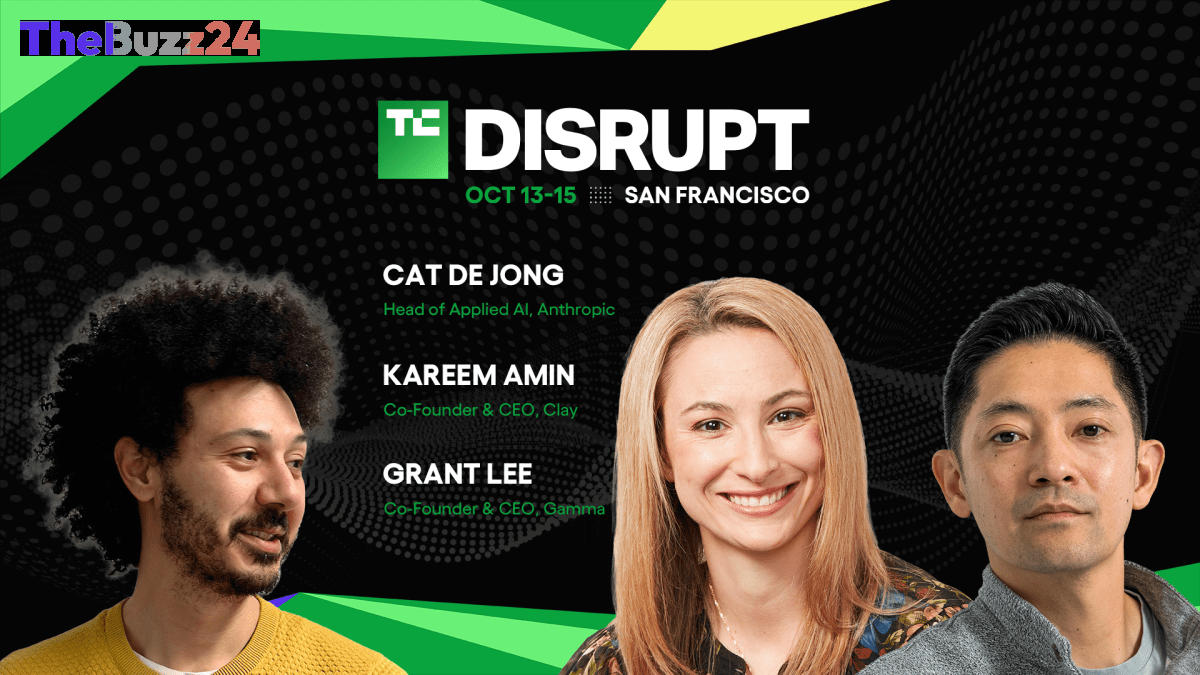
A panel featuring executives from Anthropic, Gamma, and Clay will delve into the complexities of enterprise AI deployment. Cat de Jong, Head of Applied AI at Anthropic, will offer a unique perspective on the patterns observed across numerous enterprise implementations of Claude. Her discussion will focus on identifying the critical factors that distinguish successful, value-generating deployments from those that remain in the pilot phase indefinitely. This session aims to illuminate the practical realities of moving AI from experimental stages to core business operations.
Complementing Anthropic’s broad view, Grant Lee, Co-Founder and CEO of Gamma, and Kareem Amin, Co-Founder and CEO of Clay, will provide the founder’s perspective. Gamma, known for its AI-powered visual communication platform that has garnered significant user adoption, will share its experiences in creating AI products that users consistently engage with. Clay, which offers infrastructure for data integration and agentic workflows, will discuss how AI is being embedded into customer acquisition and engagement processes. Their insights will address how to build AI solutions that address genuine user needs and become indispensable tools.
Together, these leaders will explore the crucial gap between AI potential and practical application. They will dissect what happens when AI moves beyond the initial hype and is subjected to the rigorous demands of real-world business environments. The discussion is set to offer invaluable lessons for companies navigating the complexities of AI adoption, highlighting the strategies that lead to sustained success and the pitfalls that lead to abandonment.
Key Takeaways
- Enterprise AI adoption hinges on solving real problems and integrating reliably into existing workflows, not just impressive demos.
- Successful AI deployment requires understanding customer adoption patterns and adapting products to unexpected use cases.
- Leaders from Anthropic, Gamma, and Clay will share insights on the challenges and successes of bringing AI into critical business operations.
Editor’s Analysis & Impact
The discussion at TechCrunch Disrupt 2026 highlights a critical inflection point for the AI industry. As the initial excitement around AI capabilities matures, the focus is shifting decisively towards tangible business value and user adoption. Companies like Anthropic, Gamma, and Clay are at the forefront of this shift, demonstrating that the long-term success of AI solutions depends not just on technological prowess, but on seamless integration, reliability, and the ability to solve persistent business challenges. This pragmatic approach is essential for moving AI from a novel experiment to a fundamental component of enterprise operations, signaling a move towards more sustainable and impactful AI integration across various sectors.
Frequently Asked Questions
Q: What is the main challenge in enterprise AI deployment?
A: The primary challenge is transitioning AI from impressive demonstrations to reliable integration into existing workflows that solve significant business problems, leading to sustained user adoption.
Q: What will be discussed at the TechCrunch Disrupt 2026 panel?
A: The panel will cover the patterns Anthropic observes in enterprise AI deployments, alongside firsthand experiences from Gamma and Clay founders on building AI products that users actively integrate into their work.
Q: How does Gamma's AI platform differ from traditional presentation software?
A: Gamma's AI-powered platform goes beyond traditional presentation software by acting as a broader visual communication tool, incorporating AI for creating marketing assets and other forms of visual content, and aiming for deeper user integration.
AI Disclosure: This article is based on verified data and official reports. Our Team and AI have cross-referenced every financial detail with primary sources to ensure total accuracy.
More from this Category