Beyond the GPU: Nvidia’s Strategic Shift Toward Total System Orchestration
For years, Nvidia’s market dominance was defined almost exclusively by its high-performance GPUs, which became the essential engine of the global artificial intelligence boom. However, as hyperscalers like Amazon and Google begin developing their own custom silicon, the narrative surrounding Nvidia is shifting. Investors and industry analysts are increasingly recognizing that the company’s competitive moat is no longer just about the processor itself, but about the complex orchestration of the entire data center ecosystem.
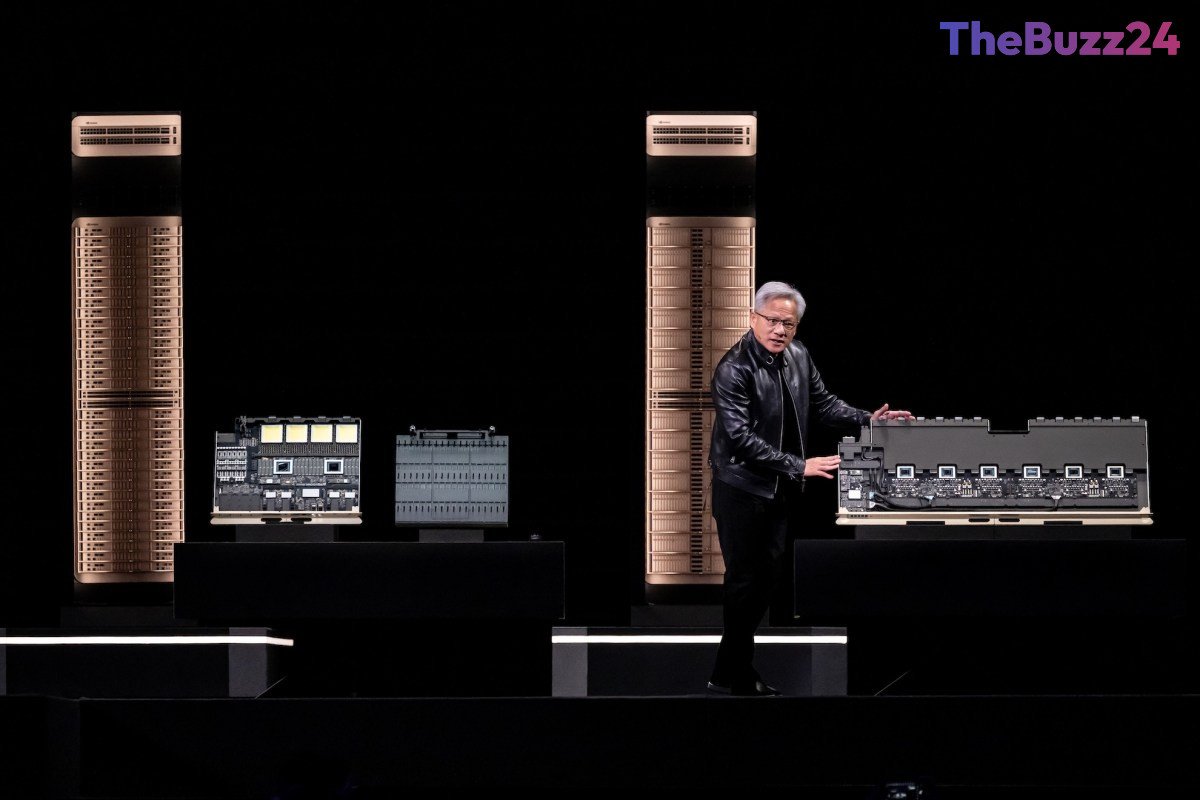
As AI deployments reach the gigawatt scale, the challenge of maintaining efficiency has moved beyond raw compute power. Nvidia is addressing this through its new Vera Rubin architecture, which integrates specialized components like the Vera CPU and the Groq 3 LPX inference accelerator. These systems function as the infrastructure surrounding the GPU, managing data flow and storage to ensure that the entire rack operates at peak performance. By focusing on traffic direction and memory management, Nvidia is solving the critical bottleneck of moving massive datasets to the GPU without latency.
This evolution highlights a broader industry trend where efficiency is prioritized over sheer processor cycles. While companies like OpenAI are exploring alternative designs—such as their Jalapeño chip, which aims to minimize data movement by keeping workloads within a single integrated system—the core objective remains the same: optimizing the entire stack. Nvidia’s ability to provide a cohesive, high-efficiency system gives it a significant advantage in this new phase of infrastructure competition, even as the market for standalone GPUs becomes increasingly crowded.
Key Takeaways
- Nvidia is shifting its competitive focus from standalone GPU dominance to comprehensive data center system orchestration.
- The Vera Rubin architecture demonstrates how specialized CPUs and networking components are now critical to preventing data bottlenecks in AI workloads.
- The industry is moving toward a 'total system' approach where efficiency is gained by optimizing data movement rather than just increasing processor speed.
Editor’s Analysis & Impact
The shift in Nvidia’s strategy marks a maturation of the AI infrastructure market. As compute becomes commoditized, the value proposition is migrating toward the ‘plumbing’ of the data center—networking, memory orchestration, and system-level integration. This is a defensive masterstroke; by creating a proprietary ecosystem that optimizes the entire rack, Nvidia makes it significantly harder for hyperscalers to ‘rip and replace’ their hardware with custom alternatives. While competitors are attempting to solve these bottlenecks through monolithic chip designs, Nvidia’s holistic approach provides a versatile, scalable solution for the massive data centers of the future. The long-term implication is that Nvidia is positioning itself not just as a chipmaker, but as the primary architect of the modern AI-driven enterprise, effectively raising the barrier to entry for any rival attempting to challenge its market leadership.
Frequently Asked Questions
Q: Why is data orchestration becoming more important than GPU speed?
A: As AI models scale, the bottleneck is often not the speed of the processor, but the speed at which data can be moved to and from the memory. Efficient orchestration ensures the GPU is never waiting for data, maximizing the return on investment for expensive hardware.
Q: How does Nvidia's new architecture differ from its previous GPU-focused strategy?
A: Previously, Nvidia focused on selling the most powerful individual GPUs. The new Vera Rubin architecture focuses on a holistic system approach, integrating CPUs, storage, and networking components to ensure the entire server rack functions as a single, highly efficient unit.
AI Disclosure: This article is based on verified data and official reports. Our Team and AI have cross-referenced every financial detail with primary sources to ensure total accuracy.
More from this Category