Brazil’s Political Phoenix: Lula’s Extraordinary Journey to Reclaim the Presidency
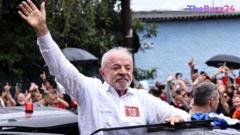
Luiz Inácio Lula da Silva has once again defied political odds, securing re-election as Brazil’s president in a remarkable comeback. His recent victory, which saw him overturn a first-round deficit, marks another extraordinary chapter in a career defined by resilience. At 80 years old, Lula’s return to the nation’s highest office, following previous unsuccessful attempts before his initial 2002 win, underscores his enduring appeal and extensive experience in governing one of the world’s largest democracies. His triumph also signals a notable counter-trend to the recent rise of right-wing leaders across Latin America.
Lula’s journey to power began from the humblest of origins. Born into a poor, illiterate peasant family, he worked as a child selling peanuts and shining shoes, only learning to read at age ten. He later became a metalworker, an experience that propelled him into trade union activism. By 1975, he led the influential Metalworkers’ Union, transforming it into a potent independent force. This activism culminated in 1980 with the co-founding of the Workers’ Party (PT), Brazil’s first significant socialist party. During his initial two terms from 2003 to 2010, Lula implemented extensive social programs, such as the Bolsa Família, which significantly increased the minimum wage and provided grants to impoverished families, lifting an estimated 44 million people out of poverty and cementing his support among the nation’s most vulnerable. His tenure also saw Brazil enjoy its longest period of economic growth in three decades, elevating the country’s international standing.
However, Lula’s career was not without significant challenges. After leaving office with exceptionally high approval ratings, he was later embroiled in the “Operation Car Wash” corruption scandal. In 2017, he was convicted of corruption and money laundering, leading to his imprisonment for over 18 months. Lula consistently maintained his innocence, asserting the accusations were politically motivated. His convictions were ultimately annulled by the Supreme Court in 2021, clearing his path to run for president again in 2022, where he successfully defeated Jair Bolsonaro. In his current term, Lula has championed environmental protection, particularly in the Amazon, citing significant reductions in deforestation. Yet, he has also faced criticism for supporting offshore oil drilling, which he defends as crucial for financing Brazil’s transition to clean energy.
On the international stage, Lula navigates complex relationships. His interactions with former US President Donald Trump have been marked by both public disagreements, particularly concerning trade tariffs and US influence in the Western Hemisphere, and moments of diplomatic cordiality. Lula has been a vocal critic of the UN Security Council’s structure, advocating for greater representation for nations like Brazil, Germany, India, Japan, and African countries. He actively promotes Brazil’s role within the BRICS bloc (Brazil, Russia, India, China, South Africa), viewing it as a vital counterweight to Western dominance. This stance includes defending continued alliances with Russia and China, even amidst global conflicts, underscoring his vision for a multi-polar world order.
Key Takeaways
- Luiz Inácio Lula da Silva achieved a remarkable political comeback, securing re-election as Brazil's president at 80 years old, overcoming past imprisonment and political challenges.
- His initial presidency (2003-2010) was marked by significant social programs like Bolsa Família, which lifted millions out of poverty and fostered a period of strong economic growth.
- Lula's current administration balances environmental protection efforts in the Amazon with controversial fossil fuel exploration, while internationally advocating for a multi-polar world order through alliances like BRICS.
Editor’s Analysis & Impact
Lula’s latest electoral victory carries significant implications for Brazil’s political landscape and its global standing. His return signals a potential resurgence of leftist policies in Latin America, challenging the recent right-wing shift. Economically, his administration faces the complex task of balancing environmental commitments, particularly in the Amazon, with the need for economic development and energy security, as evidenced by the debate over offshore oil drilling. This balancing act will be crucial for attracting foreign investment and maintaining international credibility. Globally, Lula’s emphasis on BRICS and his critique of existing power structures underscore a broader trend towards a multi-polar world, potentially reshaping trade alliances and diplomatic relations. His ability to navigate a divided congress and address persistent structural inequalities will define the success and legacy of this unprecedented third term.
Frequently Asked Questions
Q: Why was Lula previously imprisoned, and how did he return to power?
A: Lula was convicted of corruption and money laundering in 2017 as part of the "Operation Car Wash" scandal, leading to his imprisonment. He maintained his innocence, and his convictions were annulled by the Supreme Court in 2021, clearing the way for his successful presidential campaign in 2022.
Q: What are some key aspects of Lula's current policies and international relations?
A: Domestically, Lula's administration focuses on environmental protection in the Amazon, though it also supports some fossil fuel exploration to fund clean energy transition. Internationally, he advocates for a multi-polar world, strengthening alliances with BRICS nations (Brazil, Russia, India, China, South Africa) and challenging the existing UN Security Council structure.
AI Disclosure: This article is based on verified data and official reports. Our Team and AI have cross-referenced every financial detail with primary sources to ensure total accuracy.
More from this Category