Brics Summit in Delhi Highlights Global Shifts and Internal Tensions
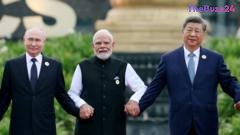
The recent Brics summit in New Delhi served as a high-stakes stage for some of the world’s most influential leaders to navigate a rapidly changing geopolitical landscape. Hosted by Indian Prime Minister Narendra Modi, the gathering brought together heads of state including China’s Xi Jinping, Russia’s Vladimir Putin, and Iran’s Masoud Pezeshkian. The summit underscored a collective desire among member nations to transition from being ‘rule-takers’ to ‘rule-shapers’ in a global order increasingly defined by economic uncertainty and regional conflict.
Despite the outward display of unity, the summit exposed deep-seated divisions within the bloc. The participants, who include nations with histories of border disputes and opposing military stances, struggled to find common ground on pressing international issues. While some members, such as Russia and Iran, view Brics as a necessary counterweight to Western influence, India has maintained a more cautious approach, emphasizing that the group is not intended to be an anti-Western coalition. This delicate balancing act was reflected in the ‘New Delhi Declaration,’ which managed to secure consensus by carefully omitting controversial topics, such as the war in Ukraine, and avoiding direct naming of countries when addressing trade sanctions and tariffs.
Beyond the formal proceedings, the summit provided a rare venue for direct diplomacy between rivals. Notably, the meeting between Iran’s President Pezeshkian and the Crown Prince of Abu Dhabi marked a significant moment of engagement amidst ongoing Middle Eastern tensions. Similarly, the interaction between Prime Minister Modi and President Xi signaled a potential, albeit tentative, thaw in relations between India and China following years of border friction. While the summit successfully facilitated dialogue, the path toward a cohesive, alternative global order remains complex and largely undefined.
Key Takeaways
- The Brics summit highlighted a collective push for 'strategic autonomy' among member nations seeking to reduce reliance on Western-dominated institutions.
- The 'New Delhi Declaration' achieved consensus by deliberately avoiding specific mentions of the war in Ukraine and refraining from naming the U.S. regarding trade sanctions.
- The event served as a critical diplomatic platform, enabling high-level face-to-face meetings between regional rivals like Iran and the UAE, as well as India and China.
Editor’s Analysis & Impact
The New Delhi Brics summit illustrates the inherent fragility of a bloc attempting to expand its influence while managing internal contradictions. By prioritizing consensus over concrete policy, the group has successfully avoided immediate fracture but has also deferred the difficult task of defining a unified vision for a post-Western global order. The market implication is one of ‘strategic hedging’; member nations are clearly signaling a desire to diversify their economic dependencies to insulate themselves from potential U.S. policy shifts. However, until the bloc can reconcile the divergent interests of its members—particularly regarding trade imbalances and regional security—its ability to act as a singular, cohesive economic force remains limited. The future outlook suggests a slow, incremental evolution toward alternative financial frameworks rather than a sudden, disruptive departure from existing global systems.
Frequently Asked Questions
Q: What was the primary goal of the Brics summit in New Delhi?
A: The summit aimed to foster collaboration among member nations to establish a more independent global order, allowing them to act as 'rule-shapers' rather than 'rule-takers' in international affairs.
Q: Why was the 'New Delhi Declaration' considered a diplomatic success despite its omissions?
A: The declaration was successful because it achieved a rare consensus among diverse members with conflicting interests by side-stepping highly divisive issues like the war in Ukraine and avoiding direct confrontation with Western powers.
AI Disclosure: This article is based on verified data and official reports. Our Team and AI have cross-referenced every financial detail with primary sources to ensure total accuracy.
More from this Category