Catastrophic Train Collision in Toledo Claims Dozens of Lives, Prompts Urgent Investigation
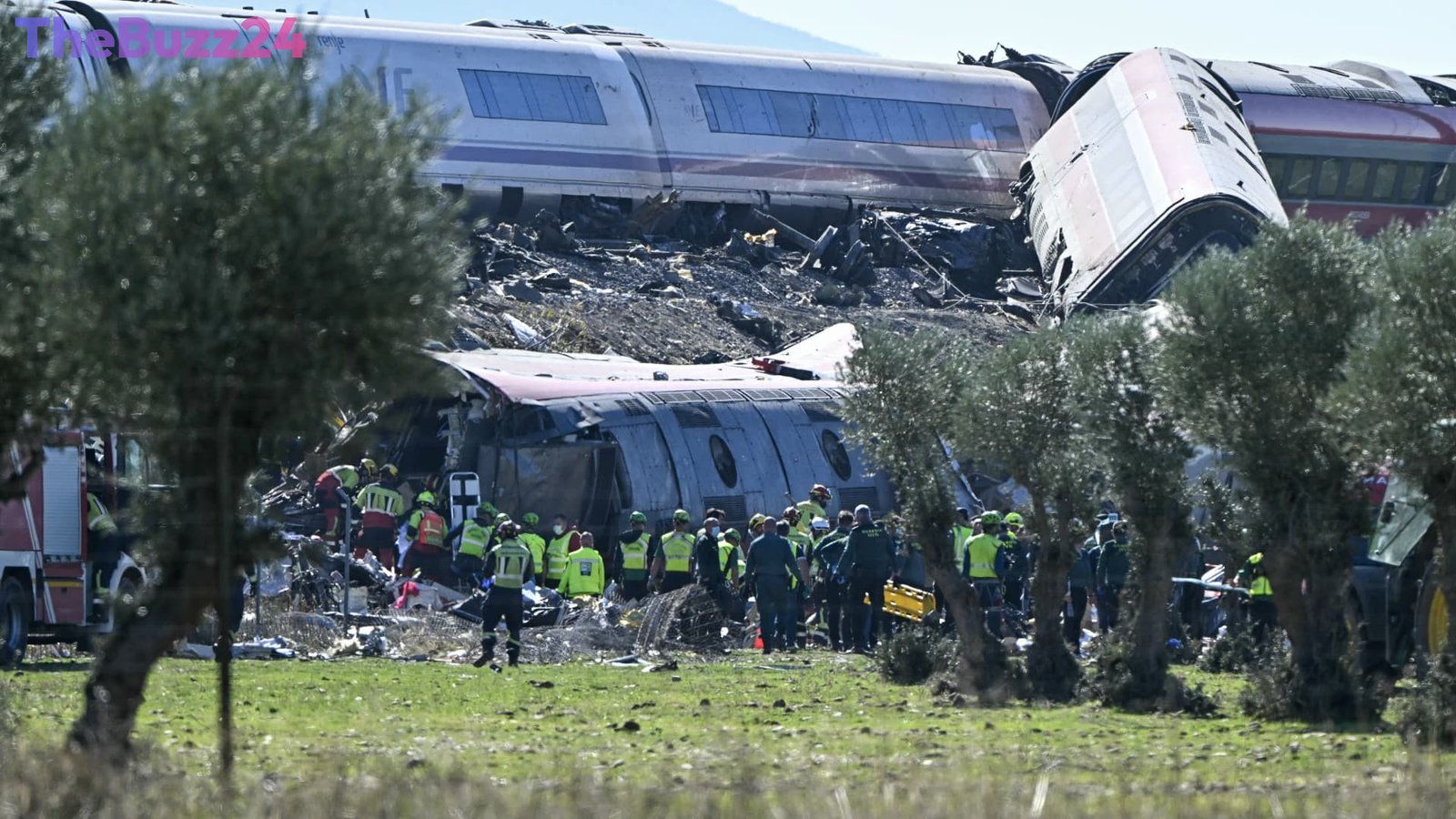
A devastating high-speed train collision in the Spanish province of Toledo has resulted in at least 64 fatalities and left 50 others injured, marking the country’s second deadly high-speed rail incident this year. The tragic event unfolded shortly before 9:15 a.m. local time on the critical Madrid to Seville line, prompting an immediate and extensive emergency response.
Transport Minister Óscar Puente disclosed that a critical control system failure near the town of Urda was a primary factor in the accident. According to initial reports, six trains were halted due to the system malfunction. One of these trains was subsequently permitted to resume its journey, traveling approximately 25 kilometers before colliding at high speed with another stationary train. Minister Puente described the circumstances leading to the collision as “inexplicable,” underscoring the severity of the operational lapse. The trains involved were operated by AVE and Iryo, and it is estimated that over 500 passengers were on board the two services.
Railway infrastructure manager Adif has launched a comprehensive investigation to ascertain the precise sequence of events and underlying causes of the disaster. The incident has severely disrupted traffic on the vital Madrid to Andalucía high-speed line. Spanish Prime Minister Pedro Sanchez expressed his profound shock and extended his solidarity to the victims and their families via a post on X, confirming that emergency services are working tirelessly on the ground. Meanwhile, Santiago Abascal, leader of the far-right Vox party, criticized the government in the wake of the tragedy, linking it to broader issues of “neglect” and “betrayal” of the Spanish people.
Key Takeaways
- A high-speed train collision in Toledo, Spain, resulted in at least 64 fatalities and 50 injuries.
- The accident, the second deadly high-speed crash in Spain this year, was attributed to a control system failure near the town of Urda.
- Railway infrastructure manager Adif is investigating the incident, which involved trains operated by AVE and Iryo and disrupted a major rail line.
Editor’s Analysis & Impact
This catastrophic train collision will undoubtedly trigger intense scrutiny on Spain’s high-speed rail safety protocols and infrastructure management. For railway operators like AVE and Iryo, and infrastructure manager Adif, public confidence and operational integrity are now under immense pressure. The incident highlights the critical importance of robust, fail-safe control systems and rigorous maintenance in modern rail networks. Economically, there will be immediate costs associated with emergency response, victim compensation, and service disruptions. Longer-term, it could necessitate significant investment in system upgrades and enhanced regulatory oversight, potentially impacting future budgets and policy decisions. Politically, the timing is sensitive, with an upcoming snap election, and the tragedy is already being leveraged in political discourse, adding another layer of complexity to the government’s response.
Frequently Asked Questions
Q: Where did the train collision occur?
A: The collision took place in the Spanish province of Toledo, specifically on the high-speed line connecting Madrid to Seville, near the town of Urda.
Q: What was identified as the primary cause of the accident?
A: Transport Minister Óscar Puente stated that a control system failure near Urda was a key factor, leading to one train restarting and subsequently colliding with a stationary train.
Q: How many casualties were reported in the incident?
A: At least 64 people were confirmed dead, and 50 others sustained injuries in the high-speed train collision.
AI Disclosure: This article is based on verified data and official reports. Our Team and AI have cross-referenced every financial detail with primary sources to ensure total accuracy.
More from this Category