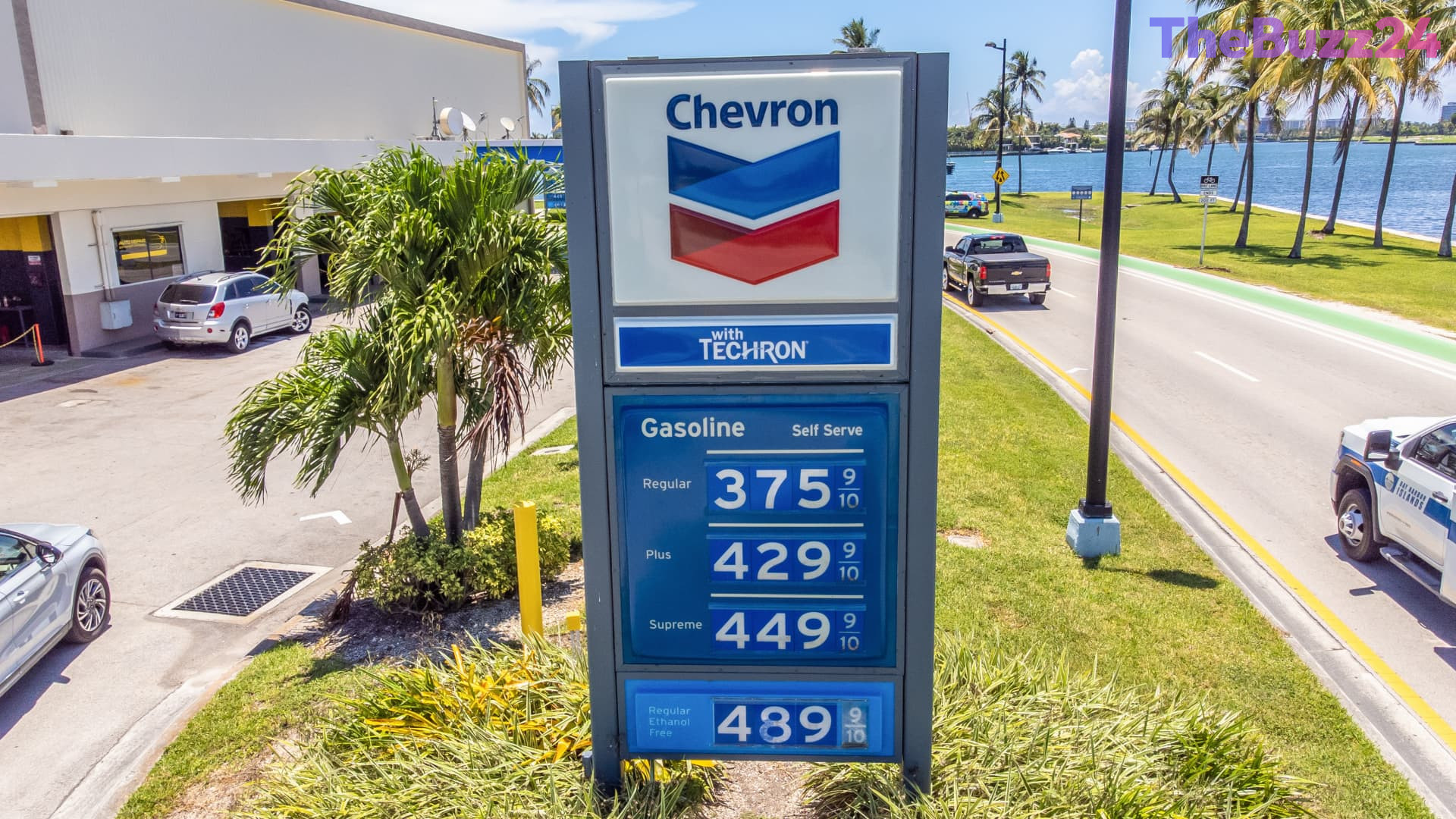
Chevron Responds to Presidential Pressure on Gas Prices, Citing Market Lag and Production Growth
Chevron’s Chief Financial Officer, Eimear Bonner, has indicated an expectation for U.S. gasoline prices to decline, a statement made amidst heightened political scrutiny over fuel costs. This outlook comes as President Donald Trump has publicly criticized major oil companies, accusing them of “gouging” consumers by not adequately reducing prices at the pump despite a recent downturn in crude oil markets.
President Trump specifically called out industry giants like Chevron, Exxon Mobil, Shell, and BP, asserting that gasoline prices should be significantly lower, ideally around $2.25 per gallon. He further escalated the pressure by ordering the Department of Justice to launch an immediate investigation into the matter, emphasizing the critical impact of fuel affordability on national security and American households.
In response to the presidential accusations, Bonner affirmed that energy companies are actively working to address the situation. She highlighted that there is an inherent time lag between a drop in crude oil prices and when those reductions are reflected at the gasoline pump. Bonner also noted Chevron’s commitment to increasing production, projecting a 7% to 10% growth this year, as part of efforts to meet global energy demands and stabilize markets.
The recent decline in global oil prices, which underpins the current debate, follows an interim peace agreement between the U.S. and Iran. International benchmark Brent crude futures for August have fallen to approximately $72.75 per barrel, while U.S. West Texas Intermediate futures for August were last observed around $69.60, levels reminiscent of those before the recent Middle East conflict.
Key Takeaways
- Chevron expects U.S. gasoline prices to fall, attributing current levels to a lag effect between crude oil costs and pump prices.
- President Trump has accused major oil companies, including Chevron, of "gouging" consumers and has initiated a Department of Justice investigation.
- Global oil prices have significantly decreased following an interim peace deal between the U.S. and Iran, setting the stage for potential price reductions at the pump.
Editor’s Analysis & Impact
This situation highlights the complex interplay between global geopolitical events, crude oil markets, and domestic consumer prices. While falling crude prices typically signal relief at the pump, the “lag effect” cited by Chevron is a real factor, often influenced by inventory levels, refining costs, and distribution logistics. President Trump’s intervention, including a DOJ investigation, underscores the political sensitivity of fuel prices, especially during periods of economic uncertainty. For energy companies, balancing shareholder returns with public perception and political pressure is a constant challenge. The market outlook suggests continued downward pressure on crude prices due to the U.S.-Iran deal, which should eventually translate to lower gasoline costs, but the pace will remain a point of contention. This dynamic could shape future energy policy discussions and corporate strategies regarding transparency and pricing.
Frequently Asked Questions
Q: Why is there a delay between falling crude oil prices and lower gasoline prices at the pump?
A: The delay, often called the "lag effect," occurs because gasoline sold at pumps was often refined from crude oil purchased weeks or even months prior at higher prices. Additionally, factors like refining costs, transportation, taxes, and retailer margins also influence the final price.
Q: What is President Trump's concern regarding gasoline prices?
A: President Trump has accused major oil companies of "gouging" consumers by not lowering gasoline prices quickly enough, despite a significant drop in crude oil prices. He believes prices should be closer to $2.25 per gallon and has ordered a Department of Justice investigation into the matter.
Q: How does the U.S.-Iran peace deal affect oil prices?
A: An interim peace deal between the U.S. and Iran typically signals a reduction in geopolitical tensions in the Middle East, a major oil-producing region. This can lead to increased confidence in stable supply, reducing the "risk premium" on oil prices and causing them to fall, as seen with Brent and WTI crude futures.
AI Disclosure: This article is based on verified data and official reports. Our Team and AI have cross-referenced every financial detail with primary sources to ensure total accuracy.
More from this Category